

How do tea and coffee affect human bones?
Australian scientists monitored the health of 10,000 elderly women for 10 years. According to the results of the study, women who like to drink tea may experience bone fractures less frequently than coffee drinkers.
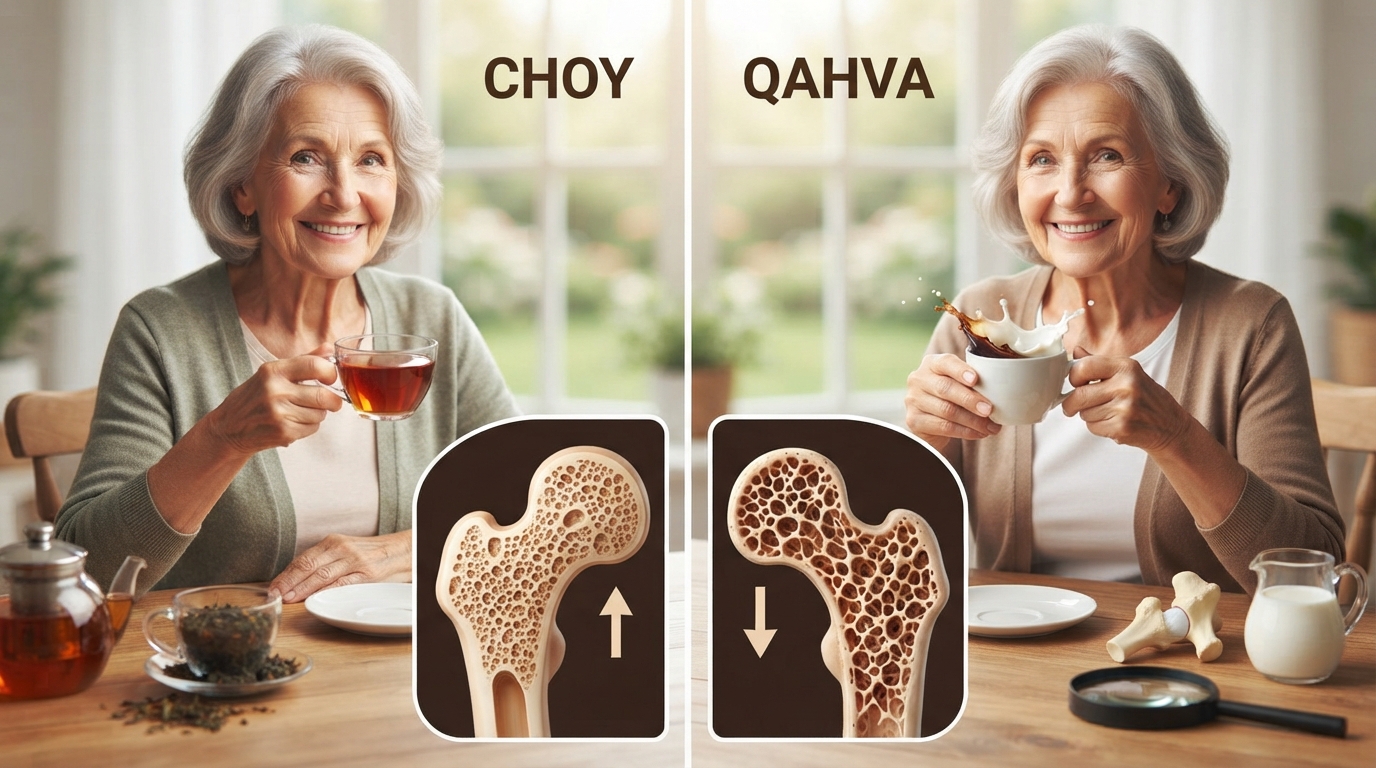
**How do tea and coffee affect bones?**
Scientists from Australia's Flinders University monitored the health of nearly 10,000 women over the age of 65 for ten years. The researchers studied how regular consumption of tea and coffee affects bone mineral density.
Osteoporosis is a disease in which bones lose their strength and can break even as a result of minor strain. It occurs in one in three women and one in five men over 50 years of age. Fractures of the hip and spine can lead to disability and reduce the quality of life. Doctors usually recommend calcium and vitamin D to prevent this disease.
Study participants were asked how much coffee, black tea, or green tea they consumed every day. At the same time, doctors regularly measured their bone density in the hip joint and femoral neck areas.
According to the results, women who drank tea had higher bone density in the hip area than those who did not drink tea. As the number of cups of tea drunk during the day increased, bone strength indicators also increased. Consuming two to three cups of coffee a day had almost no effect on bone tissue.
Additional analyses showed that reducing the amount of coffee yielded more benefits in women who had consumed alcohol regularly throughout their lives. In overweight participants, the positive effect of tea was observed to be stronger.
Scientists explain these results by the composition of the beverages. Catechins in tea stimulate the activity of bone-forming cells and slow down the work of bone-destroying cells. Caffeine in coffee, on the other hand, can interfere with the body's absorption of calcium. However, adding milk to coffee reduces this negative effect.
The study results are also consistent with previous research conducted in Europe. Those studies also found that tea can increase bone density and reduce the risk of osteoporosis.
The study authors emphasize that it is not necessary to give up coffee completely or drink large amounts of tea. However, drinking tea in moderation can complement osteoporosis prevention measures such as calcium and vitamin D intake and physical activity.