

Green tea, porridge, black bread: are the products that many think are "healthy" really beneficial?
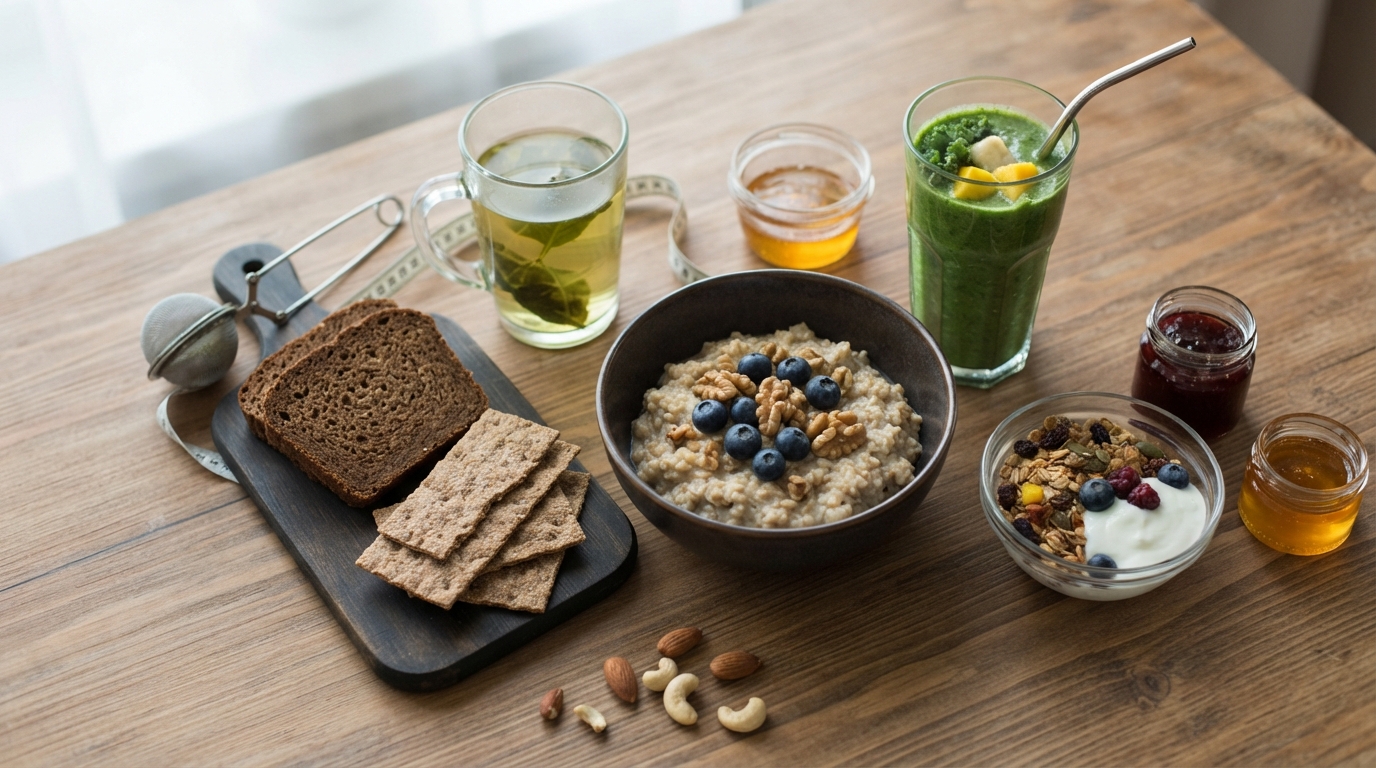
Green tea, porridge, black bread: are the products that many consider "healthy" really beneficial?
We have become accustomed to trusting phrases written on packaging such as "sugar-free," "fat-free," "natural," and "source of vitamins." Marketers have mastered the art of turning ordinary foods into "superfoods" using high-flown words, promising health, a slim figure, and longevity. However, upon closer inspection of their ingredients, many idealized healthy eating products lose their appeal.
**Porridges**
Eating porridge for breakfast has long been considered both healthy and tasty. However, this does not refer to ready-made packaged porridge, but rather to traditionally cooked porridge. This is because almost all instant porridges contain large amounts of added sugar, and the cereal itself is simply processed grain. Consuming them brings no benefit to the body.
The pieces of fruit and dried berries found in some of them can be almost entirely ignored — their quantity is so small that the presence of such "nutritious" additions is barely noticeable. It is not them, but the added artificial flavorings that provide the strong aroma. Therefore, if you do not want to give up porridge for breakfast, take the time to cook it yourself. In doing so, it is better to cook it in water rather than milk whenever possible. This way, it will be healthier.
**Muesli**
As with instant porridges, muesli often contains processed grains and sugar, as well as other less-than-healthy fats. Furthermore, muesli is considered a high-calorie food: 100 grams of the product contains approximately 300 calories. This means its calorie content is high, but its nutrient content is not very significant.
This especially applies to store-bought sweet muesli with added chocolate, various flavorings, and preservatives. Therefore, if you really want something nutritious and crunchy in the morning, it is better to eat a handful of nuts or make muesli yourself at home using various ingredients. Then, consume it by mixing it with fat-free yogurt, low-fat milk, or mineral water.
**Smoothies**
This thick-consistency drink, depending on what you put in it, can have a very beneficial or completely useless effect on your body. Good smoothies include fruits and vegetables. Chocolate and ice cream are not added to them. Therefore, make sure your delicious and nutritious drink consists only of healthy products.
**Green tea**
Green tea, which is currently in vogue, is considered a very healthy product. However, it interferes with the absorption of folic acid, and if consumed during pregnancy, it increases the risk of birth defects in the baby. The risk arises even when drinking just 2-3 cups of tea a day.
Also, drinking too much green tea can cause liver and kidney diseases. Moreover, the dose at which green tea consumption becomes risky is just 2 regular cups a day. In addition, the caffeine it contains stimulates the nervous system, which can lead to sleep disturbances and fatigue. The drink is also not recommended for those suffering from insomnia, tachycardia, and high excitability.
It should also not be forgotten that not only the products themselves, but also their incorrect combination can cause harm. For example, if you add jam or preserves to fat-free cottage cheese, instead of benefiting the body, you will trigger a fermentation process in the intestines. This leads to nothing good: toxins are produced during this process, which puts additional strain on the liver and kidneys as they try to neutralize them.
**Black bread**
Everyone knows that black bread has fewer calories than white bread. But at the same time, black bread contains more vitamin B, which converts carbohydrates into fat and stores them as excess fat in the body, leading to weight gain. Therefore, it is better to replace bread with crispbreads, which are even healthier and lower in calories.