

How are modern wars changing? What will the consequences be?
In human history, whenever the balance of power has shifted, the likelihood of wars has increased. The dominant power has resorted to wars to suppress newly rising powers in order to maintain its dominance. Newly rising powers, too, have been interested in wars to formalize their status.
In which direction are modern wars changing? What will be the consequences?
Today, unipolarity in the world is weakening. However, multipolarity has not yet fully taken shape. Under these conditions, wars have increasingly become a common occurrence in recent times. Wars are no longer a taboo event between normal states. According to analysis, wars will increase on the world political arena over the next two to three decades. Through these very wars, a new order or a new global situation will gradually take shape.
So, are the forms and characteristics of wars changing today, and if so, in which direction? Because it is precisely as a result of current wars that the global geopolitical landscape is being shaped, and the ratio of regional and global forces is being defined.
Yes, in recent years, right before our eyes, both the thinking about wars and military equipment are undergoing serious changes.
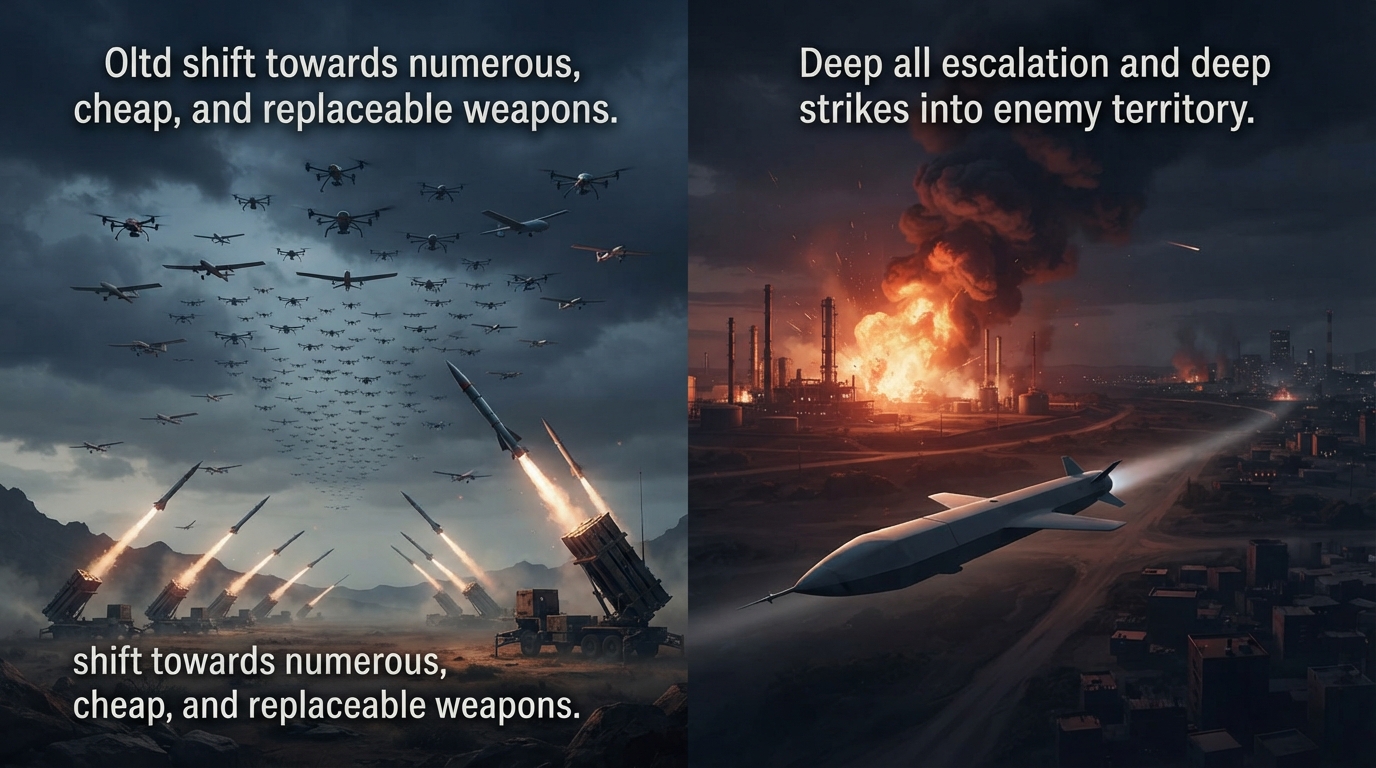
First, the era of "superweapons" that dominated until recent years is falling behind. That is, for example, long-range, powerful-striking, but extremely expensive missiles (Patriot, THAAD, etc.) and anti-missile systems have ceased to determine the fate of war today. On the contrary, weapon systems that are numerous, very cheap, can be used at will, and can be replenished without great difficulty are helping to seize the initiative in war.
For example, as we saw in the US war against Iran, even rich and powerful countries like the US quickly expend powerful missiles, and replacing them is expensive and time-consuming. On the contrary, Iran's cheap drones and relatively cheaper missiles allowed for an adequate response. Similarly, Ukraine, by responding to Russia's heavily armed army through light and numerous drones, is not yielding the military initiative to the opponent.
Of course, states are not abandoning traditional missile systems, even though they are expensive. They intend to use them for heavily protected targets. However, they are assigning the main striking task to cheap, relatively simple, and quickly replaceable unmanned aerial vehicles.
Second, because states do not want to fall into a whirlpool of exhausting, chronic wars as always, they are trying to resort more to escalation tactics. Escalation means intensifying the war, increasing pressure, and thereby forcing the opposing side to surrender more quickly. For this reason, the warring sides are trying to bring strikes deep into the enemy's territory rather than keeping the war along the line of conflict.
Russia launched attacks on the interior regions and cities of Ukraine. Ukraine, too, over the past year, has brought the war inside the RF, striking oil refineries and large commercial networks. By doing so, it is trying to strike at the morale of the opponent and its social foundation through the population. As long as wars take place around positional, hard-to-change frontlines, striking inside the enemy state and exerting pressure in this way to change the initiative of the war is a logically expected situation. That is why the countries of the world are making special investments in military equipment that strikes over long distances and cannot be shot down en route.