

House prices on the rise - how does your area compare?
Affordability continues to be a "real challenge" for buyers, as prices rise by an average of 4%.
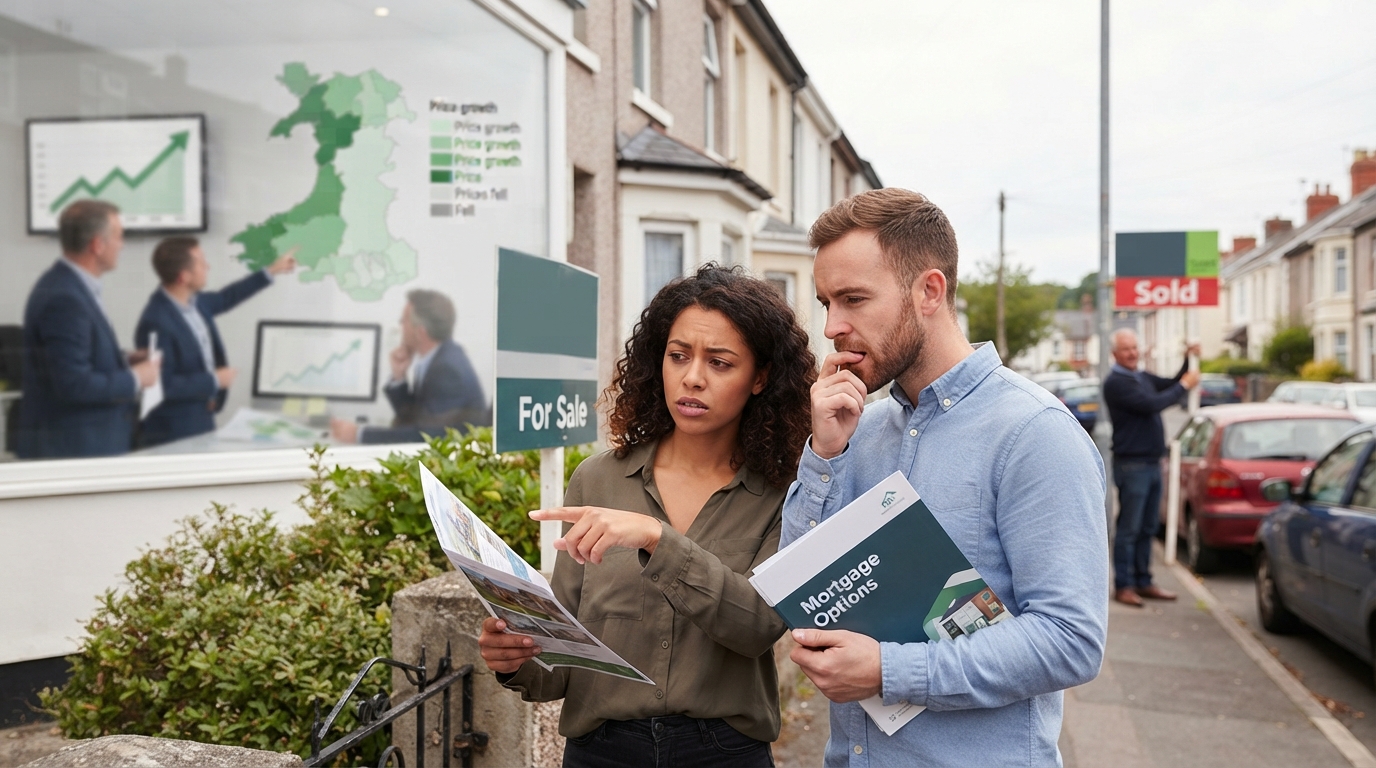
House prices are climbing - how does your area stack up?
Affordability remains a "real challenge" for some buyers, after house prices in Wales increased by 4% in the year to June.
New figures from the Principality Building Society (PBS) show the market has displayed "real resilience", with prices in some areas standing at more than 7.5 times the average income.
Anglesey recorded the biggest annual increase at 22%, while 17 of Wales' 22 local authority areas saw prices rise, according to the Wales House Price Index.
Ceredigion was among four areas where prices fell, and Aberystwyth estate agent Layla Mangan said she has seen "a lack of confidence" among buyers and sellers who are feeling "uncertain" because of cost of living pressures.
The average house price across Wales was £258,129, but Andy Mottram of PBS said that although the market had shown "real resilience" and "strong price growth" in many places, "affordability was a real challenge for people".
Flintshire saw no annual change, and among the four local authority areas where prices declined, Ceredigion had the largest fall at 9% - though Mangan said that did not match what she has seen in Aberystwyth.
For first-time buyers, average house prices were equal to four-and-a-half times household income in Cardiff, compared with just over three-and-a-half times in Blaenau Gwent, where homes were cheapest, the data showed.
For existing homeowners looking to move, purchase prices were equivalent to 7.6 times income in Cardiff and 5.2 times in Blaenau Gwent.
Blaenau Gwent saw a 47% rise in the number of mortgages issued between April and June compared with the first three months of 2026, the largest increase in Wales.
First-time buyer homes in the area averaged £155,000, while the overall average house price was £167,239.
However, Blaenau Gwent also had the lowest average household pre-tax income at £42,000, according to the report.
That is in contrast to Monmouthshire, which had the highest household income at £61,700, as well as the most expensive average house prices at £285,000 for a first-time buyer and £387,606 overall.
Layla Mangan of Alexanders estate agent in Aberystwyth said she was "surprised" by the 9.3% fall in prices recorded for Ceredigion.
"That's not been our experience" she said, "it's a hard market, yes, but it doesn't feel that we've dropped nearly 10%".
But Mangan said she has noticed "a lack of confidence" among buyers and sellers.
"We don't have to look hard to work out why that would be. What an uncertain time we're in," she said.
"I can understand people feel reluctant to wanting to essentially get into more debt. I understand that and it's hard at the moment."
"Everybody is really into house prices, whether you're a homeowner or not, because we can use it as this kind of thermometer, this gauge for what the economy and our finances are doing in general," she said.
"If you aren't looking at selling again in 12 months' time I'd hold your nerve, I'd go for it.
"We can't expect to be buying houses and making money on them straight away and where we go wrong is if that's what we're expecting."
The number of houses sold in a region can affect how much prices rise or fall compared with other places.
On Anglesey, which saw the biggest annual rise in house prices at 22.2%, the market can look mixed.
Richard Tuke has lived on the island for 20 years but now wants to sell up and move to Spain.
"Anglesey has always been a desirable area for people to live," he said, adding that he thinks the market is "not as bad as it was".
After several months of little interest, he has twice cut his asking price, from the original £475,000 to £425,000, and that has made a difference.
"We've had a wave of viewings in the last two weeks and a lot of strong interest, so I think we're at the right price level now," he said.
Turbulence in the Middle East and the knock-on impact on oil and gas prices have already pushed up rates for fixed-rate mortgage deals, and the Bank of England is widely expected to raise interest rates, making borrowing more expensive in the months ahead.
"If you look back over the year to date, the market's shown remarkable resilience in spite of those pressures," said Mottram.
"I think that's broadly likely to continue as we look forward."
Mottram said that despite rising cost of living pressures, there were several options for would-be buyers.
"There's still going to be pressures," he said, but "if people are worried, the best thing they can do is talk to their lender or talk to a mortgage broker to understand their options".