

Average house price in Northern Ireland rises above £200,000
The average price of a house in Northern Ireland is above £200,000 for the first time since the property crash of the late 2000s, according to official figures.
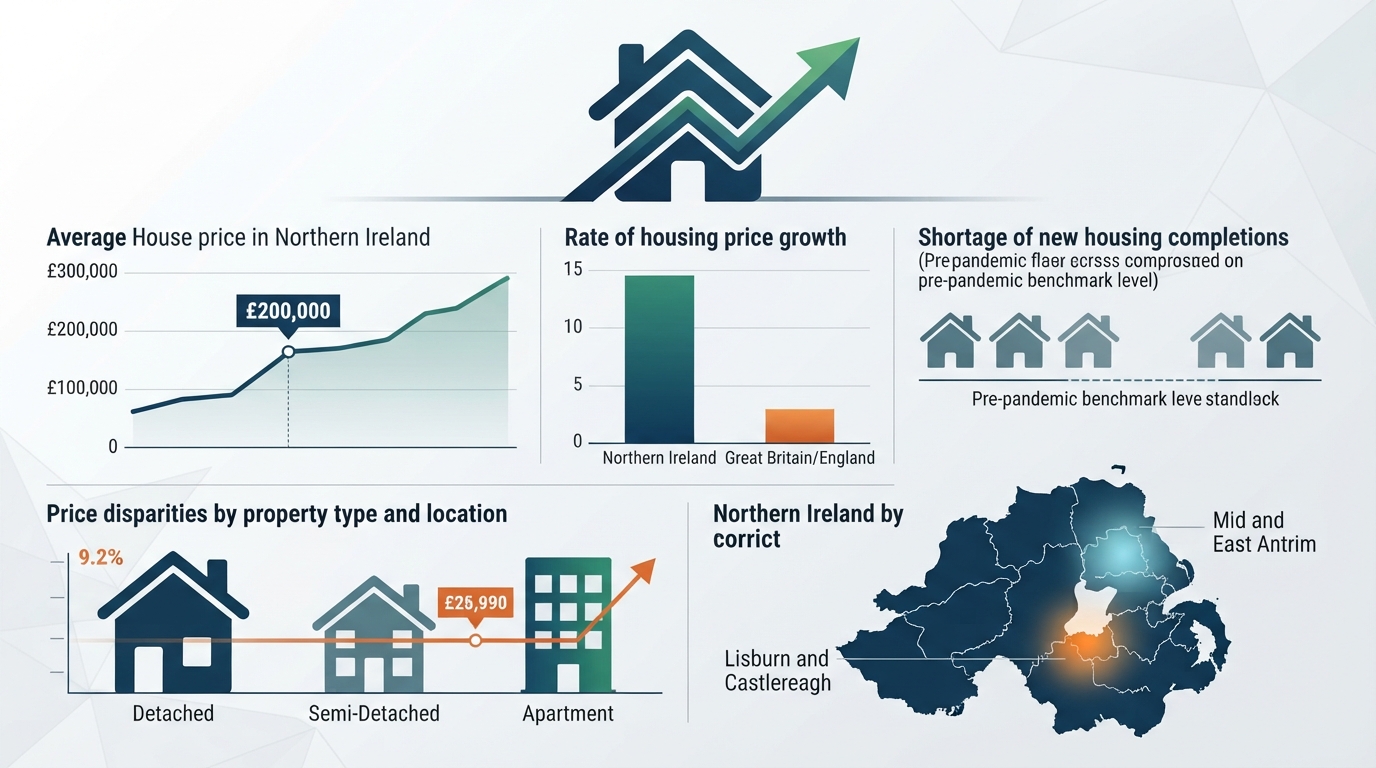
For the first time since the property market collapse of the late 2000s, the average cost of a house in Northern Ireland has surpassed £200,000, according to official data.
Figures released by the Northern Ireland Statistics and Research Agency (Nisra) indicate that average prices rose by 2.1% between the first and second quarters of this year.
In the second quarter of this year, the average house price stood just shy of £202,500. This figure is nearly identical to the price level observed in the final quarter of 2007, precisely when a property bubble began to deflate. Nevertheless, due to the impact of inflation, houses are considerably more affordable in real terms today.
Compared to a year ago, prices have climbed by 9.2%.
Lisburn and Castlereagh holds the distinction of being the most expensive local council area, with an average house price now exceeding £240,000. Conversely, Mid and East Antrim is the most affordable council area, where the average price is just under £178,000.
The average price for a detached house crossed the £300,000 threshold in mid-last year and is currently £312,000. Semi-detached houses reached an average of £200,000 at the beginning of this year, increasing to £204,000 in the second quarter.
Apartment prices saw a significant jump of almost 6% between the first and second quarters of the year, reaching £148,000. This represents the largest quarterly increase since 2013.
Comparable data from the rest of the UK suggests that house prices in Northern Ireland are rising at a much faster rate than in Great Britain. In certain areas of England, particularly London, prices are experiencing a decline.
The robust jobs market and a persistent shortage of new homes have been key factors supporting house prices in Northern Ireland. New housing completions continue to be well below pre-pandemic levels, hampered by infrastructure constraints, especially limitations in wastewater network capacity.