

Hawaii's iconic 550-year-old Hōlei Sea Arch collapses
The lava rock formation protruding from the rocky cliffs of Volcanoes National Park crumbled some time last weekend.
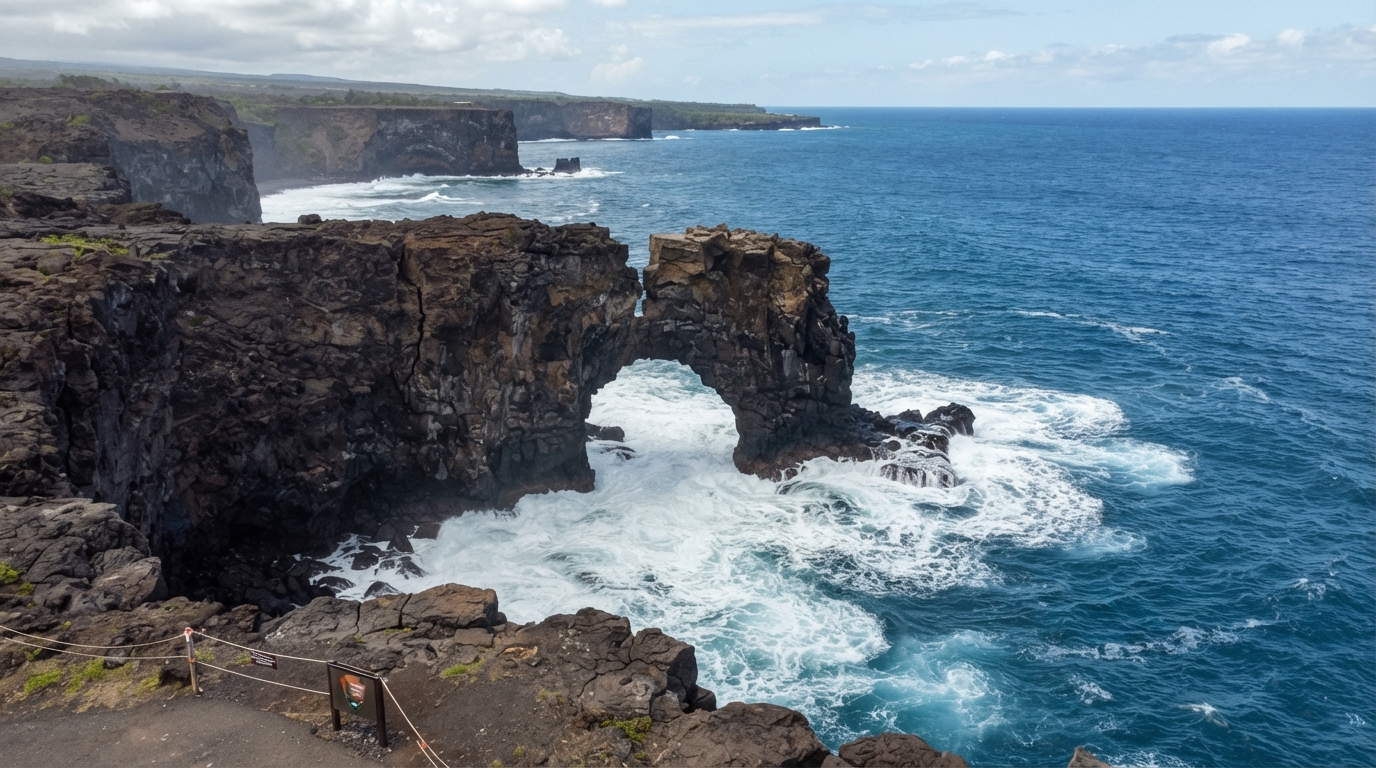
Hawaii’s well-known 550-year-old Hōlei Sea Arch has collapsed
Hawaii’s celebrated Hōlei Sea Arch, a 90-foot-tall (27.4m) lava rock formation that dates back about 550 years, has fallen into the Pacific Ocean.
The precise moment of the collapse is unknown. The arch was still extending into the water from the coast of Volcanoes National Park on 23 September, but by 27 September it was gone, the National Park Service (NPS) said.
“The coastline flanking the sea arch has shown signs of instability for years,” NPS, which warned in 2021 that the arch would eventually crumble, said in a statement.
Situated at the end of Chain of Craters Road on the island of Hawaii, also known as “the big island”, the formation was a popular - and heavily photographed - tourist attraction.
The arch is thought to have collapsed when the park was temporarily closed during Tropical Storm Nolo last weekend.
The park service said earthquakes during the 2018 Kīlauea volcano eruption and summit collapse had damaged the cliffs near the arch.
Its final collapse marks “the latest transformation of the park’s remote and rugged coastline”.
In January 2020, new cracks and instability in the cliffs caused the park to close the original arch viewing area, and a few months later, NPS said, a new viewing area opened at a safer distance.
Later that year, waves from a tropical storm broke off a piece of rock from the bottom of the arch.
“This formation is beautiful, but temporary, and has a limited life span,” the park service said in 2021. “The sea arch will eventually crumble into the sea. However, others will replace it as the cliff slowly migrates inland.”
Thousands of people have liked and commented on the NPS social media post about the arch’s collapse, including sharing memories of visiting the arch and posting photos of it.
“Nothing and no one is here forever,” one Facebook user commented. “Millions of years from now the sun will die. Appreciate the good, the beauty, now.”