

Have you heard about the Glandular Broomrape – a rare plant included in the Red Data Book of Uzbekistan?
Bezchali zo‘rcha is a rare endemic plant species specific to the Northwestern Pamir-Alay, with a limited distribution area. In Uzbekistan, Nurota
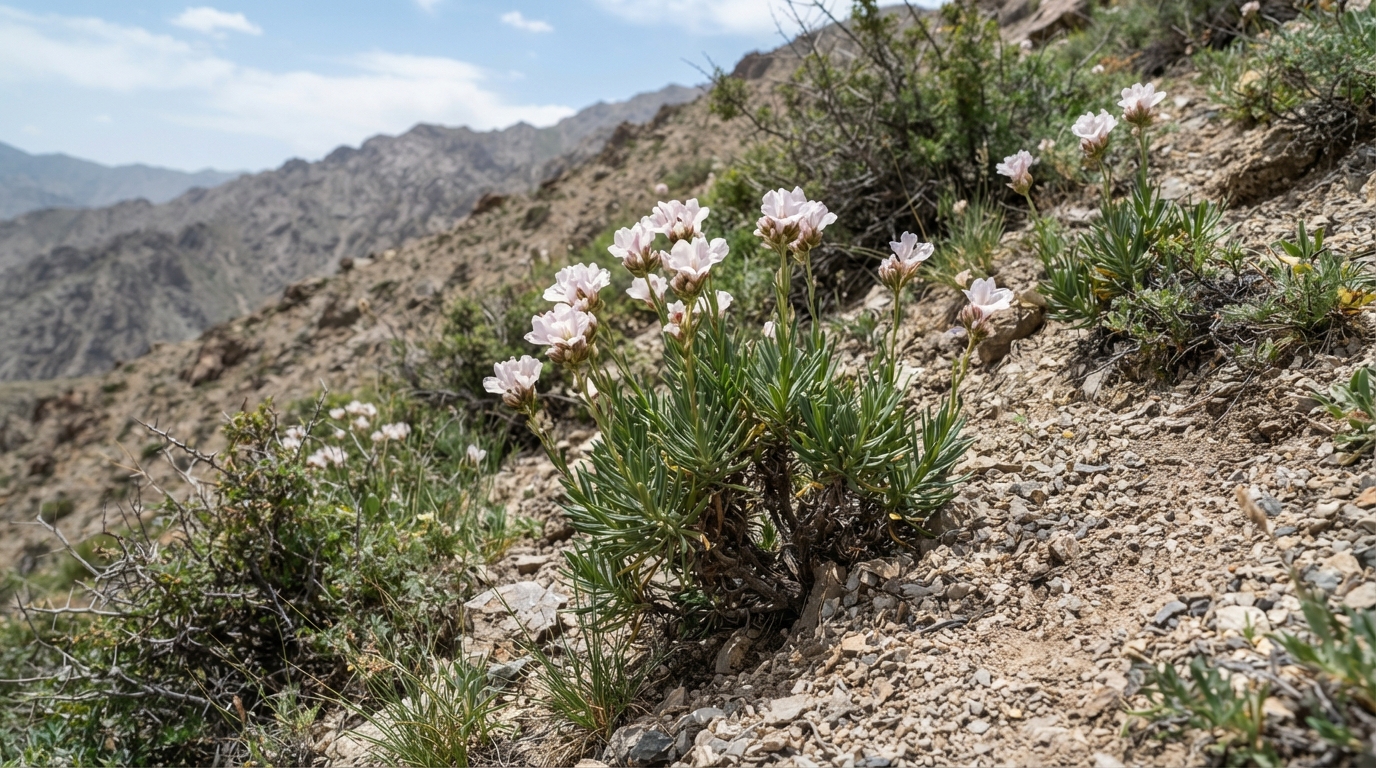
Have you heard of the Glandular Catchfly (*Silene glandular*), a rare plant species included in the Red Data Book of Uzbekistan?
The Glandular Catchfly is a rare endemic plant species native to the North-Western Pamir-Alay, with a narrow and restricted range of distribution. In Uzbekistan, it is found in the Nuratau and Malguzar mountain ranges, across the territories of Jizzakh, Navoiy, and Samarkand regions.
This plant is a perennial herb reaching a height of 30–50 centimeters. It has several stems, with the part near the base having a hard and woody structure. The leaves are lanceolate, about 3–6 centimeters long and 10–12 millimeters wide. The flowers are large, positioned singly at the tips of the branches. The corolla is whitish-pink in color and deeply divided into two lobes. The fruit is in the form of a capsule.
The Glandular Catchfly grows on fine-gravelly northern slopes in the middle parts of mountains, mainly among shrublands. It reproduces by seeds. It flowers in April–June, during which period its fruit also matures. It is rare in nature, found individually or in small groups.
The population of this species is believed to have declined as a result of overgrazing of livestock and negative impacts on its natural habitat. Currently, the Glandular Catchfly is protected in the Nuratau State Nature Reserve.
Destroying the Glandular Catchfly and other rare plant species or damaging their natural habitats entails liability in accordance with the procedures established by law.