

Green wave across 10 kilometers: 21 traffic lights synchronized in Tashkent, saving drivers 23 percent of travel time
On the section of the Small Ring Road from Beruni to Katta Darkhon, travel time has been reduced from 26 to 20 minutes. Specialists from the Traffic Management Center configured 21 traffic lights based on the "green wave" principle so that cars pass through intersections with fewer stops.
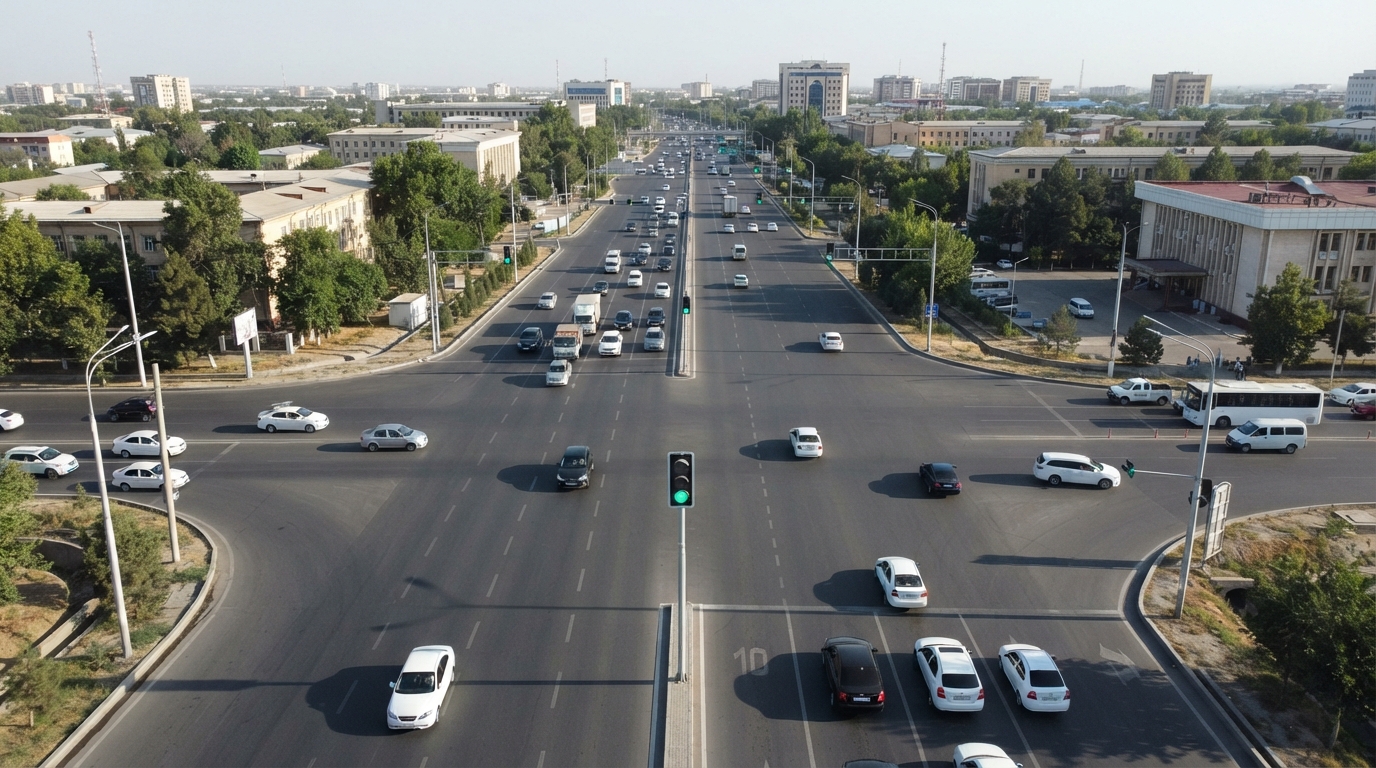
Green Wave Across 10 Kilometers: Tashkent Synchronizes 21 Traffic Lights and Saves Drivers 23 Percent of Travel Time
Behind the improvement of road traffic in Tashkent lies the daily work of a large team of specialists from the Traffic Management Center. This work is carried out almost around the clock: specialists study traffic flows, analyze street congestion, take measurements, improve traffic light operating modes, and develop new approaches to traffic management.
One example of such activity is the optimization of traffic light regulation on the Little Ring Road of Tashkent.
Along a 10-kilometer stretch, the operation of 21 traffic lights was synchronized. The result is a 23-percent reduction in travel time.
The optimization was carried out on the section from the intersection with Beruni Street in the Olmazor district (landmark: "Orzu") to the intersection with Katta Darkhon Street in the Mirzo Ulugbek district (landmark: "Plov Museum").
Previously, insufficiently coordinated operation of traffic lights caused additional vehicle stops and increased waiting times at intersections. Specialists studied traffic patterns, conducted an analysis of traffic flows, and optimized the operating modes of 21 traffic lights, coordinating them with each other according to the "green wave" principle.
The operation of the traffic lights was synchronized, traffic light cycles were optimized taking into account traffic intensity, and the coordination of traffic flows was improved. The new modes make it possible to reduce unnecessary stops, decrease waiting times, and ensure a more uniform movement of vehicles.
On the 10-kilometer section during off-peak hours, the trip took 26 minutes before optimization and 20 minutes after. The savings amounted to 6 minutes per trip, and travel time was reduced by 23 percent.
Important: measurements were recorded during off-peak hours (before adjustment — September 25 at 12:00, after — October 8 at 12:40) to evaluate the net effect of the new scheme. During peak hours, trip duration may vary depending on traffic intensity and actual road conditions.
Work to increase traffic efficiency in Tashkent continues.