

Froyo's made a comeback. But at £12 a tub will it last?
Frozen yoghurt, which was a huge craze in the 2000s and 2010s, has made its return with multiple chains popping up across the wider UK.
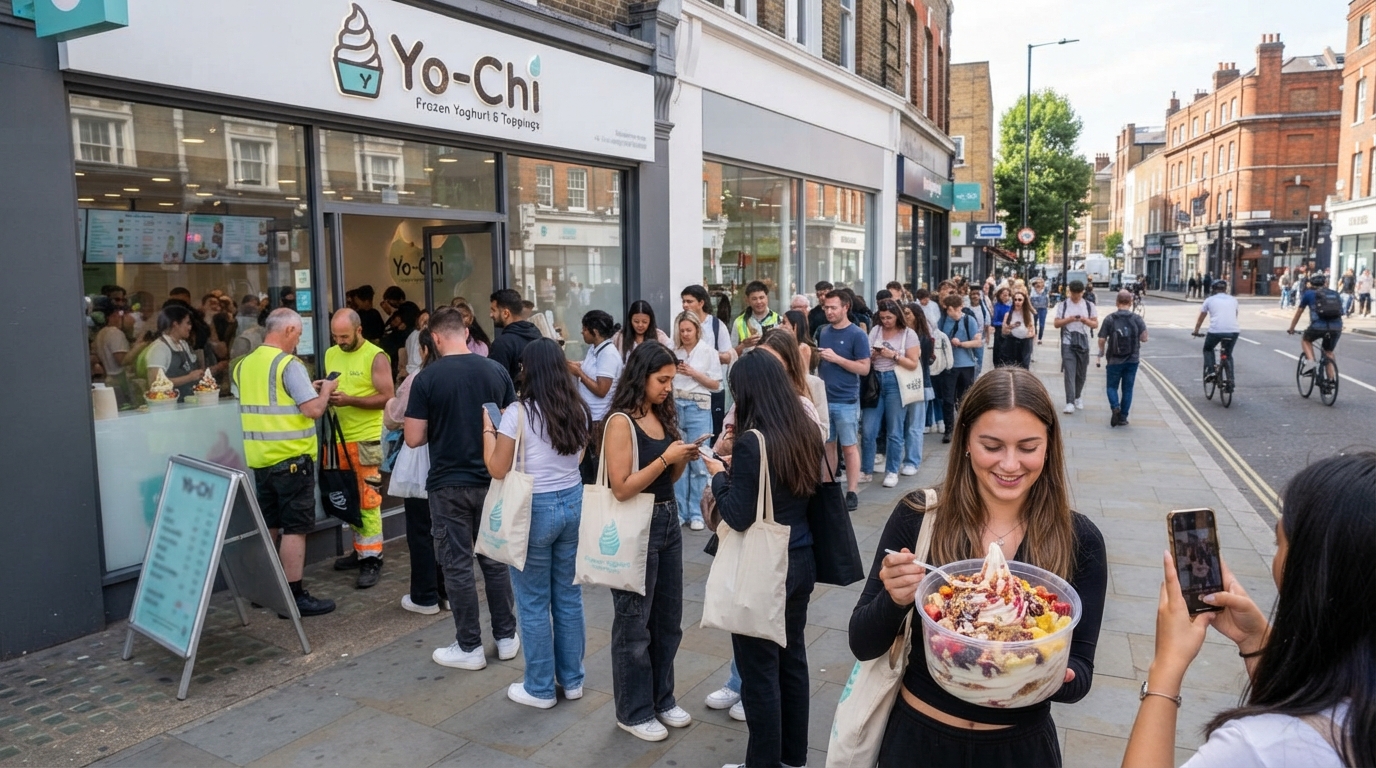
Froyo is back — but at £12 a tub, can it really stick around?
Frozen yoghurt has returned, with a number of shops opening across the UK this year.
Kiersten Paterno was among the many people prepared to wait up to an hour for a frozen yoghurt treat.
"It was a 45-minute wait for my turn but the whole experience of choosing your flavours and customising it with different toppings was a big part of the appeal for me," says the 19-year-old student.
Froyo was a major craze in the UK in the late 2000s and early 2010s, especially in London.
Chains such as Snog had 10 outlets in the capital at their peak, while other brands including AngelBerry had branches in Bristol and Brighton.
Now, in 2026, it has returned, fuelled by nostalgia, social media and its image as a healthier dessert option.
Several brands, including Go Greek, Myka and Yo-Chi, have launched in London, while Frurt, which mainly operates in the north west of England and Yorkshire, has opened new stores, including one in Leicester.
Despite not being a particularly cheap indulgence, with tubs costing up to £12, these businesses have seen hundreds of customers queue to build their own dessert pots.
Kiersten Paterno, 19, says froyo appeals to her because it is nostalgic and can be healthy.
She says she was first drawn to it because she could control portion size and sweetness.
"I could control how sweet I wanted it to be through the toppings. It feels healthier overall as it's a dessert I can enjoy without feeling like I've overindulged."
She admits it can be expensive, but says she is happy to spend a bit more on it as an occasional treat.
Research indicates the froyo market is growing steadily. Market Data Forecast estimates the European frozen yoghurt market will be worth £434m in 2026, up from £419m last year.
Australian brand Yo-Chi opened in Notting Hill in August and quickly gained attention on social media for its toppings and its "third space" atmosphere.
"Sweet treat culture is huge. People aren't spending a fortune on big things, but a little thing like that, they're happy to," says Bethan Clarke, Yo-Chi campaign manager.
There were long queues outside Yo-Chi on opening day.
Although Yo-Chi would "never call ourselves healthy" — froyo is generally lower in calories and fat than ice cream, but may also have more added sugar — Clarke says its customisable nature means people can control their own portions and sugar levels.
Social media trends such as "2026 is the new 2016" are also boosting froyo's popularity online.
"People are coming back to re-experience childhood a little bit," says Clarke.
Ella Light, who also works for Yo-Chi, says she has been surprised by the variety of customers visiting the shop.
"I was kind of expecting to see the Gen Z girlies coming in, [but] this morning there was a group of builders!"
Snog was the biggest froyo name in the 2010s.
But how likely is this latest froyo boom to last? After all, it was massive in the 2010s, but by the end of that decade it had almost disappeared.
Vhari Russell, founder of Food Marketing Experts, says: "Market over-saturation played a role in the initial disappearance of froyo, as well as the natural cycle of dying trends."
Market leader Snog faced growing competition from Yog, Yoomoo and Pinkberry, while consumers also came to realise the dessert may not have been the healthier choice they had first believed.
"But now 2010s throwbacks coupled with a modern twist are seeing huge appetite across the market," says Russell.
Will £12 for a tub eventually put people off?
Russell does not think so, describing it as an "affordable luxury".
She adds that going out for froyo can be "an experiential moment" as much as anything else.
"For many people, they don't smoke or have expensive lifestyles, so froyo isn't viewed as food, it's viewed as an experience."