

From yarn to buyer: How Zelal Textile is developing a clothing brand through Wildberries
Uzbekistan's Zelal Textile company has integrated fabric production and garment sewing. The company is using customer feedback to develop its own DNZ brand.
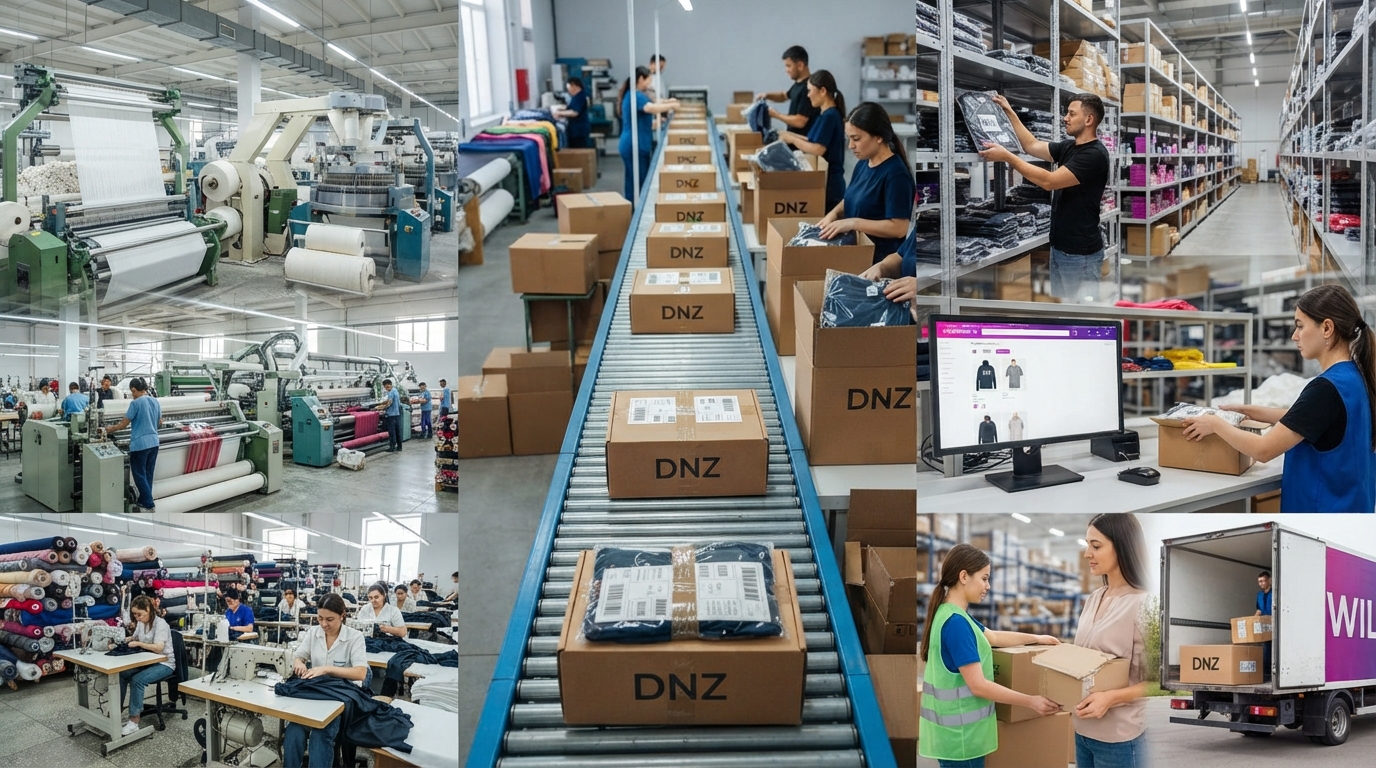
From yarn to buyer: how Zelal Textile is developing a clothing brand through Wildberries
In two and a half years, the DNZ product line expanded from a single model to 400. According to company data, customers purchased more than two million items during this period. Behind these numbers lies the hard work of fashion designers, technologists, seamstresses, and specialists who analyze demand and convey customer desires to production. The journey of the product from the textile workshop to the marketplace warehouse is featured in the second episode of a special project by Wildberries and Afisha Media.
Production begins with tuning the equipment
According to company representatives, today 1,200 people work in fabric production and another 2,500 people in clothing manufacturing. 100 tons of fabric are produced per day.
The process from raw cotton to the finished product and its sale on the marketplace is divided into 12 stages here. Yarn enters the knitting machines, where it is transformed into raw, un-dyed, and untreated fabric. This is followed by the stages of dyeing, printing patterns, processing, cutting, sewing, and preparing for dispatch.
Many characteristics of future clothing are determined as early as the knitting stage. Specialists calculate the width and density of the fabric taking into account changes in subsequent stages: after dyeing, the fabric shrinks, while processing and printing affect its weight.
In the laboratory, a color recipe is selected for each type of fabric. The equipment allows printing patterns using up to 12 colors. Molds are saved for repeat orders, and the details of how the fabric was processed are recorded to achieve the exact same result again.
At the same time, company representatives believe it is difficult to completely replace humans with machinery: the properties of cotton vary, and working with it requires experience. It takes years to train a good master craftsman.
Buyers themselves say what needs to be changed
For DNZ, the private clothing brand of the Zelal Textile workshop, Wildberries became both the first sales platform and a channel for receiving customer feedback. Buyers request new colors and sizes, suggest making the fabric thicker or lighter, and ask whether the top or bottom of a set can be purchased separately.
"In the past, it would take a year for any factory to collect feedback from buyers. Now we get it immediately. The customers themselves give us direction," says Ekrem Ugerem, Commercial Director of Zelal Textile.
Reviews are passed on to the relevant departments and taken into account when working on the product range. The company also uses Wildberries analytics data. According to the company, taking colors into account, 400 models are presented in almost 1,600 product cards. Orders come from various regions of the CIS, including Yakutia. However, the main demand falls on the Central and Volga federal districts of Russia.
With sales growing, the company emphasizes the importance of representing the product accurately: photos must correspond to the item the customer will receive in the order. Overly high expectations can lead to customer disappointment.
Balance of price and quality
Work on a new collection begins in the modeling workshop. Designers create models, after which the team sews samples and agrees on them with managers. Preparation can begin three seasons in advance.
During approval, not only the appearance is evaluated, but also the fabric, accessories, and production costs. Even an interesting model might not go on sale if its final price is too expensive for the buyer.
"We always try to find a balance between price, quality, and the attractiveness of the product," the company noted.
After approval, the fabric is sent for cutting, and then to sewing factories. Finished clothes are packaged and labeled in accordance with Wildberries requirements for direct shipment to marketplace warehouses.
Zelal Textile's next goal is to direct all produced fabric into finished clothing production. According to company estimates, nearly 250,000 items per day can be made from 100 tons of fabric. The enterprise plans to reach this scale gradually by expanding production and the DNZ product line.