

For bones, memory, and heart function: how are mushrooms beneficial for the human body?
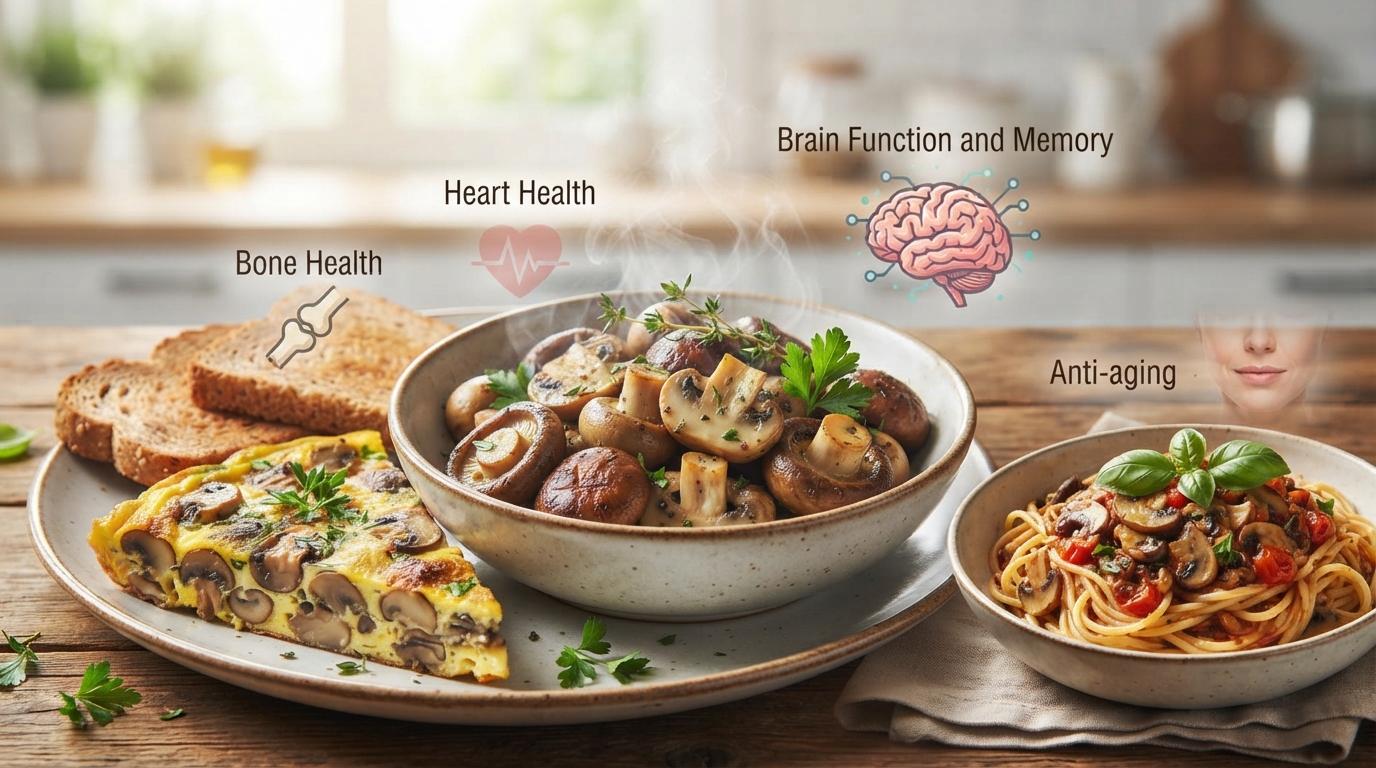
**For bones, memory, and heart function: how mushrooms benefit the human body**
There is good news for those who love to eat mushrooms. Mushrooms not only improve the taste of food but also have a positive effect on health, writes "Noviy ochag".
**Why else are mushrooms beneficial?**
**Help maintain a youthful appearance**
According to a 2017 study by Pennsylvania State University, mushrooms contain very high concentrations of two antioxidants — ergothioneine and glutathione. These antioxidants protect the body from physiological stress, which causes visible signs of aging such as wrinkles.
**Slow down age-related changes in the brain**
According to researchers, the two aforementioned antioxidants — ergothioneine and glutathione — help prevent Parkinson's and Alzheimer's diseases. To reduce the risk of neurological diseases in the future, it is recommended to eat at least five mushrooms a day. To better preserve their nutritional properties, they should be cooked in a microwave or on a grill.
**Improve memory**
This is another benefit related to mental health. Researchers at the National University of Singapore found in 2019 that eating two portions of mushrooms a week can reduce the likelihood of cognitive decline.
**Improve heart health**
Mushrooms enhance the flavor of dishes even better than salt because they contain glutamate ribonucleotides. These compounds provide a savory taste without affecting blood pressure or the risk of heart disease. A whole serving of mushrooms contains only 5 mg of sodium. They are also an excellent substitute for red meat, reducing extra calories, fat, and cholesterol.
**Strengthen bones**
It is advisable to choose packaging marked UVB at the supermarket. Such mushrooms have been exposed to sunlight compared to those grown in the dark, and they directly convert a compound called ergosterol into vitamin D. Vitamin D, in turn, strengthens bone health.
**Boost energy**
Mushrooms are rich in B vitamins: riboflavin (B2), folate (B9), thiamine (B1), pantothenic acid (B5), and niacin (B3). They help the body utilize energy from the food consumed and produce red blood cells that carry oxygen.
**How to eat more mushrooms?**
It is also recommended to prepare omelets with mushrooms for breakfast. You can make pasta sauce even tastier by adding some mushrooms to it.
However, it is very important to distinguish between beneficial and inedible mushrooms. Eating mushrooms that grow in the wild should be avoided. They can be poisonous, leading to severe illness and, in some cases, death. It is recommended to buy mushrooms in common places — from grocery stores.