

Five European countries called Russia the main threat to Euro-Atlantic security
The defense ministers of Great Britain, Germany, Italy, Poland, and France assessed Russia as the most acute and long-term threat to Euro-Atlantic security and stability. At the meeting in Paris, issues of winter assistance to Ukraine and strengthening its air defense were also discussed.
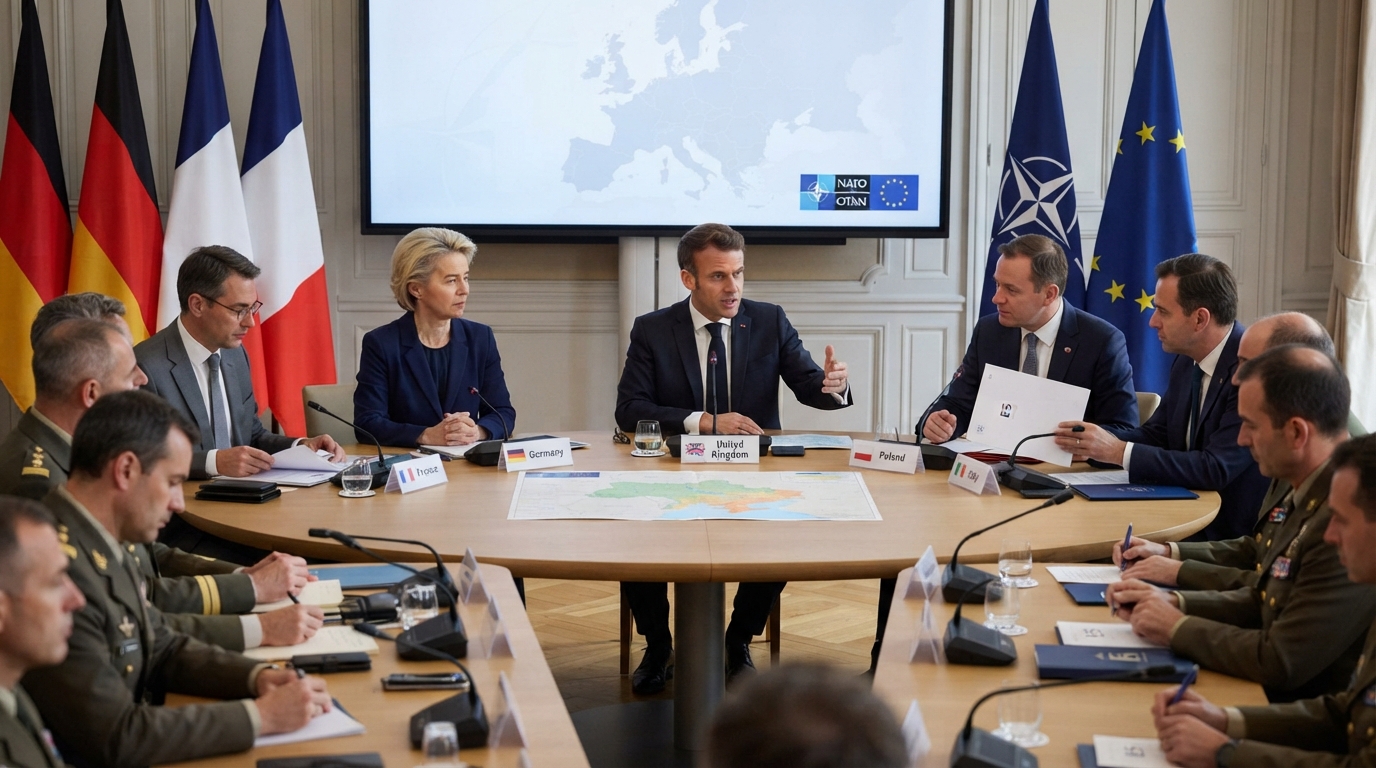
Five European countries named Russia the main threat to Euro-Atlantic security
The defense ministers of the five countries belonging to the E5 group met in Paris on October 26. The joint statement adopted at the conclusion emphasized that Europe must take greater responsibility for its own security.
According to the document, this should start, first of all, by expanding the role of European allies within NATO. At the same time, it was noted that the United States remains an irreplaceable ally for the E5 countries.
German Defense Minister Boris Pistorius announced after the meeting that "winter aid packages" had been prepared for Ukraine.
According to him, the E5 countries will do everything possible to ensure that the US continues to assist Ukraine with supplies, especially intelligence and satellite data.
Pistorius also said that representatives of the five countries are working together with Ukraine to create an air defense system that will operate in addition to the Patriot complexes and other existing systems.
NATO Deputy Secretary General Radmila Šekerinska urged partners to step up aid to Kyiv right now. She emphasized that the pressure of Russian attacks is felt in Ukrainian cities almost every night.
The joint statement reaffirmed the commitment to continue supporting Ukraine. The ministers stated that Ukraine's ability to defend itself now and in the future is of decisive importance for collective Euro-Atlantic security.
The E5 countries noted that they support Kyiv's pursuit of a lasting peace based on reliable security guarantees, for which political, military, and financial assistance is necessary.
The issue of providing assistance to Ukraine on the eve of winter was also one of the main topics at the European Union summit held in Brussels on October 15–16.
At that time, German Chancellor Friedrich Merz called for increasing financial support to help Ukraine get through the winter and prepare for the next year. President of the European Commission Ursula von der Leyen stated that Ukraine's financial needs for 2026 were covered, while President of the European Council António Costa said he was waiting for a concrete proposal on allocating funds for 2027.