

"Europe is not supporting Ukraine because it loves it" - political scientist
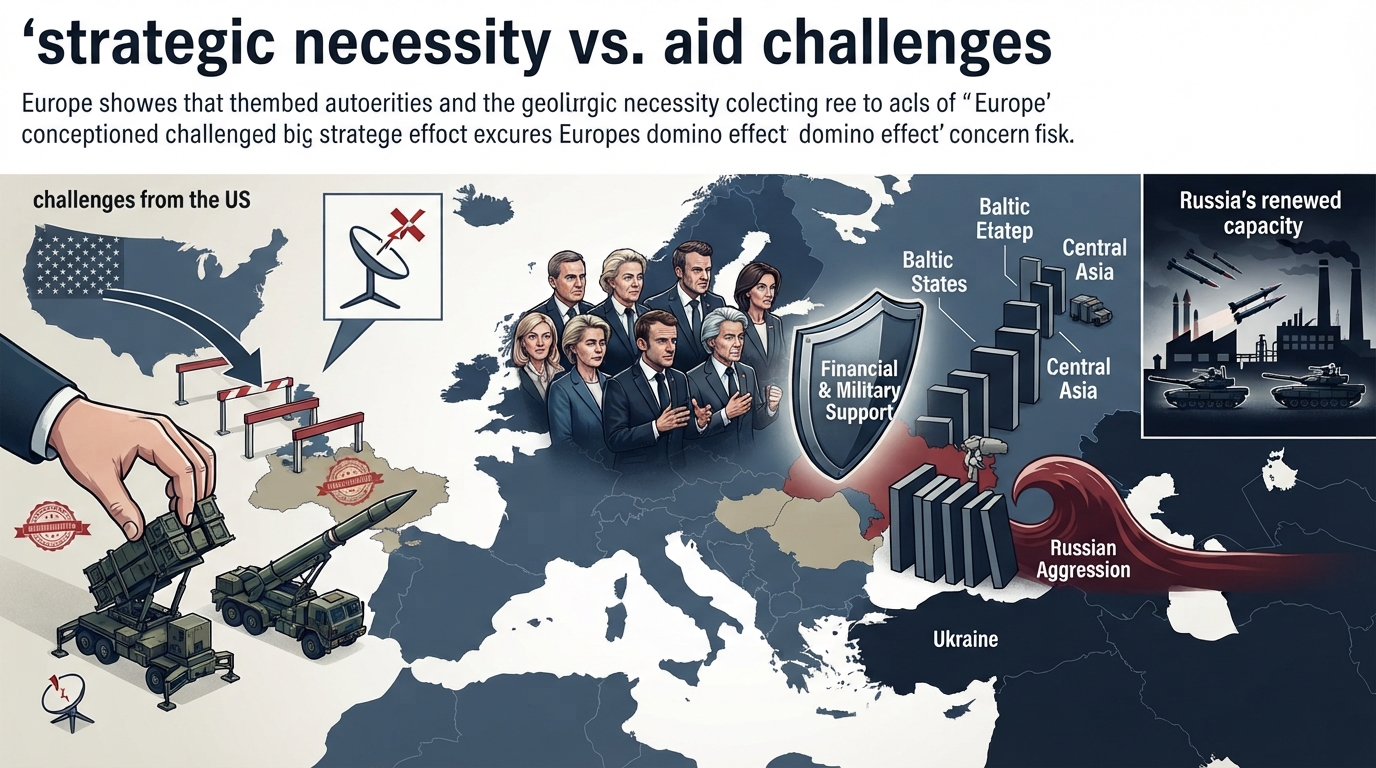
Europe's mindset is as follows: if Ukraine falls today and comes under Russian influence, a domino effect will begin: imperialistic sentiments in Russia will increase, provocations in the post-Soviet space, particularly in Central Asia and the Baltics, will escalate, ultimately creating serious consequences for the European Union. That is why, despite Trump's position, Europe's support for Ukraine remains stable, says Kamoliddin Rabbimov.
“Europe is not supporting Ukraine because it loves it” - political scientist
- How long can the European Union support Ukraine amid pressure from the US?
After Donald Trump came to power, the large volume of grant assistance that the US had been providing to Ukraine virtually ground to a halt. Currently, the US is mainly supplying intelligence data, but even this support is being disrupted from time to time. Disruptions are also being observed in the Starlink service, which plays an important role in the coordination of the Ukrainian military. Furthermore, despite the EU having paid for weapons that were to be purchased from the US and handed over to Ukraine, the US has recently been dragging out this process.
There are two important aspects to this issue. The first is the weapons purchased from the US that must be handed over to Ukraine. The second is the strategic weapons that European countries had previously acquired from the US. For example, Patriot air defense systems and long-range missiles. To transfer such weapons to another country, US consent is required, for which the Pentagon must grant the appropriate permissions. Currently, this process has also come to a standstill.
The EU is not supporting Ukraine simply because it loves it. This is primarily linked to strategic interests. European leaders view Ukraine as an important barrier standing against the Russian invasion and weakening Russia's military potential. In their view, if Ukraine falls and comes under Russian influence, a domino effect will occur. That is, the collapse of one state will increase pressure on others as well. Russia's imperialist policy will become even more active, affecting the situation in the post-Soviet space, including Central Asia, provocations against the Baltic states will intensify, and ultimately serious threats will emerge for the EU and NATO.
For this reason, Europe considers helping Ukraine as part of protecting its own security. The goal is to help Ukraine in order to contain Russia and weaken its military capabilities. This approach is not idealistic, but rather closer to strategic calculation.
In addition, European political elites do not trust Vladimir Putin's promises. Leaders such as former French President François Hollande and former German Chancellor Angela Merkel negotiated with Putin in their time. The experience of European politicians shows that Putin can make positive promises in negotiations and then act contrary to them. For this reason, the view exists in the West that Russia's goal is not limited to Ukraine alone.
According to this view, Moscow is interested in weakening the European Union, fracturing NATO, and undermining the transatlantic ties between the US and Europe. The anti-Western views of Russian political philosopher Aleksandr Dugin are also frequently mentioned in these discussions. He has been promoting the idea of fundamentally changing the existing Western political order.
Therefore, it is not just about the fate of Ukraine. This is a broader struggle over how the international order will be shaped, the future security of Europe, and how relations between the US and Europe will develop.
To what extent Trump understands these risks or on the basis of what strategy he evaluates them is a separate issue. But European leaders believe that stopping Russia in Ukraine is vital for their own security. For this reason, they strive to assist Ukraine for as long as possible.
Europe will continue to help Ukraine. There are two main directions to this assistance: financial and military. Financially, the European Union plans to allocate 90 billion euros for Ukraine through the end of 2027. Of these funds, 60 billion euros will be directed toward defense needs, and 30 billion euros toward supporting the budget and the economy. However, not all European countries bear this burden equally; the main responsibility falls on a few states. Meanwhile, the participation of countries like Hungary and Slovakia in this regard is limited.
Russia's current military capabilities must also be taken into account. For now, the question remains open whether Russia has sufficient capacity to launch a new full-scale offensive against the whole of Ukraine or to capture cities like Odesa and Mykolaiv. Perhaps such attempts could occur in the future, but for that to happen, Russia would first need to restore and strengthen its military potential. Nevertheless, European countries do not want to sit back complacently relying on the assumption that Russia will not attack in the near future. They are strengthening their defense capacity, paying more attention to border security, and reinforcing their armed forces. At the same time, they are striving to continue providing military aid to Ukraine.