

Fast food can cause memory deterioration – study
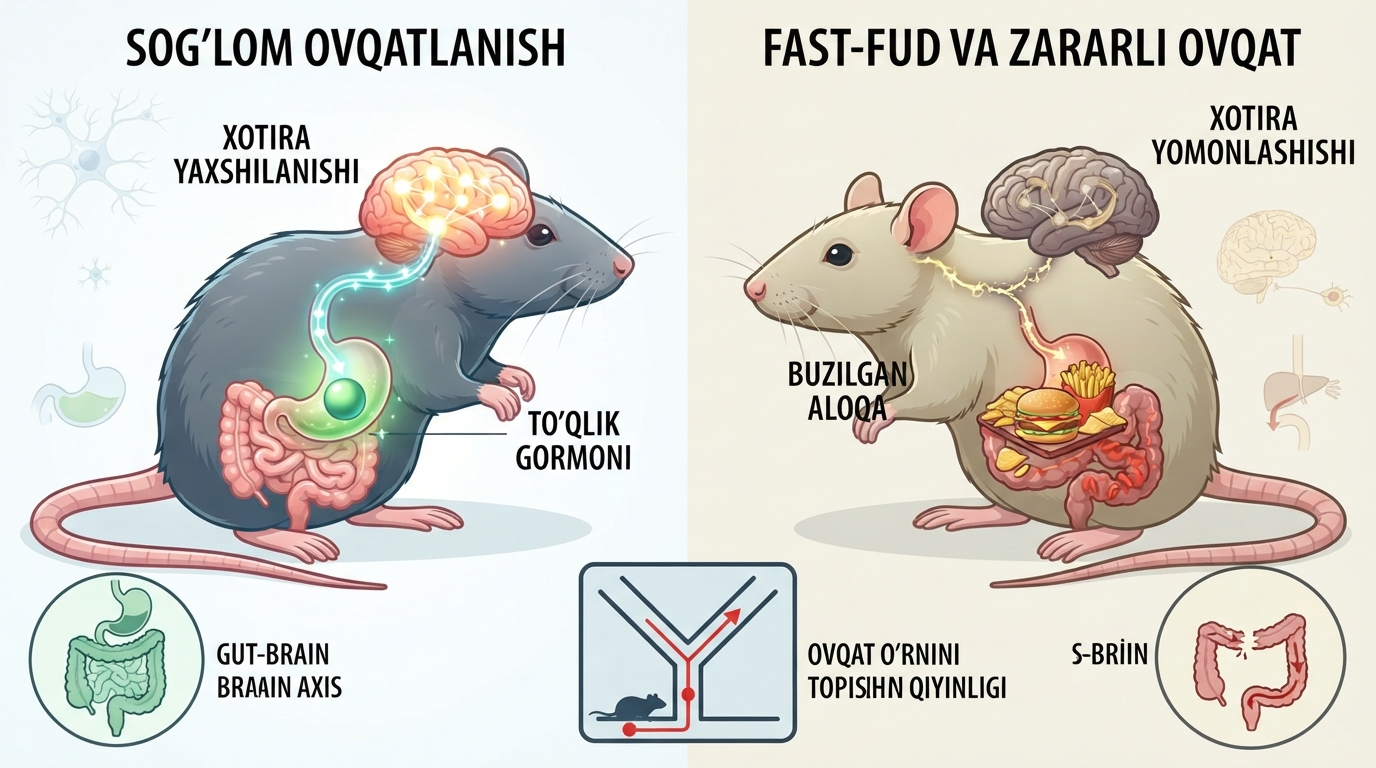
Fast food can lead to memory impairment — study
Usually, memory sharpness is associated only with brain activity. However, a new study conducted on rats has shown that the digestive system is also involved in this process. The results of the study were published in the journal Nature Communications.
Researchers have discovered how food activates memory. It turns out that fast food can disrupt this important connection between the gut and the brain.
During the experiment, rats were injected with a satiety hormone that is naturally produced in the gut when food is digested. After that, the level of a memory-related substance in their brains increased sharply. Scientists discovered that there is another important link in this signaling pathway from the gut to the brain. It consists of a small group of nerve cells located in the deep part of the brain. When the researchers temporarily deactivated these nerve cells, the signal coming from the gut did not reach the part of the brain responsible for memory. As a result, memory was not strengthened either.
The rats were also given various liquids: high-calorie sweet water, liquid fat, and drinks with sugar substitutes. As a result, it was found that the memory-related substance in the brain increased only when actual calories were consumed. That is, this was caused precisely by the calories in the food, not by the sweet taste itself. When the nerve connecting the gut and the brain was surgically severed, this reaction disappeared completely.
The most concerning result was observed in the experiment involving unhealthy foods. Young rats were fed fatty and sweet products, such as chips and chocolate, for a month. Then they were returned to their normal diet. Despite this, however, the memory mechanism associated with digestion did not recover. The rats stopped responding to the satiety hormone as before and began to overeat.
This result shows that consuming a lot of unhealthy foods in youth can disrupt the connection between the gut and the brain for a long time.
In the final experiment, the rats were placed in a special maze — where the rodents had to remember where the food was hidden. Healthy rats found the food easily. Meanwhile, rats with a damaged nerve connecting the gut and the brain, or with impaired activity in the brain part that transmits this signal, chose the wrong path in most cases.
Rats fed on unhealthy food also remembered the location of the food poorly.
However, the experiments were conducted only on male rats. For this reason, scientists emphasize that this process may work differently in humans and that additional research is needed to draw definitive conclusions.