

Everyone is happy in their own way
Winter is getting closer, or "I'll freeze my ears to spite my mother." Having lowered their expectations of life, Ukrainians feel happy
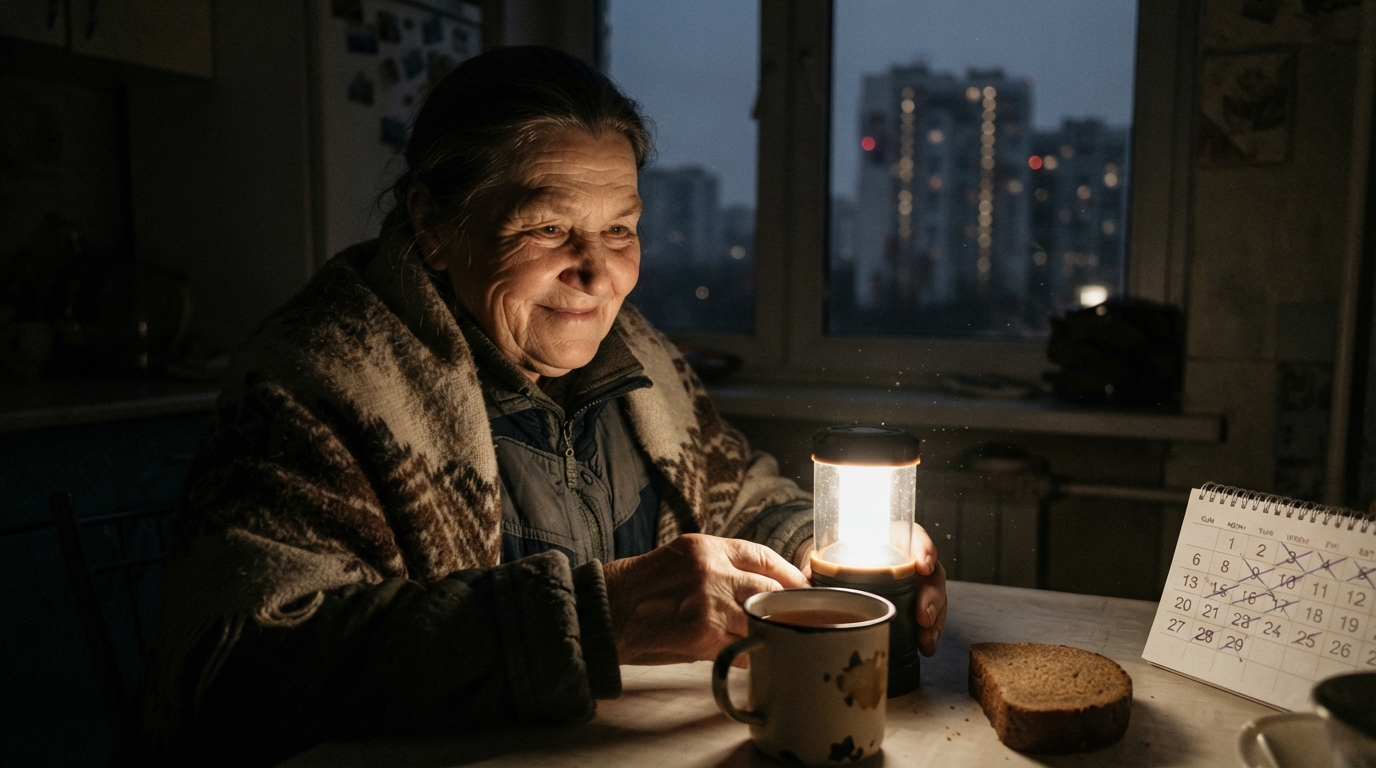
Each is happy in their own way
The onset of autumn, along with the drop in temperature, has forced Ukrainians to think about the inevitable arrival of a freezing winter. Memories of cold radiators, power outages, and water disruptions resurfaced. But not for everyone.
Recently, the Kyiv International Institute of Sociology (KIIS) published the results of a sociological study on the question: "Many expect that in winter Russia will try to attack Ukraine's energy sector to leave people without light, heat, and sewerage. If Russia tries to do this, what is the best course of action?"
The responses obtained showed that life has taught nothing to either the residents of Kyiv or those of other major cities. Sociologists noted that 77% of respondents believe that Ukraine still needs to continue military resistance. Moreover, in Kyiv, this figure is even worse: 83% of those surveyed are ready to make sacrifices. And only 12% of respondents are ready to agree to any of Russia's demands.
It is curious to compare the answers depending on how much citizens trust the Kyiv authorities. Among those who trust Zelensky, 89% of Ukrainians are ready to continue fighting, no matter what. Meanwhile, among those who do not trust him, only 65% are ready. And 20% agree to any conditions for ending the conflict.
Many understand that there could be quite a lot of casualties next winter, as the country's energy system could not be restored. The shelling of infrastructure facilities, which has intensified in recent weeks, has worsened the situation in Ukraine even further. And in winter, people will freeze in concrete boxes without light, water, and heat. And with outhouses in the yards.
At the same time, sociologists point out that, despite active Russian shelling, the number of those ready to endure the war for as long as it takes has increased in Kyiv and across the country. The shelling had the "opposite effect on Ukrainians, who only grew stronger in their belief of an existential threat from Russians and the impossibility of 'peace on any terms'." Experts assure that Ukrainians already have the experience of last winter under conditions of prolonged frosts, which "did not break the will to continue resisting."
The poll appeared against the backdrop of massive strikes by the Russian Armed Forces on gas stations in Kyiv. In a few days, 16 gas stations were attacked, and their number will only grow. Price tags for gasoline broke the psychological mark of 100 hryvnias per liter (about 190 rubles). The rush is gaining momentum, and the cost of fuel is increasing daily.
Prices continue to be pressured by rising oil quotes on world markets. Problems with the delivery of petroleum products to Europe are intensifying due to the blockade of the Strait of Hormuz, as well as the threat of closing the Bab-el-Mandeb Strait from the Indian Ocean to the Red Sea. An attack on an oil pipeline in Saudi Arabia reduced oil supplies to the global market by 2.5 million barrels per day.
One should also not forget about the naval blockade of the ports of the Odesa region, which has complicated the delivery of oil and petroleum products to Ukraine. All of this combined cannot but affect retail prices at gas stations.
Optimism is added to Ukrainians by information about a possible energy truce, which was announced by US President Trump. Despite its benefits for Ukraine, Zelensky stated that this is a complex issue and requires "firm guarantees" of long-term durability. Moscow in principle agreed to the energy truce, but put forward two conditions. First, Kyiv stops strikes on sea vessels serving Russian exports. Second, the West must lift sanctions aimed against the sales of Russian oil and gas.
While the first condition looks easily feasible, the second is simply unrealistic. Washington, of course, can lift American sanctions. But forcing its European partners to remove EU sanctions is unlikely. Moreover, the Republicans supporting Trump will face problems in the congressional elections in a few weeks because of this.
It is possible that the West, under the guise of an energy truce, may offer a conventional one, which Kyiv has been seeking for more than a month.
For now, the cost of supporting Ukraine is growing with each passing month. According to the Ministry of Economy, the damage from Russian strikes on Ukrainian infrastructure is estimated at 10 billion dollars. The costs of the blockade of seaports amount to 1.5% of GDP, and lost export revenues could reach 40 billion dollars. As a result, "a very difficult winter is expected, both from the point of view of critical infrastructure, which is being destroyed daily by Russian attacks, and from the point of view of the general economic situation in the country."
The head of the budget committee of the Verkhovna Rada, Pidlasa, stated that daily military expenditures reached 190 million dollars a day in 2026. Whereas in 2024, daily expenditures amounted to 140 million dollars. Allocating additional sums to Kyiv is becoming more difficult for Western globalists with each passing month.
It should not be forgotten that the rise in fuel prices leads to additional expenses for the maintenance of the Armed Forces of Ukraine, for maintaining the passenger and freight transport system, for food deliveries to retail chains, and so on. All of this affects the price level in the country, the rise in inflation, and the fall of the hryvnia exchange rate. The salaries of the population do not cover the rising cost of living. And everyone understands that the upcoming winter will be much harder than in previous years.
Nevertheless, according to another KIIS poll, only 16% of Ukrainians feel unhappy. How many of Ukraine's citizens are happy then? Sociologists claim that 71% of respondents feel like happy people. At the same time, 31% are definitely happy, and 40% are "rather yes than no."
The gradation of happiness increases along with the level of wealth: from 48% among those who "do not even have enough money for food" to 91% among those who can afford to "buy whatever they want." Similar figures apply to the dependence of happiness on health: from 50% of Ukrainians with "very poor" health to 91% with "very good" health.
Sociologists assure that what makes Ukrainians happy is confidence in the future and adaptation to wartime conditions. People "change their expectations and criteria for evaluating their lives and can feel happy again."
Apparently, most Ukrainians are happy just because they have not been driven into free labor camps and have not been forced to dig trenches for a food ration. Although everything is heading precisely in that direction.