

PM's top security adviser says Europe faces hard winter to keep pressure on Putin
In rare public remarks, Jonathan Powell said now was not the time for European nations to take their "foot off the gas".
PM's top security adviser says Europe faces hard winter to keep pressure on Putin
The UK national security adviser has said Europe needs to be prepared to endure "real hardship" this winter if it wants to maintain economic pressure on Russia.
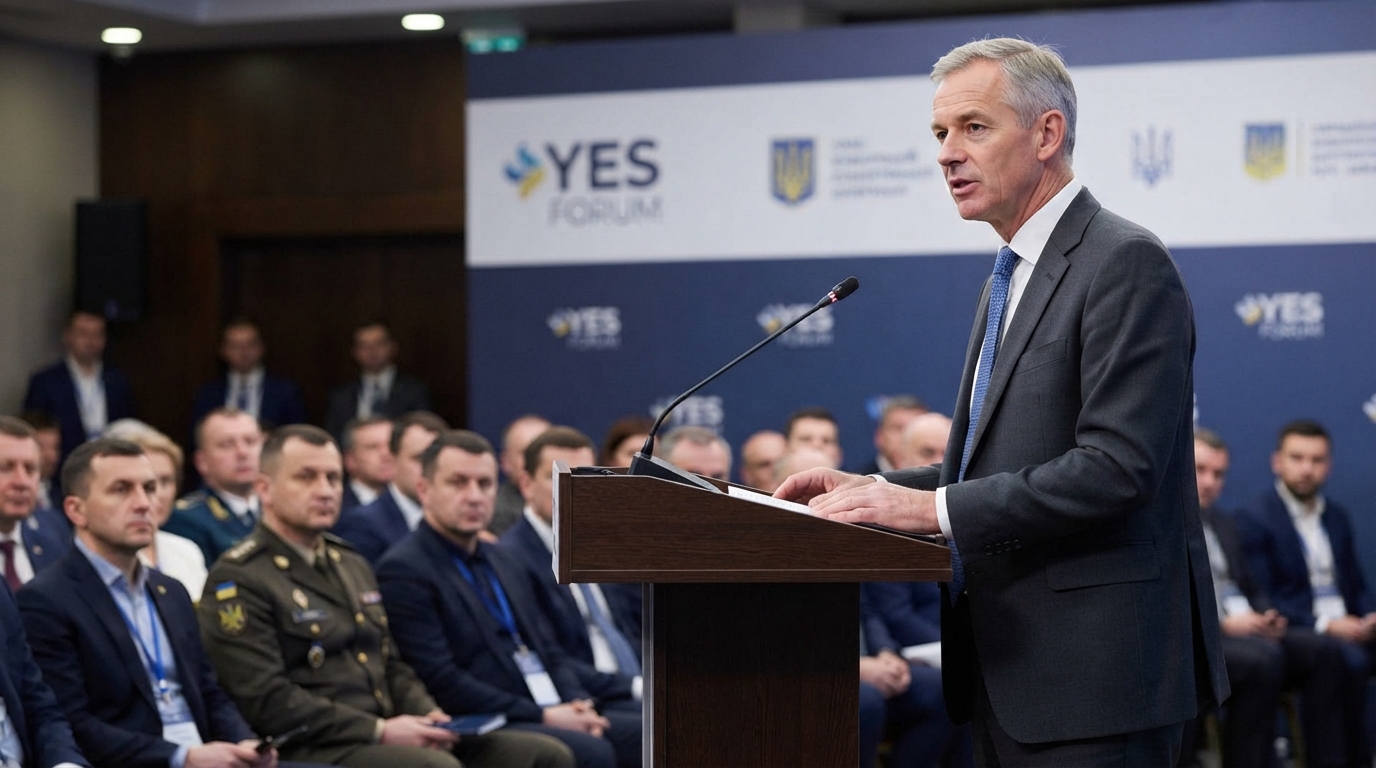
Speaking publicly only rarely, Jonathan Powell told a conference in Kyiv that Europe’s approach of backing Ukraine and sanctioning Moscow was proving effective.
Powell said warnings about Russian escalation were "not a problem" but instead "a sign of success" that pressure on President Vladimir Putin was finally having an effect - and that European countries should therefore not take their "foot off the gas".
His upbeat comments come as Russia keeps striking Ukrainian infrastructure and as Europe heads into a harsh energy crunch this winter after sharply cutting its reliance on Russian oil and gas.
Although Russia’s full-scale invasion is now in its fifth year, Powell said Ukraine had "already won" because Putin would not be able to take the entire country and "a free Ukraine in Europe" would still be able to decide its own future regardless of any territorial losses.
The prime minister’s most senior security adviser was in Ukraine’s capital just last weekend for discussions with envoys of US President Donald Trump after they met Putin in Moscow.
His comments at the Yalta European Strategy forum - before an audience of Ukraine’s top leadership and international backers - offered an unusual and detailed look at UK policy on the war, and were notably more positive than those of others.
Around-the-clock Russian attacks on Ukraine are hurting the country’s economy, undermining morale and increasing fears about the winter ahead, when power shortages are expected.
Oleksandr Kravchenko, Ukraine’s minister of economy, told the conference that Russian attacks this year were expected to cause $10bn (£7.4bn) in losses from destroyed infrastructure and assets. With the blockade of Ukraine’s sea ports limiting grain exports, he said Ukraine’s GDP would shrink by 1.5%.
Europe is now getting ready for winter amid a global energy crisis and low gas reserves, making sanctioned Russian supplies of liquid natural gas potentially more appealing to some EU countries.
Sanctions have forced Europe to cut its use of Russian gas dramatically - though not completely, with some countries moving slowly.
The EU still receives 12% of its gas imports from Russia but intends to end them entirely by January. However, last week the European Court of Auditors said this plan was "faltering" because of gas shortages linked to the Iran war.
Powell said "we cannot turn that into an advantage for Putin", adding that pressure on Putin was working "and that means we have to keep the pressure up".
"It will require some real hardship and difficulties on our parts," he added. "But we will have to swallow that and we have to keep the economic, military, political and diplomatic support going for Ukraine."
While acknowledging that things in Ukraine did "feel a bit difficult at the moment", with a shortage of Patriot air defence missiles, attacks on businesses and the government’s budget deficit, Powell insisted "there are strong reasons for optimism".
He said Trump – who has blown hot and cold on Ukraine – was "in a very different place".
"He sees that Ukraine is doing better and therefore he is not leaning in the direction of Putin in the way that he was previously. I think that's a really big asset."
Powell said Russia was no longer claiming that the US had agreed Ukraine should surrender territory and abandon hopes of Nato membership at last year’s Trump-Putin summit in Alaska.
"The so-called Anchorage compromise is firmly dead," he said. "We can stop worrying about it. It's finished."
That meant "we can look for serious ways of getting to a negotiated settlement, rather than waiting for the Ukrainian people to hand over territory the Russians have not been able to conquer", Powell said.
Ukrainian commanders had successfully held the front line on the ground while Russia had suffered 1.5 million casualties, Ukraine had increasingly carried out strikes deep inside Russian territory and Europe’s resolve remained firm, he said.
"The strategy is to apply enough pressure to make [Putin] want to get into negotiation," Powell said.
"And I think that the escalation we hear talk about is not a problem - it's a sign of success, because what's happening is the pressure that we are putting on Putin is finally paying off."
Putin himself has shown little sign of feeling under pressure, telling journalists earlier this month: "I have no doubt that the enemy will crumble."
Meanwhile, Ukrainian authorities have started evacuating some residents in Slovyansk and Kramatorsk, the largest cities still fully under Ukrainian control in the eastern Donbas region. Russia claims sovereignty over the Donbas and fully capturing it is a key goal for Moscow.
Powell said the war was "not about territory" but about "the right of Ukraine to be independent", adding that "to the extent that [Putin] gains another 10km of land or loses another 40km of land, this war is already won".
"That's the threat to him at home. There is a free, independent and European Ukraine, and people in Russia are going to notice that."
The national security adviser said it was a "mug's game" to predict when the war might end, but said Europe had to be ready to negotiate a settlement.
"Where we least expect it, Putin will be ready to negotiate... It's all about getting him to be serious in that negotiation. And I think that strategy is beginning to work."
Powell, who helped negotiate the Good Friday Agreement in Northern Ireland, said the US and Europe should keep talking to Putin - despite calling the Russian leader a "terrorist".
"What we don't want is miscalculation - that they don't understand where our red lines are. That's why I think it's important the CIA went to Moscow as well."