

Election in Israel: Will Arabs decide the fate of the government?
After counting 95 percent of the votes in Israel's parliamentary election, the situation is as follows: Netanyahu's bloc – 54 seats, the opposition coalition – 48 seats, and Arab parties – 18 seats. No one managed to secure the 61 seats required to form a government. The opposition could theoretically oust Netanyahu by reaching an agreement with the Arabs, but the likelihood of this is quite low.
Election in Israel: Will Arabs Decide the Fate of the Government?
The Middle East is the historical center of global geopolitics, energy security, major world religions, and civilizations. Therefore, monitoring and analyzing the Middle East, where Israel is located, is extremely important. Moreover, Israel is a unique state. While the US is the largest economy and military power, Israel and its lobby are considered the nation capable of exerting the greatest influence on US domestic and foreign policy.
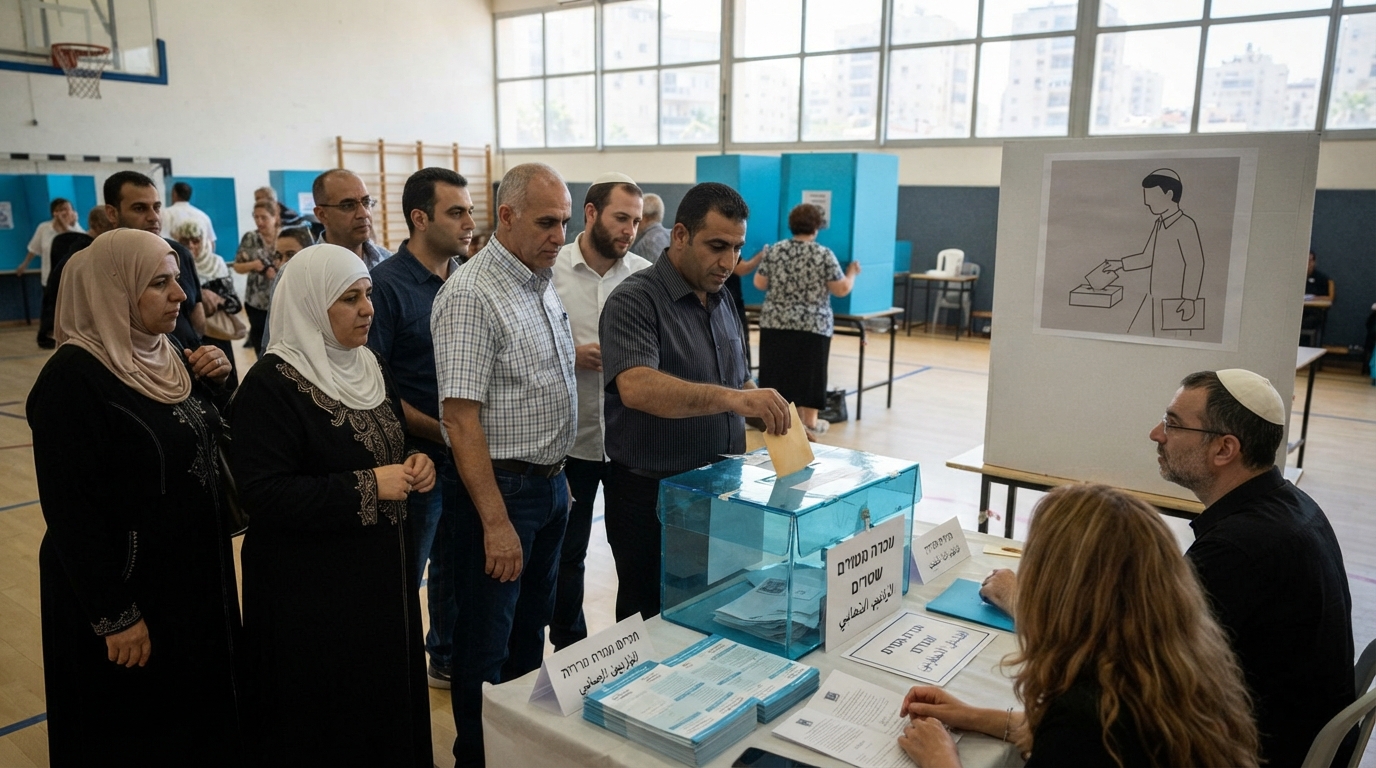
This election in Israel has brought about several sensations. Firstly, neither of the two political blocs competing for power managed to secure the required majority, namely more than 60 parliamentary seats. The second important news is that for the first time in Israel's history, the country's Arab population was exceptionally active, and it became clear that Arab parties could win between 17 and 19 seats in the Knesset.
Thus, while Israel's population is around 11 million, 21 percent of its population, or approximately 2.1 million, are ethnic Arabs. These Arabs hold Israeli citizenship, which means they have the right to vote, elect, and be elected. However, the attitude toward the Arab population in Israel is not simple. The country's authorities view their Arab population as "second-class" people, do not conscript them into military service, keep them away from governance, and attempt to limit their electoral activity from turning into political influence.
Now, two political blocs and alliances are fighting to form a government in Israel. One is Prime Minister Netanyahu's coalition. The other is the bloc of former commander-in-chief, chief of the general military staff, General Eisenkot. Netanyahu's bloc won a total of 54 parliamentary mandates. However, Netanyahu is short of 7 deputies to form a government. Meanwhile, the Eisenkot coalition won a total of 48 seats. They lack at least 13 parliamentary votes to form a government and distribute cabinet portfolios.
At the center of these elections stands the persona of Netanyahu. In this election, the population of Israel divided based on a single principle — pro-Netanyahu or anti-Netanyahu. Other issues are not as important and fundamental as the persona of Netanyahu. It should be noted that Netanyahu is the politician who has served as prime minister for the longest time and the most terms in Israel's history. He is a politician who has held the prime minister's chair several times since 1996. For this reason, Netanyahu is the most disliked figure among the Israeli elite, yet his supporters in Israeli society are still numerous. If we compare it with the previous parliamentary elections in 2022, Netanyahu's bloc lost a significant number of seats: in 2022, they won 64 seats and comfortably formed a government. This time they received 11 fewer seats (the final results are not yet known).
However, the Eisenkot bloc, which is in opposition to him, also failed to get enough votes. So, will the Arab parties, which won 19 parliamentary seats, now decide the fate of the Israeli government? The likelihood of this is not very high. The main reason is the rules of the political game and political ideology in Israel.