

DM Paper capacities to be tripled: Construction of a second plant for the production of gypsum board liner paper begins in Angren
Having been shaping the industry's quality standards for four years, the enterprise has started the construction of a new production facility with a capacity of 250 tons per day. By 2027, DM Paper's total capacity will increase by 3.5 times.
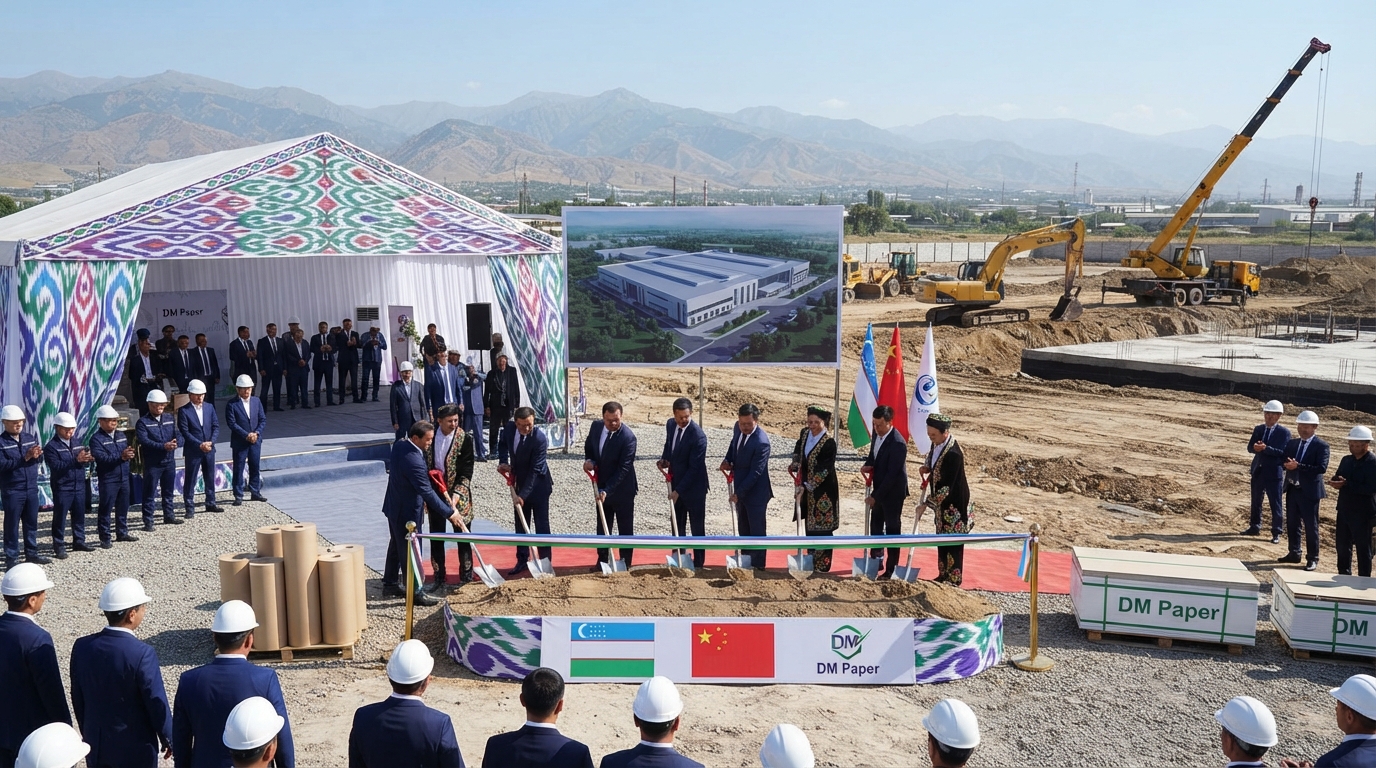
DM Paper capacity to be tripled: Construction of the second plant for the production of gypsum board linerboard has started in Angren
DM Paper, the largest domestic enterprise producing gypsum board linerboard in Uzbekistan, has started the construction of its second plant in the city of Angren, Tashkent region. The launch ceremony of the project was attended by the khokim of the city of Angren, representatives of investors, international technological partners, and the Chinese design team.
The new plant is designed to produce 250 tons of linerboard per day, which is 2.5 times higher than the capacity of the existing plant in Samarkand. Once the new production is launched in 2027, DM Paper will supply 350 tons of paper per day, which represents a volume equal to the annual consumption of the entire Central Asian gypsum board paper market.
The DM Paper plant was launched in Samarkand in 2022, and since then it has become the technological benchmark of the industry in Central Asia.
▪ produces up to 100 tons of gypsum board linerboard daily;
▪ employs 150 staff members;
▪ has its own quality control laboratory;
▪ operates under the leadership of an international technological team;
▪ certified according to three international standards: ISO 9001 (quality management), ISO 14001 (environmental management), and ISO 45001 (occupational health and safety).
During four years of continuous operation, DM Paper has taken a leading position in the industry. Previously, due to the absence of a local manufacturer of gypsum board linerboard, the product was imported to Uzbekistan, but now the enterprise's products are supplied to the largest gypsum board manufacturers in the country. In addition, it is exported to Kazakhstan, Tajikistan, Turkmenistan, Georgia, Azerbaijan, and other destinations. This has reduced the outflow of foreign currency and, on the contrary, increased the inflow of foreign currency into the economy of Uzbekistan.