

Denmark nurdles may be from Tyne spill, agency says
The Danish Environment Protection Agency says nurdles it has tested are similar to the Tyne pellets.
Denmark nurdles may be from Tyne spill, agency says
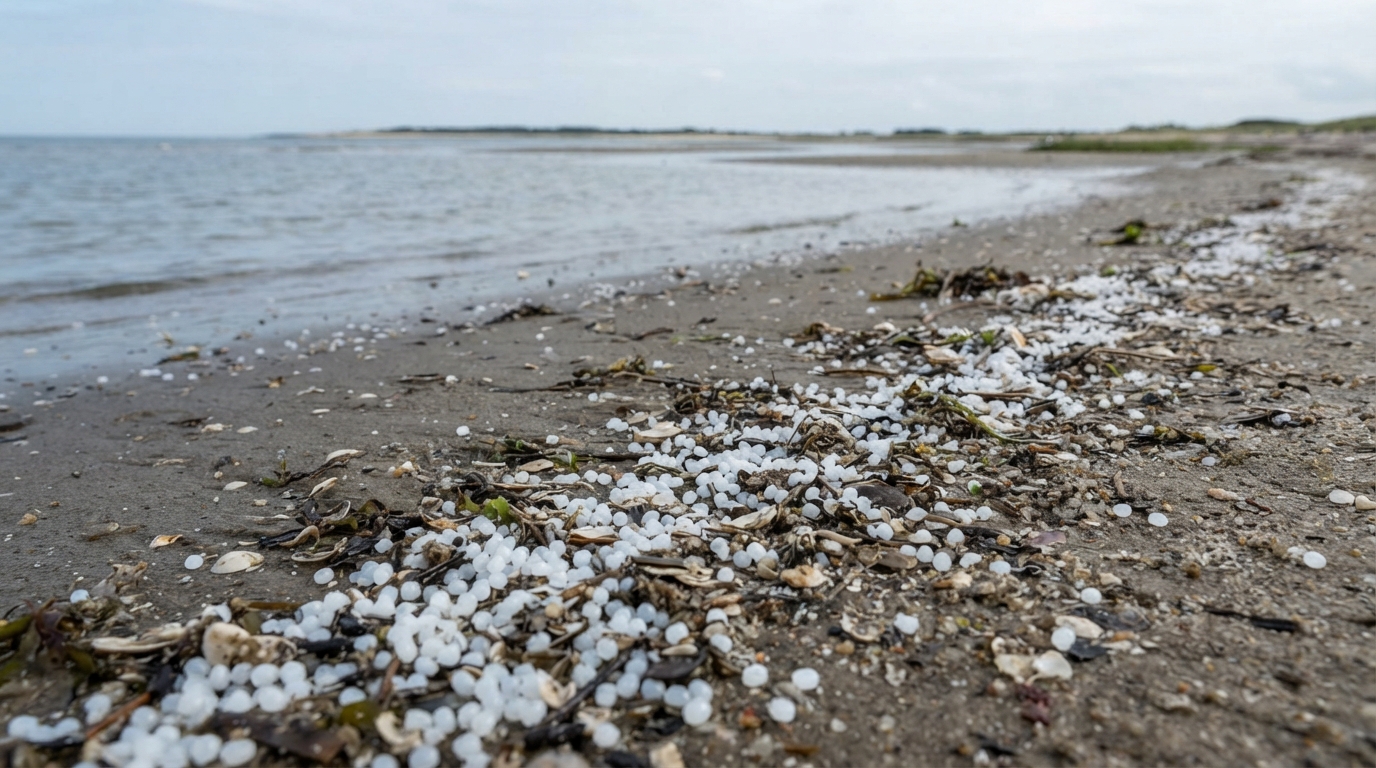
The Danish Environment Protection Agency said the pellets along the Wadden Sea coast looked similar to those from the Tyne spill
Nurdles found along the Danish coast are likely to have come from the spill in north-east England, according to the country’s environment agency.
Large amounts of plastic pellets were discovered along Denmark’s western coast in September.
The Danish Environment Protection Agency has now said tests on the microplastics indicate they came from the River Tyne spill in August.
It said the nurdles had the same characteristics as the one billion that were spilled in north-east England, and that their appearance in Denmark in late September and early October matched “current patterns and circulation in the North Sea”.
Signe Simonsen, head of the startup Race for Oceans Technology, first noticed the nurdles on the Danish island of Mandø on 26 September.
“There were just so many milk white plastic pellets,” she said. “So many that I’ve never seen before in this area.”
Simonsen said finding the nurdles had left her “really sad” given the “pristine” condition of the Wadden Sea.
She then said she drove along the coast of several nearby islands that are roughly on the same latitude as Newcastle.
She said there were nurdles “all over” the places where the tide had washed up.
Simonsen said she collected nurdles from 10 different locations along the Danish coast and on Sylt in Germany.
Simonsen, whose company aims to detect microplastic pollution from drone images, then gave some of her samples to the Danish Environment Protection Agency.
The agency, which tested the pellets together with Aarhus University, said another reason suggesting the Danish nurdles were the same as those spilled in the River Tyne was that there were no other recorded spills in the area that could account for their presence.
Nurdles from the spill have also washed up along the coast of north-east England, including Teesside and Durham.
As of September, about 28% of the nurdles are thought to have been recovered.