

Nord Stream trial: How German police followed the evidence - to Ukraine
After four years, a Ukrainian man is set to stand trial in Hamburg accused of sabotaging the Nord Stream pipelines.
**Nord Stream trial: How German police followed the evidence - to Ukraine**
Three of the four Nord Stream pipelines were ruptured by explosions in September 2022
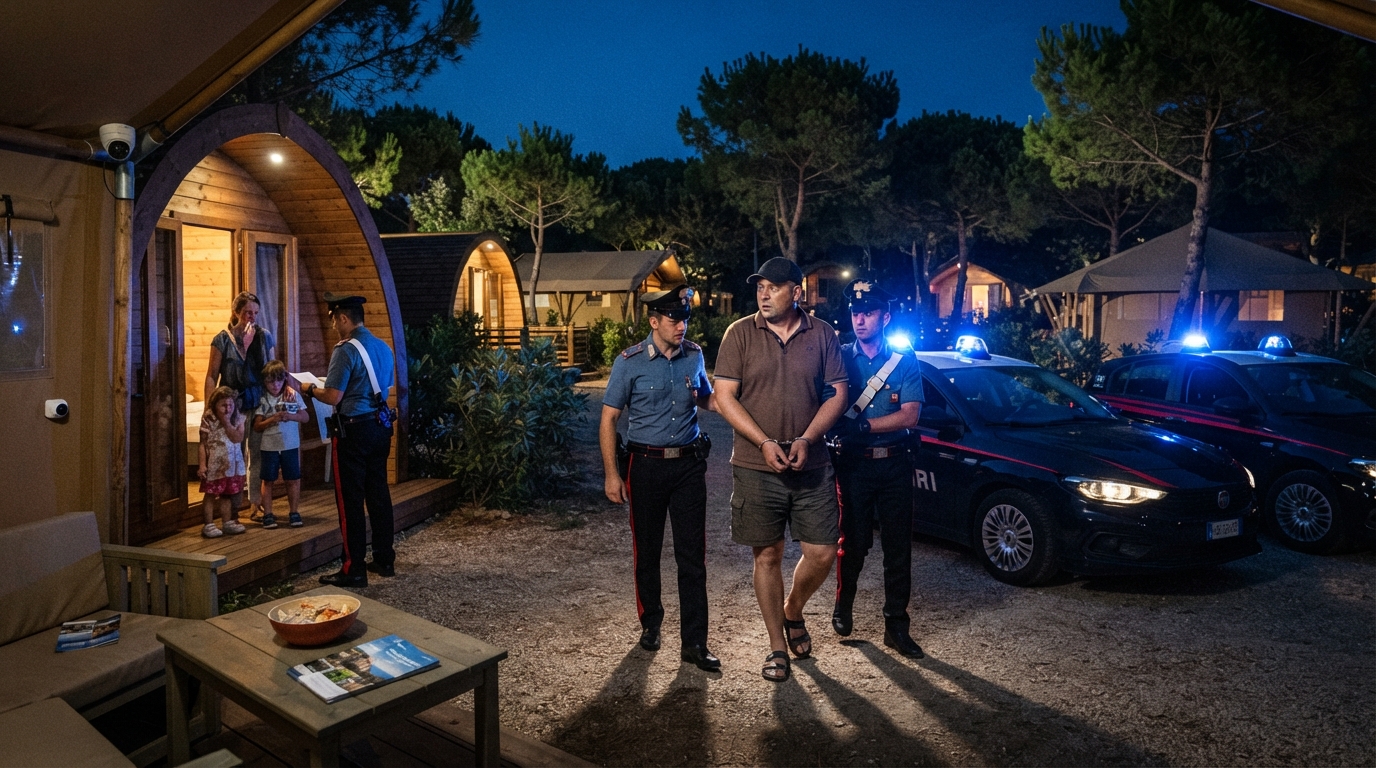
Serhii K appeared at ease as he arrived at a glamping resort near Italy’s Adriatic coast with his wife and young children.
Wearing shorts, sandals and a dark baseball cap, the former Ukrainian Special Forces soldier wandered around, talking to the receptionist and repeatedly helping himself to a bowl of free snacks.
But German police were already closing in on him.
After a meticulous investigation, they concluded that Serhii K had led Europe’s biggest act of sabotage in decades: a chain of explosions in September 2022 deep under the Baltic Sea that tore through the huge Nord Stream pipelines and cut off Russian gas supplies to Germany.
Next week, after being extradited to Germany and spending months in isolation in a high-security prison, Serhii K is due to stand trial in Hamburg. He faces charges of causing an explosion and committing a war crime – attacking civilian infrastructure – allegedly on behalf of "state agencies of Ukraine".
He and his country both deny any involvement.
Under Germany’s privacy laws, he will be referred to in court only as Serhii K, though during extradition proceedings he was identified as Serhii Kuznetsov.
At 02:03 am on 26 September 2022, the first blast broke part of the Nord Stream pipelines, sending huge amounts of gas pouring up through the surface of the Baltic Sea.
Two more explosions followed, targeting both Nord Stream 2 – not yet operating, but already filled – and the original Nord Stream 1, which had supplied about half of Germany’s yearly natural gas demand.
Both pipelines have remained unusable ever since.
Prosecutors say "high-performance explosives" were placed about 80m (260ft) below the surface: four devices weighing as much as 27kg each, triggered by timers.
They "strongly suspect" that Serhii K led a team that included four deep-sea divers, using a rented yacht called Andromeda.
After the dangerous and complicated mission was completed, the saboteurs returned to Ukraine, apparently unaware of the DNA evidence some of them had allegedly left on the boat.
As news of the blasts spread, experts and some governments initially jumped to the same conclusion: they blamed Moscow.
Russia had, after all, a record of hybrid attacks and of using energy supplies as political leverage.
But while commentators flooded the airwaves with claims of "suspicious" Russian naval activity near the blast site, German police ignored the noise.
They kept following the forensic trail.
In the end, it led them to Ukraine.
The case investigators have since assembled alleges that Serhii K entered Germany for the Nord Stream attack using a forged passport, likely issued by Ukraine’s security services.
In the extradition documents sent to Italy, he is named as Serhii Kulinich.
That may explain why he seemed so relaxed during his holiday in Italy.
He had been travelling extensively, and without incident, for the previous year. In a copy of his real passport seen by the BBC, there are more than two dozen stamps from countries including France, Spain and Canada – all dated after the Nord Stream attacks.
But by 13 August 2025, Germany had identified its main suspect and this time, when Serhii K crossed into Poland, he was spotted.
Italian police say the actual arrest warrant was not issued until 18 August, after he had travelled south and left Poland, suggesting the Germans were unsure whether their neighbours would cooperate and detain him.
By the time his wife booked La Pescaccia, however, he was officially a "wanted" man. As soon as he presented his passport at check-in at the resort, local carabinieri received an automatic alert.
Police came to arrest him late that night, taking Serhii K away from the glamping site and his family in handcuffs.
None of the Nord Stream suspects has spoken publicly, and no one admits any role in the explosions.
But I have spoken to some of the Ukrainians caught up in the case, and to people close to them.
"Anyone who admits involvement in this mission, they're immediately a target for Russia," one source said. "Whoever did it can never confirm that."
Nord Stream was a major investment and worth a great deal to Moscow in fuel sales. But it also made Germany and others dependent, giving Russia enormous leverage over Europe.
That is why Ukraine, the US and Poland in particular all hated it.
Another source I spoke to was "eaten alive by anxiety" about the investigation and bewildered that Germany, a close ally of Ukraine, was even pursuing prosecution.
"Many Ukrainians believe that these pipelines, they helped Russia to fight so blowing them up was a good thing for our country," they said.
Germany’s prosecutor’s office told me the justice system was separate from politics. Sabotage is an offence against Germany’s constitution.
Equally frustrating for the Ukrainians I met was the silence from their own government.
"At the very minimum, he's a military man, so if there are any questions, they should be addressed to the state, not to him," a close contact of Serhii K said.
Before his extradition to Germany, his lawyer in Italy told me his client had felt "abandoned".
Volodymyr Zhuravlyov is currently fighting extradition from Croatia
Germany has a long list of suspects, but only one other name has so far been made public.
Volodymyr Zhuravlyov is currently fighting extradition from Croatia, where he was arrested in August.
He was there as a consultant on a new thriller film about the Nord Stream blasts, although he denies any role in the real operation.
Travelling was a risky decision, given that he knew Germany was after him.
Zhuravylov has lived in Warsaw with his family since just before Russia’s full-scale invasion of Ukraine and runs his own air-conditioning business there.
He is also an enthusiastic and skilled deep-sea diver.
But he is a civilian.
Last year, he was arrested in Warsaw on a German warrant, but a Polish judge refused to extradite him.
In a striking twist, the judge instead ruled that a Ukrainian attack on Nord Stream, if that is what happened, would be a "just" act in a "bloody and genocidal war".
As one source close to the case told me: "The Poles don't like Ukrainians, historically, but they hate Russians and Germans even more."
Croatia is another matter.
The consequences of this case go far beyond the Hamburg courtroom.
After a slow beginning, Germany is now Ukraine’s biggest supplier of military aid. The far-right AfD party, currently surging in the polls, has used the Nord Stream case to strengthen its argument that support for Kyiv should end.
At the very least, it is awkward for the governments in both Berlin and Kyiv.
It also raises questions about what counts as a legitimate military target: who can strike what, and where, outside an active war zone.
When asked about the explosions, President Zelensky has previously insisted that Ukraine "definitely didn't do that".
This week, a foreign ministry spokesman went further.
"I find it very unfortunate that this entire discussion has come to focus on who blew [the pipelines] up, rather than who built them," Heorhii Tykhyi told the BBC, forcefully.
He argued that the Nord Stream pipelines had "untied Russia's hands" to go to war, because Russia no longer needed to transit Ukraine for its gas to reach Europe.
"Did we warn about this? We did," Tykhyi asked. "Did anyone listen to us? No, no-one did."
Serhii K will soon become the first suspect to face charges in this high-profile trial.
Zhuravlyov’s case could, in theory, be joined later, though that would be complicated.
Those who know Serhii K describe him as a patriot.
He enlisted to defend Ukraine when Russia invaded, even though he had several children and was exempt, and he fought until December 2023.
His military ID shows that he was still on active service when the pipelines were blown up, meaning someone in Ukraine’s military command knew exactly where he was and what he was doing.
They are not saying, however.
And in court, Serhii K himself will not speak either.
His legal team will argue that he is not permitted to disclose details of any military activities and will present sworn statements from two of his military superiors to support that claim.
I am told that one of them will be the man widely named as the mastermind of the entire Nord Stream plot.