

Ukrainian man arrested in Croatia over Nord Stream pipeline blasts
The man is alleged to have been one of the scuba divers who planted explosives on the pipelines in 2022.
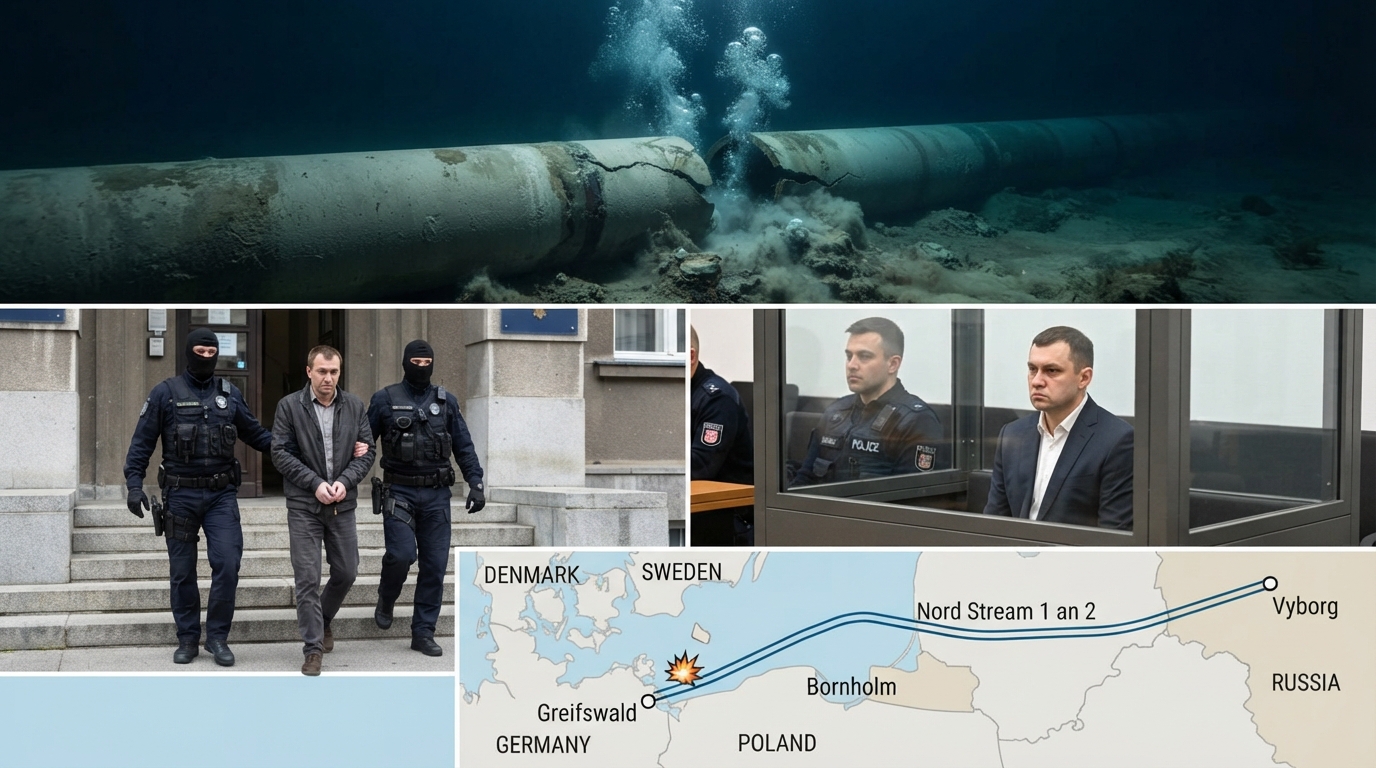
A Ukrainian national has been apprehended in Croatia in connection with the Nord Stream pipeline explosions.
In September 2022, three of the four Nord Stream pipelines were damaged by blasts.
German authorities suspect the man, a trained scuba diver identified as Vladimir Z (understood to be Volodymyr Zhuravlyov), of being one of the divers who planted explosives on the Nord Stream gas pipelines, which connect Russia and Germany. This alleged act occurred in September 2022, following Russia's full-scale invasion of Ukraine.
This marks the second arrest in relation to the plot, which has caused tension between Kyiv and Berlin, a significant European supporter of Ukraine's war efforts. German prosecutors stated that "The suspect participated in the necessary dives" for the sabotage and are seeking his extradition from Croatia.
Zhuravlyov was previously arrested in Poland in 2025 concerning the undersea plot. However, a Polish judge denied Germany's extradition request at that time, asserting that if Ukraine was responsible, the act was "just." Zhuravlyov was subsequently released, a decision that surprised those in court and elicited a smile from him.
The other individual implicated in the case is Serhiy Kuznetsov, a former Ukrainian military officer. Kuznetsov was arrested in Italy in August 2025 and later extradited to Germany, where he is awaiting trial. He has denied involvement in the explosions and appeared in a Hamburg court in June.
Prosecutors allege that Kuznetsov led a team that utilized a yacht rented in Rostock, Germany, to place explosives on the pipelines near the Danish Baltic Sea island of Bornholm. At the time of the incident, Nord Stream 1 was operational, while Nord Stream 2 had not yet commenced service.
Following his anticipated extradition from Croatia, the suspect will be presented before an investigating judge to face charges of causing explosions and sabotage.
Initial blame for the blasts, which severely damaged a long-debated energy supply route from Russia to Germany, was directed at Moscow. However, evidence suggesting Ukrainian involvement subsequently emerged. Kyiv officials have consistently denied any role in the incident.
Poland has consistently voiced criticism of the pipeline project with Russia, arguing it made Berlin overly reliant on Moscow and deprived Poland of gas transit fees. Ukraine and the US were also long-standing opponents of the pipelines.