

A mysterious town that sank 700 years ago has been found in Britain
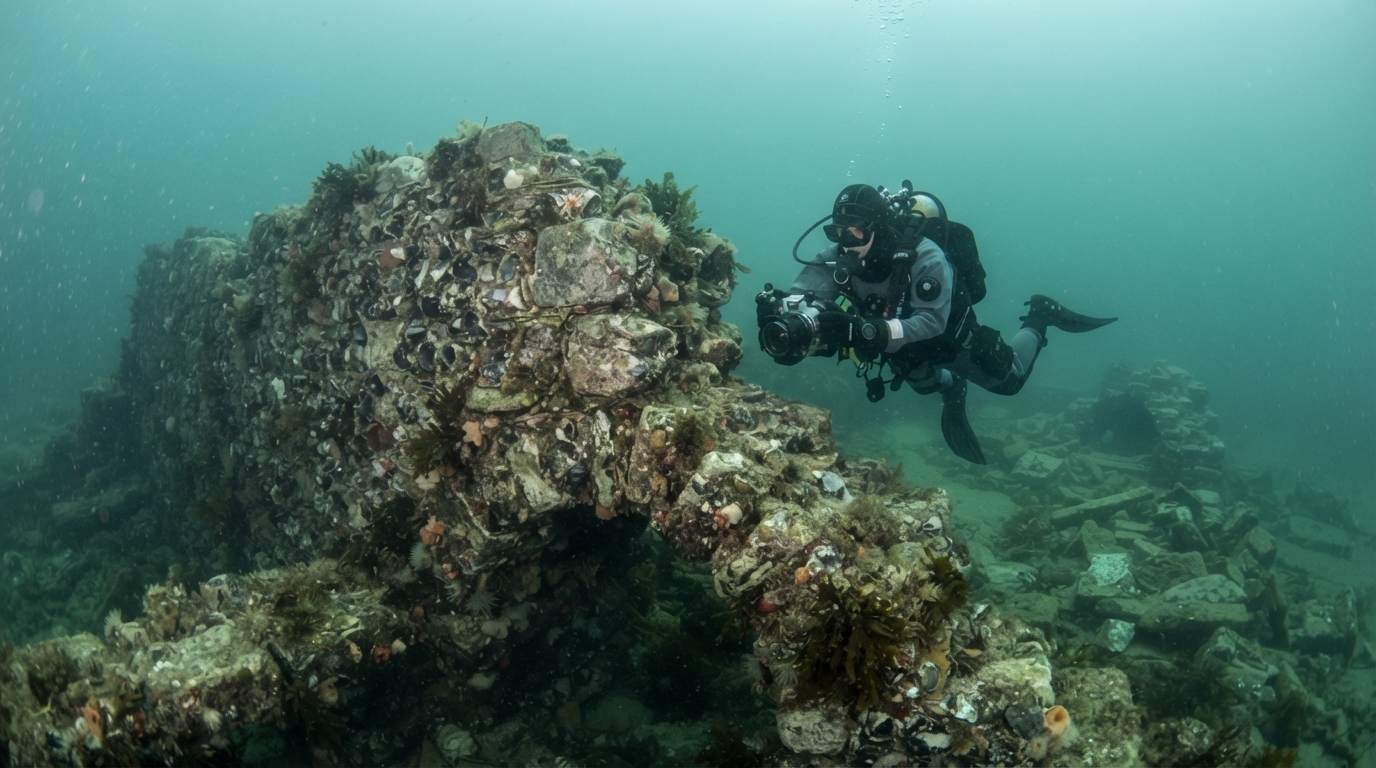
Mysterious town submerged 700 years ago discovered in Britain
In Great Britain, divers have discovered and photographed 25 mysterious man-made objects in the area of the medieval town of Shipden, which sank approximately 700 years ago.
According to the publication, the structures built of flint were discovered a few hundred meters off the coast of Cromer in the county of Norfolk. The settlement of Shipden gradually sank to the bottom of the North Sea during the 14th century. A terrible storm in 1362 completely destroyed its coastline.
British divers have filmed the ruins of the sunken town for the first time and converted them into digital 3D form. On the seabed, they identified stone buildings and underwater structures that could be part of 14th-century dams or an ancient jetty.
The find also debunked the legend of Church Rock. Previously, it was assumed that the Church of St. Peter was hidden underwater. However, the discovered object turned out to be part of a medieval coastal fortification.
"All of us who grew up in Cromer have always grown up with stories about Church Rock. Therefore, realizing that this legend might be wrong is a big step. We are actively studying medieval documents and comparing them with the finds. For now, we are putting forward hypotheses rather than definitive conclusions," said Peter Stibbons, chairman of the Friends of Cromer Museum society and project director.
In 1888, the pleasure steamer "Victoria" struck an underwater rock and sank here. Later, the remains of the ship were blown up along with part of the rock. This was intended to prevent it from interfering with shipping. Valuable archaeological objects may have been damaged during this process.
"Our initial interest was the possibility of finding the remains of the ship 'Victoria'. However, helping the Cromer community understand the history of Shipden was a great achievement for us. It seems that Church Rock was actually a coastal fortification. Therefore, the search for the church itself will continue," said senior diver Nick Schiller.
The research is being carried out within the framework of the Alfred Savin project with the support of the National Lottery Heritage Fund. The diving season has now ended, but scientists plan to resume work in 2027. The found materials and 3D models are being prepared for publication in the Cromer Museum and online.
The ship belonging to King Charles I of England and Scotland sank in 1633. Along with the royal items and works of art on board, the total value of the find could exceed $1 billion.