

Demolition was not completed in time
From a 1912 power plant into a new cultural center: a historic building has been brought back to life in Uzbekistan
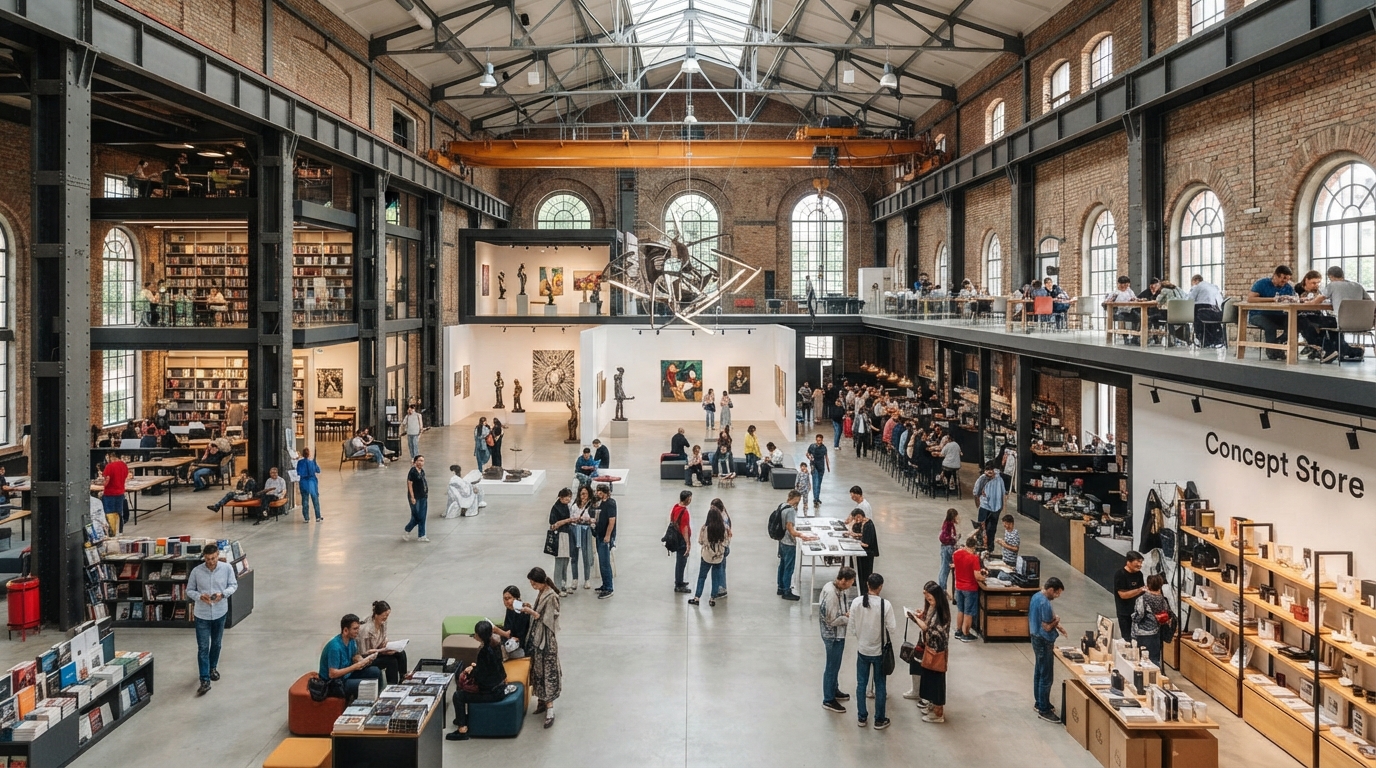
Demolition avoided in time
A new creative space has opened in Uzbekistan, notable not only for its modern content but also for the unusual fate of the building itself. The cultural center is housed in a structure built back in 1912 according to the design of the Russian architect Wilhelm Heinzelmann. More than a century ago, a diesel power station operated here — one of the city's infrastructure facilities of the early 20th century. Later, the industrial building changed its purpose and was used as a tram depot. Now, the third stage of its history begins: the former technical site has become a space for contemporary culture.
During the reconstruction, it was decided to focus not on a conventional exhibition hall, but on combining several functions at once. The historic building now features exhibition spaces, a library, educational platforms, a concept store, and a restaurant. A separate part of the complex is dedicated to meetings, discussions, research, and collaborative work. Thus, a visitor comes here not only for a specific exhibition: the space is designed for continuous life, communication, and the emergence of new cultural projects.
The project was implemented by the Art and Culture Development Foundation of Uzbekistan. Its significance is not limited to the restoration of a single historic structure. Uzbekistan is effectively applying a model common in major cultural capitals, where former industrial facilities receive a new public function. Thanks to this, power stations, factories, warehouses, and depots are preserved as part of urban history, while simultaneously becoming points of attraction for a modern audience.
It is particularly important that the new space is positioned not only as an Uzbek cultural venue. It is intended to become one of the centers for the development and presentation of contemporary culture for the entirety of Central Asia. Here, artists, researchers, designers, architects, students, and representatives of creative industries from different countries of the region can cross paths.
As a result, the 1912 building did not become a frozen monument of the past. The power station, which once supplied the city with energy, has received a symbolically similar role more than a century later — only now it is about cultural energy. The old industrial structure is turning into a place where historic architecture merges with contemporary art, education, and new urban life.