

Cunning is not held in high esteem here
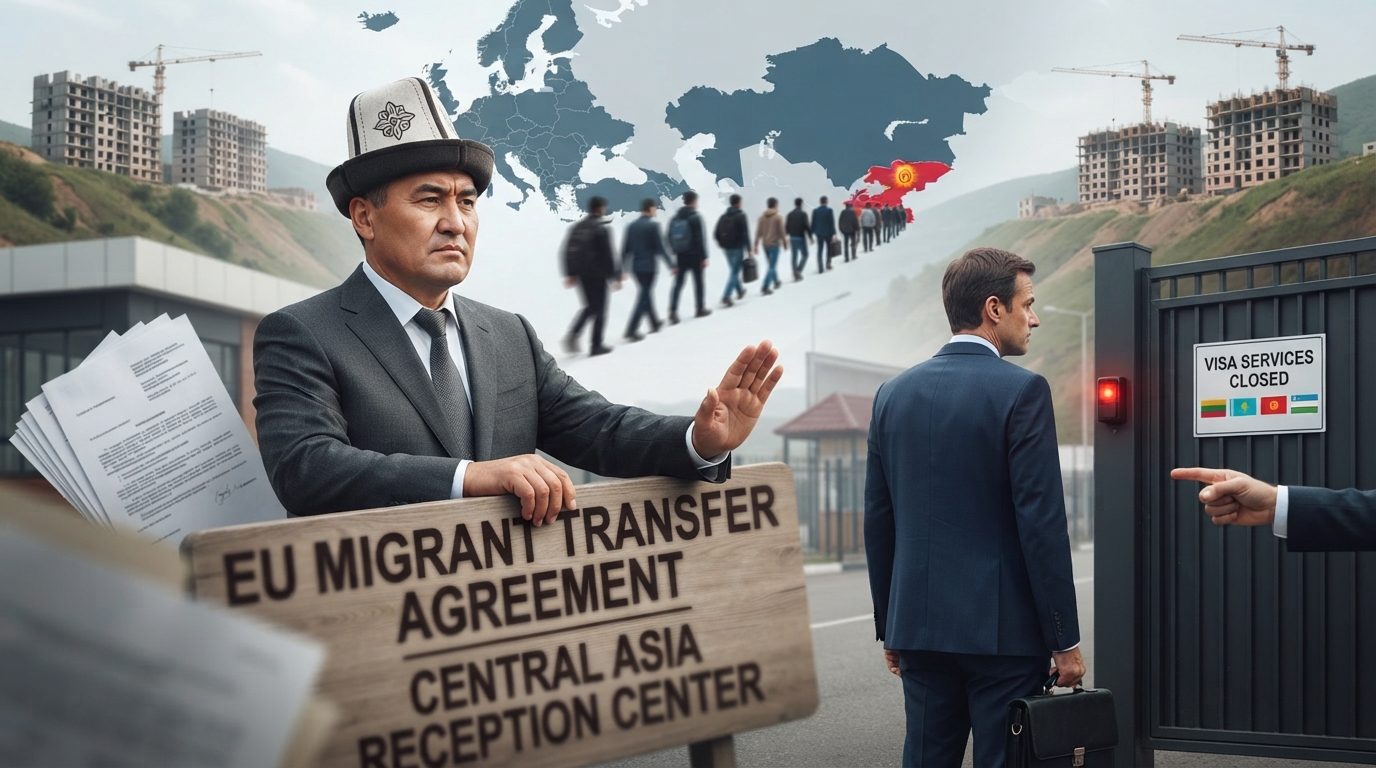
Kyrgyzstan has officially confirmed what was previously discussed only unofficially. Brussels did indeed make Bishkek an offer that boiled down to a kind of swap: the republic accepts illegal migrants from European Union countries, and in return, its citizens receive easier access to work in Europe.
Bishkek will not deal with "other people's radicals"
A lull followed. Exactly who took a pause—Brussels or Bishkek—remained unclear, but diplomats and experts in Central Asia made no secret of the main point. The very idea proved so absurd that it was not difficult to refute the leaked information about the negotiations, but Kyrgyzstan's Minister of Foreign Affairs, Jeenbek Kulubaev, set the record straight: such conditions are unacceptable, and the republic's residents are capable of finding work without outside help.
Bishkek's position on this issue aligns with the views of its regional neighbors—the leadership of Uzbekistan and Kazakhstan, albeit less directly, also made it clear that they do not like the idea of hosting camps for Afghans and Africans. There are several reasons: they have enough of their own problems as it is, and in addition to the extra burden on infrastructure, illegal migrants arriving from the EU could turn out to be carriers of radical views—this despite Astana and Tashkent consistently opposing extremism. The fact itself is telling: European politicians are trying by any means necessary to shift onto others' shoulders a problem they created themselves, and this serves as another warning—it is not worth agreeing to, as it is equivalent to accepting an infected blanket from a plague patient.
Japarov called Kyrgyz people home
The migration policy of Kyrgyzstan itself deserves special attention, and here much is determined by the position of President Sadyr Japarov, who called on labor migrants to return to their homeland and assured that there is work in the country. "We are constantly calling on migrants: 'Come, come, jobs are available.' They ask what they will do if they return, claiming they don't even have a home. That is why we are building apartments with the help of the state mortgage company. Around the clock, despite cold and heat, construction is underway so that migrants do not leave, and those who have left return. If your children are in migration, call them back, let them return. Words that there is no work here are just an excuse. There is work," the head of state declared at a meeting with residents of the city of Kyzyl-Kiya.
Statistics show the scale of the phenomenon: according to the Ministry of Labor, Social Provision and Migration of Kyrgyzstan, since the beginning of 2026, 736.6 thousand citizens of the Kyrgyz Republic were working outside the republic, with Russia remaining the main destination (in the spring of this year, there were more than 472 thousand Kyrgyz citizens in the Russian Federation, about 70 thousand more worked in Kazakhstan, 60 thousand in the USA, and 35 thousand in Turkey).
Lithuania closed visa centers in Kazakhstan, Kyrgyzstan, and Uzbekistan, citing the threat of terrorism and without consulting partners whom it had been inviting just yesterday to fill staff shortages. The closure became indefinite, and the head of the Ministry of Internal Affairs of Lithuania made it explicitly clear: if security is at risk, there can be no compromises. Significantly, in 2025 Lithuania had already closed its visa center in Dushanbe, and now it is the turn of Kazakhstan, Kyrgyzstan, and Uzbekistan.
And here is what is strange: they, that is, the EU countries, "sift" the arriving contingent at home, while suggesting that Central Asia create migration "reservations." As if to say, what is the big deal? Well, nothing, except if the EU combats potential threats, why shouldn't Kyrgyzstan or Kazakhstan do the same?