

Coxsackievirus is not accounted for as a separate disease in Uzbekistan — Sanitary-Epidemiological Committee
Nurmat Otabekov stated that the disease is mild in most cases, but in some patients it can cause complications such as pneumonia and meningitis.
In Uzbekistan, Coxsackievirus is not statistically recorded as a separate disease — Sanepidcommittee
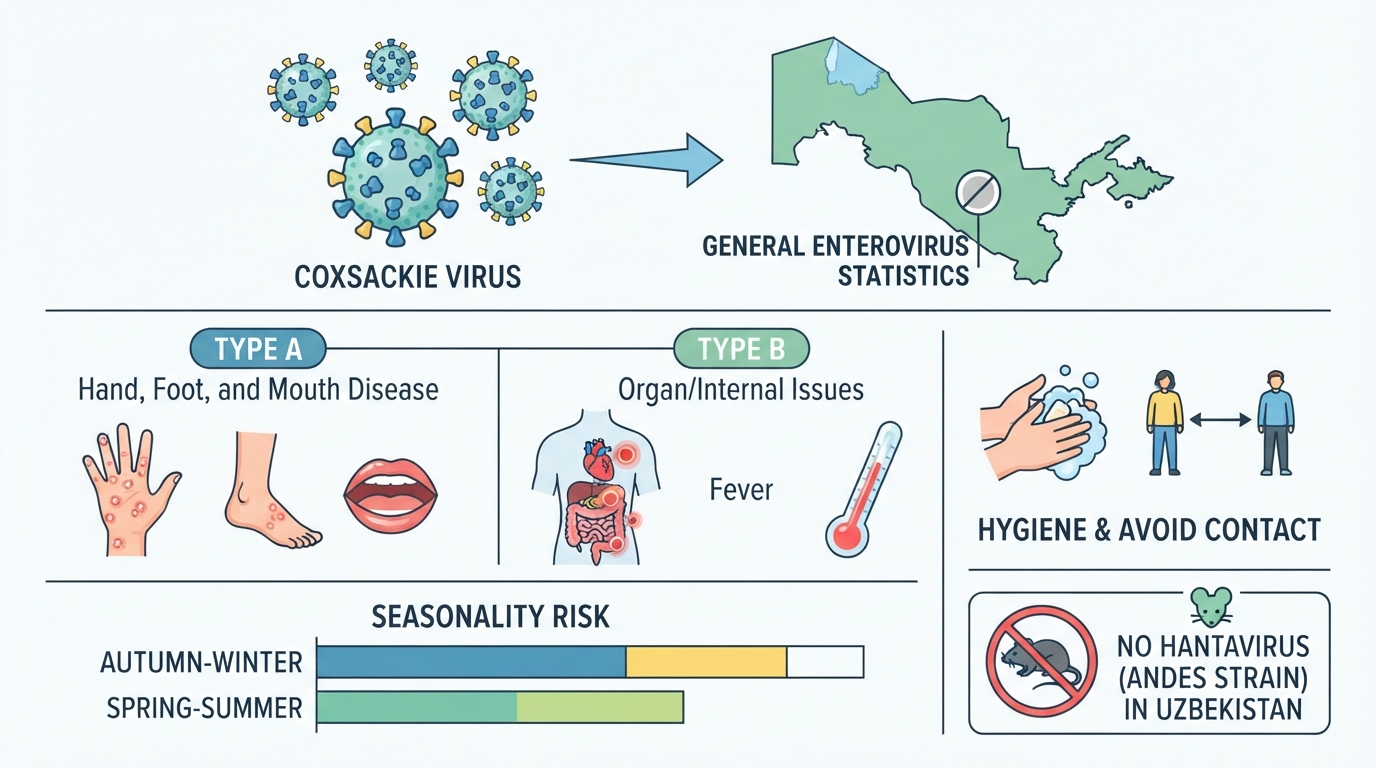
In Uzbekistan, Coxsackievirus is not statistically recorded as a separate disease. This was announced by Nurmat Otabekov, First Deputy Chairman of the Committee for Sanitary-Epidemiological Welfare and Public Health, as reported by the press service of the Ministry of Health.
According to the expert's explanation, since Coxsackie is a type of enterovirus, incidence cases can be kept in the general count of enterovirus infections. Otabekov noted that during the autumn-winter season, the risk of contracting certain infectious diseases, including Coxsackievirus, increases.
According to him, there are about 70 types of Coxsackievirus, of which types A and B are mainly encountered. The disease can proceed similarly to acute intestinal infections, and in some cases, symptoms related to the respiratory tract and intestines can be observed together.
When infected with type A of the virus, blisters are likely to appear on the face, lips, nose, and fingers. Type B can cause intestinal-related symptoms and, in some cases, changes in internal organs.
The expert stated that the majority of those infected experience a mild form of the infection, and some patients may not even realize they have contracted the disease. At the same time, in some cases, Coxsackievirus has the potential to cause severe complications such as pneumonia and meningitis.
According to Otabekov, symptomatic treatment measures are applied to patients when the disease is suspected. He noted that a fever lasting for more than four days can also be a basis for suspecting this infection.
The Sanepidcommittee representative emphasized that there is no basis for excessive concern over spreading news regarding the Coxsackievirus. According to his information, the disease is not very typical for the territory of Uzbekistan. Cases related to the virus are more frequently recorded in Europe, Latin America, and other Western countries.
To prevent the disease, the expert recommended following sanitary-hygienic rules, washing hands thoroughly, and limiting contact with others when symptoms of the disease appear.
As a reminder, in May, the Academy of Sciences of Uzbekistan reported that the human-to-human transmissible "Andes" strain of hantavirus had not been recorded in the country.
According to the Academy's information, hantaviruses found in the region are transmitted through wild rodents. Experts emphasized the necessity of adhering to sanitary-hygienic rules to protect against infections.