

Copper back at its peak, gold in conflict with oil: what is happening on the metals market this week
Over the past week, the metals market has once again split into two different stories. Precious metals are moving nervously: on the one hand, geopolitics and rising oil prices should support demand for safe-haven assets; on the other hand, it is expensive oil that expands inflationary risks and increases the likelihood of tighter actions by the Fed.
Copper at its peak again, gold in conflict with oil: what is happening on the metals market this week
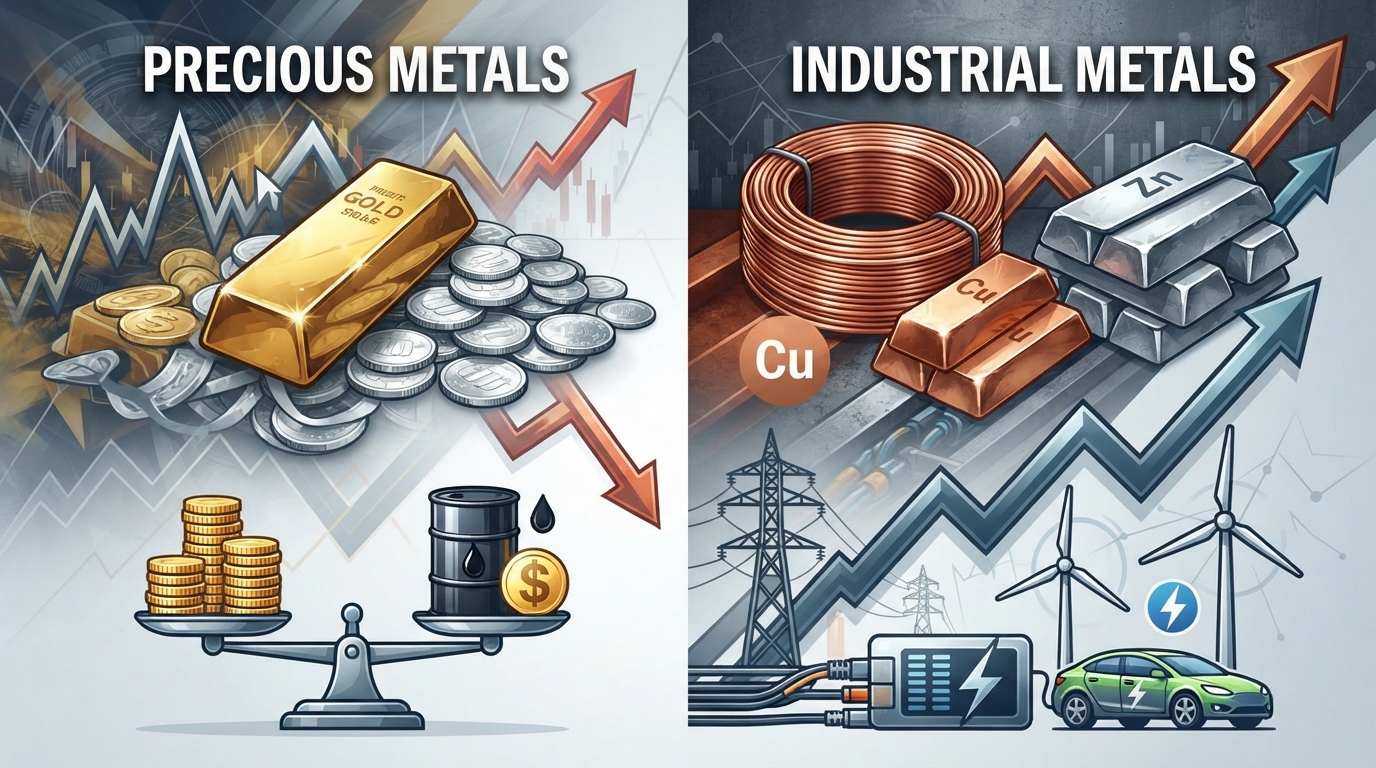
Over the past week, the metals market has once again split into two different stories. Precious metals are behaving nervously: on the one hand, geopolitics and rising oil prices should support demand for safe-haven assets; on the other hand, it is expensive oil that increases inflationary risks and raises the likelihood of tighter steps by the Fed. Industrial metals look more confident: here, the key factors remain low inventories, supply disruptions, and steady demand from energy, infrastructure, and artificial intelligence.
Gold is trading at around $4,390 per ounce, while silver is holding near $66 per ounce. Both metals remain under the influence of a contradictory background. At the beginning of the week, support was provided by expectations of a softer Fed policy, but then strong US labor market data and rising oil prices brought back talk of a September rate hike. For gold and silver, this is an unfavorable combination: safe-haven demand persists, but high yields and a strong dollar are holding back growth.
Now, the main event for precious metals is the US inflation data. Investors are waiting for statistics on producer and consumer prices to understand how decisively the Fed is ready to tighten policy at the upcoming meeting. If inflation proves resilient, gold and silver could face sell-offs again. If the data comes in softer than expected, the market will have a reason to return some buying to safe-haven assets.
Platinum and palladium also remain in a zone of high volatility. Platinum is trading around $1,830 per ounce, and palladium is in the region of $1,350 per ounce. Platinum looks more resilient due to expectations of a supply deficit and demand from hybrid vehicles, where platinum group metals are still necessary for catalytic systems. Palladium looks weaker: in the long term, it continues to be pressured by the growing share of electric vehicles and the gradual substitution of palladium with platinum in autocatalysts.
The main story of the industrial segment was once again copper. Quotes rose above $6.7 per pound and virtually returned to record levels. The market is supported by several factors at once: expectations of potential US import tariffs, the flow of metal into US inventories, and a reduction in available supply in other regions. Additionally, long-term demand from data centers, power grids, artificial intelligence, and the energy transition is at work. Therefore, even after periodic pullbacks, copper remains one of the strongest metals of the year.
Zinc was also among the leaders of the week. The price rose to almost $4,000 per ton — a maximum in more than four years. Here, the market is reacting not to beautiful long-term ideas, but to a real shortage of available metal. LME inventories are declining, the share of canceled warrants remains high, and disruptions at mines and producers reinforce the feeling of a tight market. In such a situation, buyers are trying to cover their needs in advance, which additionally supports prices.