

The dollar is putting pressure on precious metals again, copper is holding at high levels: what's happening in the metals market
By early September, the metals market was again under macroeconomic pressure. A new round of tensions between the US and Iran supported oil prices, increased inflation risks, and triggered a rally in bond yields.
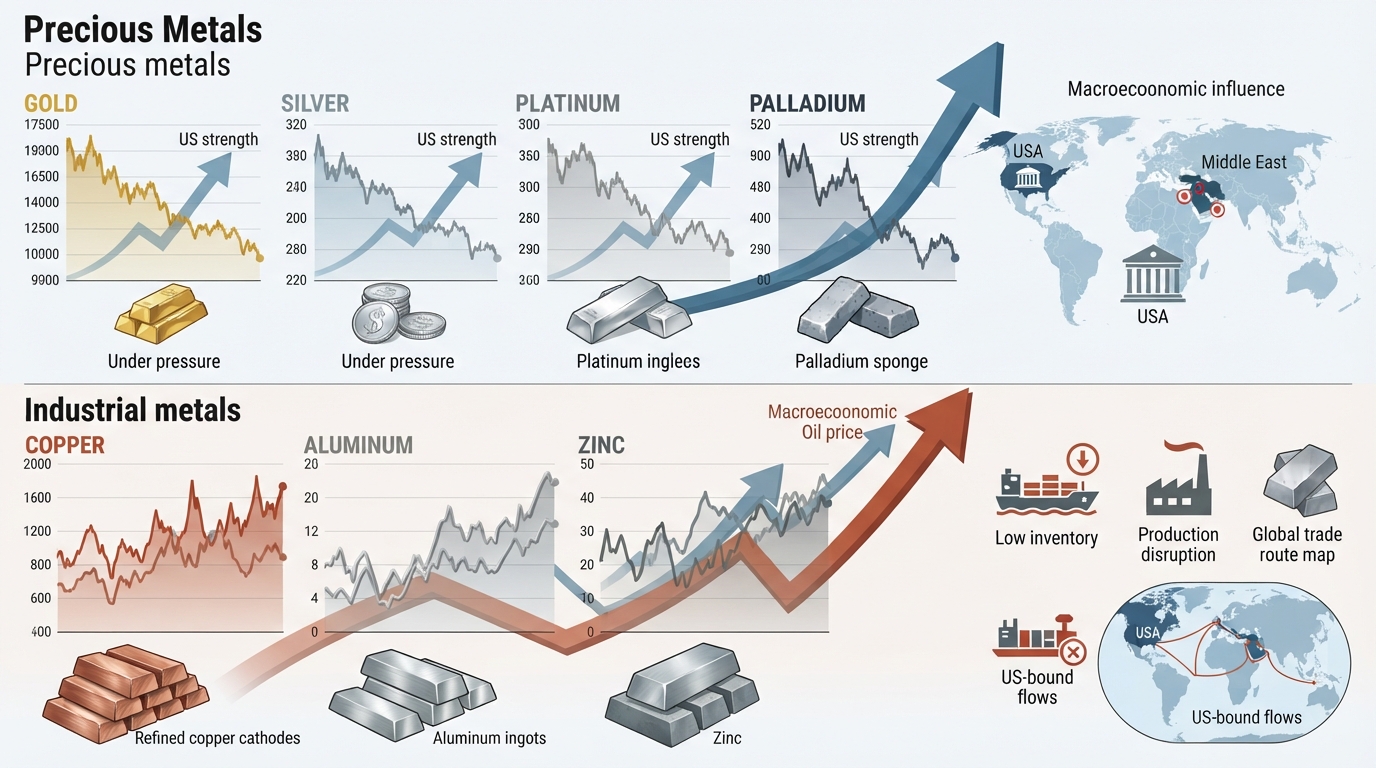
By early September, the metals market was once again under the influence of macroeconomic factors. Escalating tensions between the US and Iran led to higher oil prices, increased inflation risks, and triggered a rise in yields in the debt market. For investors, this means that the Federal Reserve (Fed) may maintain tight monetary policy for longer and resume rate hikes as early as September. Under these conditions, precious metals are correcting, while industrial metals are exhibiting more selective dynamics, dependent not only on rates but also on the actual availability of raw materials.
Gold fell to $4,300 per ounce, reaching a low in more than three weeks. Silver is trading around $63.50 per ounce and is also under pressure. While geopolitical instability typically supports safe-haven assets, the current situation is perceived differently by the market. If the conflict over Iran again boosts oil prices, this will inevitably increase inflation and increase the likelihood of more decisive action by the Fed. In this logic, gold and silver suffer not from a lack of demand for protection, but from a stronger dollar and high yields, which reduce the appeal of non-yielding assets.
Additional nervousness is being generated by the anticipation of new US labor market data. Following the Fed's speeches, the likelihood of a September rate hike has sharply increased. Therefore, for gold and silver, the coming days will be no less important than news from the Middle East. If the data confirms economic resilience and persistent inflationary pressures, it will be difficult for precious metals to quickly return to growth. If the data proves weaker than expected, the market may again begin buying gold as a hedge against macroeconomic instability.
Platinum and palladium also fell, following the broader precious metals sector. Platinum is trading around $1,720 per ounce, while palladium is trading around $1,300 per ounce. Platinum's long-term outlook remains more stable, thanks to an expected supply shortage and demand from hybrid vehicles. Palladium appears weaker: the growing share of electric vehicles and the substitution of palladium with platinum in autocatalysts continue to limit its potential. However, in the short term, both metals are primarily dependent on the dollar, rates, and overall risk appetite.
In the industrial segment, copper remains the key story. The price is holding around $6.45 per pound after reaching an all-time high above $6.80 in August. On the one hand, the metal has retreated slightly from its peaks amid rising yields and demand concerns. On the other hand, copper is still up more than 40% year-to-date, and the long-term outlook remains strong. The market continues to price in potential US import tariffs, which are causing supplies to be actively diverted to the American market. This is reducing available inventory in other regions and maintaining a perception of shortage.
Aluminum is trading around $3,245 per tonne and appears calmer than copper, but its fundamental picture also remains tense. Since the beginning of the year, LME warehouse inventories have fallen significantly, and supply disruptions from the Persian Gulf following the strikes on steel plants are still affecting the market. Investors are counting on a gradual recovery in production, but this process does not look immediate. In these conditions, even a slight increase in demand or a new logistical problem could send aluminum back to a more active rally.
Zinc remains one of the strongest metals of recent times, holding near $3,830 per ton. The market is reacting to low inventories, production disruptions, and supply risks from China. Unlike gold and silver, where rates and the dollar play a key role, physical availability is more important for zinc. This is why it appears more resilient than many other commodities, despite the overall macroeconomic backdrop.
Overall, the metals market has once again split into two camps. Precious metals are losing ground to a strong dollar, high yields, and expectations of a tighter Fed policy. Industrial metals are also feeling macroeconomic pressure, but they are supported by low inventories, trade flows, supply disruptions, and long-term demand from energy, infrastructure, and technology. Therefore, the market can no longer be characterized by a single phrase: gold and silver are now driven by the Fed's expectations, while copper, aluminum, and zinc are driven by the balance of actual supply and future demand.