

Chinese technologies accelerate the development of Namangan
The khokim of Namangan region, Shavkat Abdurazakov, spoke about more than 70 joint projects with China in industry, energy, and agriculture.
Chinese Technologies Accelerate the Development of Namangan
Namangan Region is boosting cooperation with China, applying Chinese technologies to promote industry, agriculture, and infrastructure. This was reported by the khokim of the region, Shavkat Abdurazakov, in an interview with the Xinhua News Agency.
As the head of the region noted, more than 70 joint projects with Chinese partners are currently being implemented in the region. They cover infrastructure, the production of building materials, green energy, and other important areas.
Agriculture and the textile industry remain among the key sectors of the region's economy. Namangan, the administrative center of the region, known as the "city of flowers," is among the largest exporters of finished textile products in Uzbekistan.
Abdurazakov emphasized that the further development of the agro-industrial complex and the expansion of the use of modern agricultural technologies are among the region's priorities.
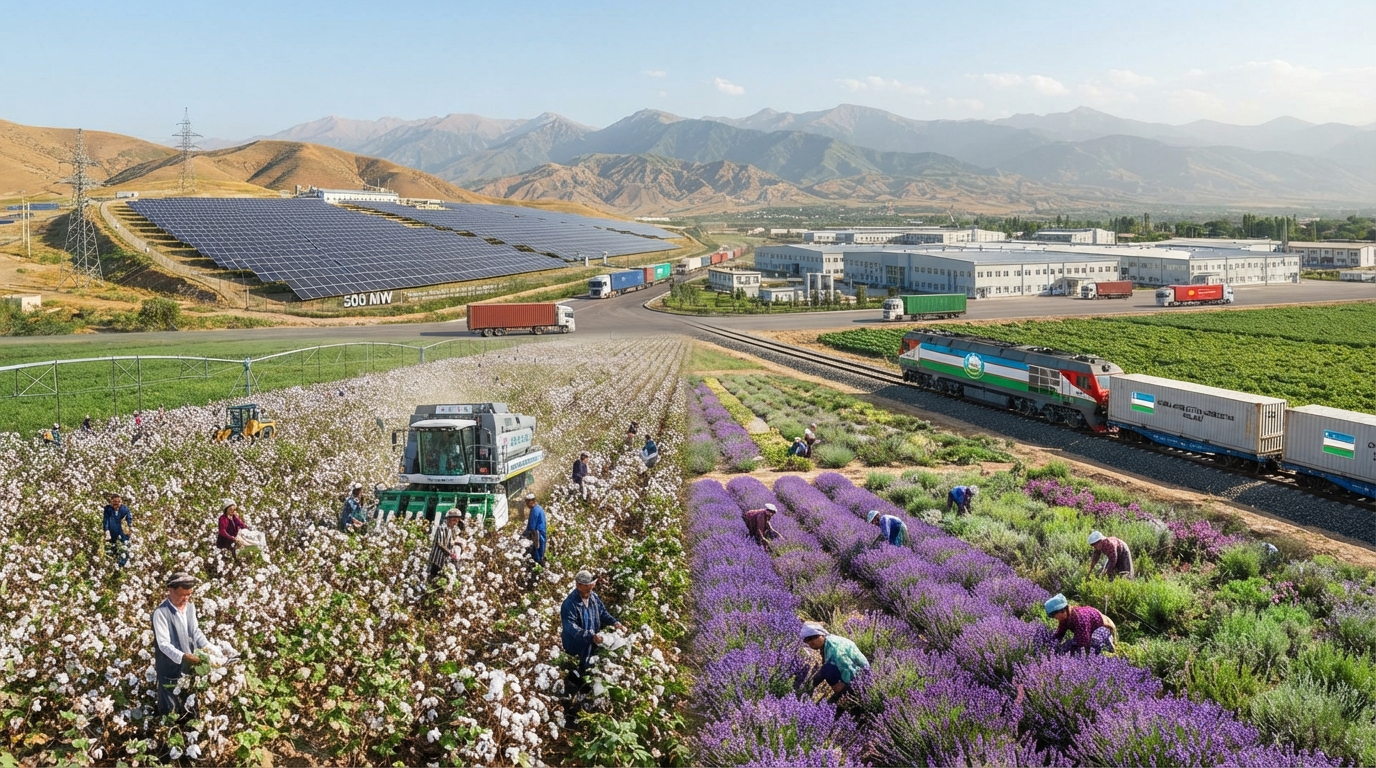
In recent years, cotton cultivation technologies, improved seeds, and specialized fertilizers supplied from China's Xinjiang Uyghur Autonomous Region have become widely adopted in the region. According to the khokim, their use has significantly increased cotton yields per hectare.
"This has become a major breakthrough in our agricultural sector," Abdurazakov said.
At the same time, local farmers are increasing the acreage under lavender and other high-margin aromatic crops. This is accompanied by the development of production chains in pharmaceuticals, perfumery, and ecotourism.
Notable results are also observed in the energy sector. The first power unit of a 500 MW solar power plant, built by a Chinese company in Namangan Region, was connected to the power grid in December 2024. As Abdurazakov noted, the implementation of the project has significantly reduced the electricity deficit in the region's industrial zones.
Transport infrastructure remains a separate area of cooperation. The khokim pointed to the strategic position of Namangan Region, which connects Tashkent with the densely populated Fergana Valley, and noted the region's active participation in initiatives to strengthen regional transport connectivity.
In particular, this refers to the China–Kyrgyzstan–Uzbekistan railway project. According to Abdurazakov, the new railway line will expand the geography of Namangan's exports and strengthen its integration into the regional market of the Fergana Valley.
"The railway will not only expand the geography of Namangan's exports but will also contribute to its integration into the broader regional market of the Fergana Valley," he stated.
The khokim also emphasized the contribution of Chinese enterprises to the development of the region. According to him, they bring modern technologies and expertise while creating jobs for local residents.
Namangan Region looks forward to further expanding cooperation with Chinese companies and government authorities.
According to Abdurazakov, the parties intend to jointly exploit opportunities for the development of the region and to ensure mutual benefit.