

China's families are now supporting more old people than kids
The latest figures mark a major milestone as Beijing grapples with an ageing population.
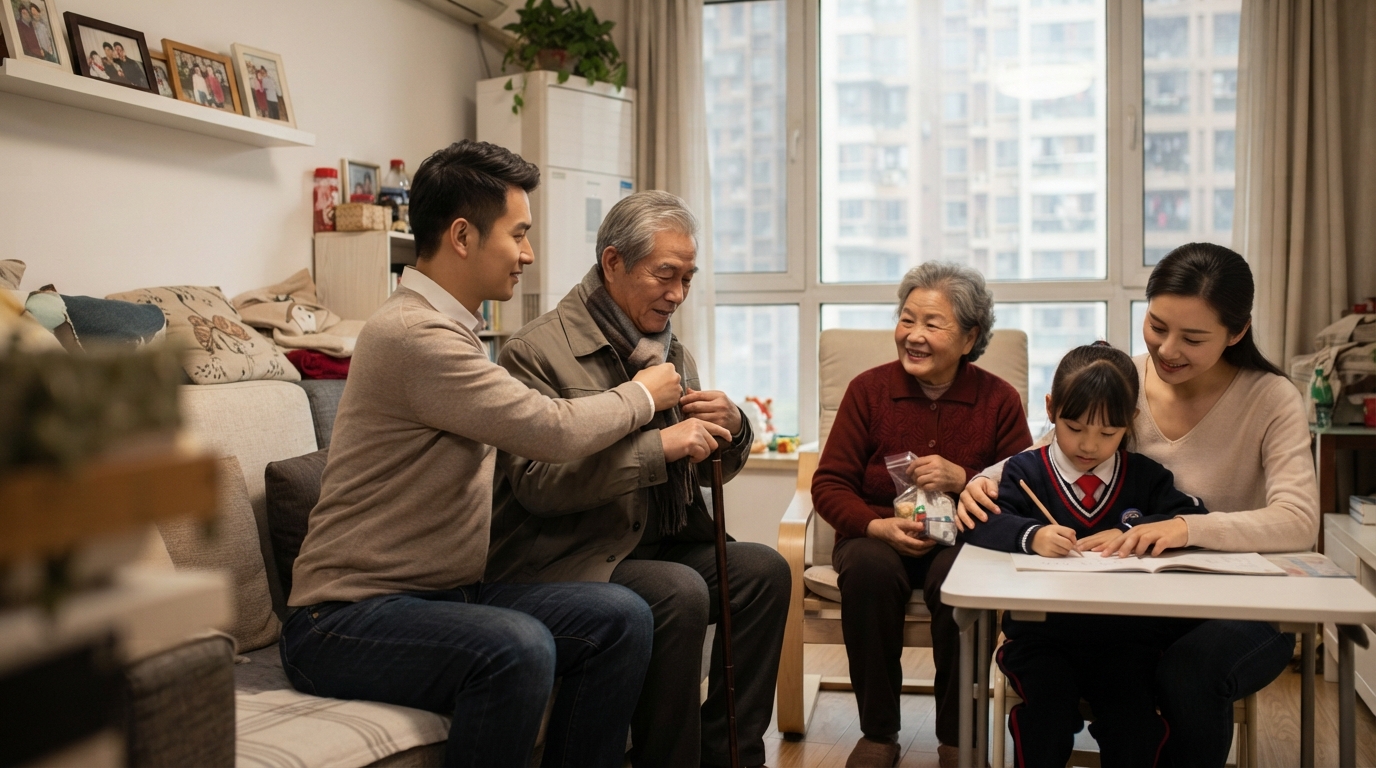
China’s families are now supporting more elderly people than children
For the first time, families in China are supporting more older people than children, the government said.
External figures show that the ratio of China’s dependent elderly people to the working-age population rose to 23% last year, surpassing the figure for children, which was 22%.
These numbers are closely monitored for what they may reveal about how China’s shrinking workforce will affect both the world’s second-largest economy and global growth overall.
Analysts say the latest figures represent an important milestone as China deals with an ageing population that could affect families, pensions and healthcare spending.
In recent years, China has been preparing for a larger share of elderly people while encouraging younger generations to marry and urging couples to have more children.
Latest data from China’s National Bureau of Statistics show that there are now more than 223 million people in China aged 65 and over, making up nearly 16% of the country’s total population.
At the same time, there are about 213 million children aged 14 and under.
No official comment was issued alongside the statistics. But Chinese state-run outlet Global Times said the country’s “entry into a moderately ageing society” is the result of several factors, including the “size of past birth cohorts” and longer life expectancy.
The change could add pressure to pension, healthcare and long-term care systems, while also opening up opportunities in the so-called silver economy serving older consumers, the newspaper said.
“It reflects a historical trend in demographic development rather than a short-term phenomenon,” Global Times quoted one researcher as saying.
Professor Stuart Gietel-Basten of The Hong Kong University of Science and Technology said the demographic change is “symbolic” and could indicate that more public spending will shift from families and schools to pensions and healthcare.
National University of Singapore sociology lecturer Mu Zheng said it may also challenge the country’s ambitions by limiting economic growth and people’s spending power.
Birth rates in China have been falling for years now
China’s ageing population has been shaped by a combination of factors, including rapid urbanisation and the impact of the controversial one-child policy, which was in force from 1980 until the end of 2015.
The policy, intended to control China’s fast population growth, is estimated by the government to have prevented about 400 million births since it began, although that figure has been disputed.
Mu said the policy was a major factor in reducing the population and means there are fewer younger people to support a growing number of elderly relatives.
But even after easing limits on family size, Beijing has struggled to persuade couples to have more children, with birth rates falling to historic lows.
Mu said other factors include changing gender roles, rising living costs and higher education levels, all of which have put pressure on fertility rates.
Earlier this year, Beijing included further support for older people in the measures set out in its five-year economic blueprint.
Financial support for pensioners has become an increasingly important part of Chinese government spending. Official figures show that more than 53 million elderly people were receiving senior citizen allowances and subsidies by the end of 2025.
The Global Times said many people entering old age who were born between the 1950s and the 1970s generally have higher incomes than previous generations, stronger purchasing power and better health.
The dependency ratio is widely used to measure ageing populations, but some experts have questioned it, arguing that its scope is too narrow.
Gietel-Basten said using the statistics risks “taking agency away” from older people, many of whom he said have been misrepresented as dependants.
He added that it also fails to account for improvements in healthcare.