

Kazakhstan may become a country of "elderly people" in 25 years
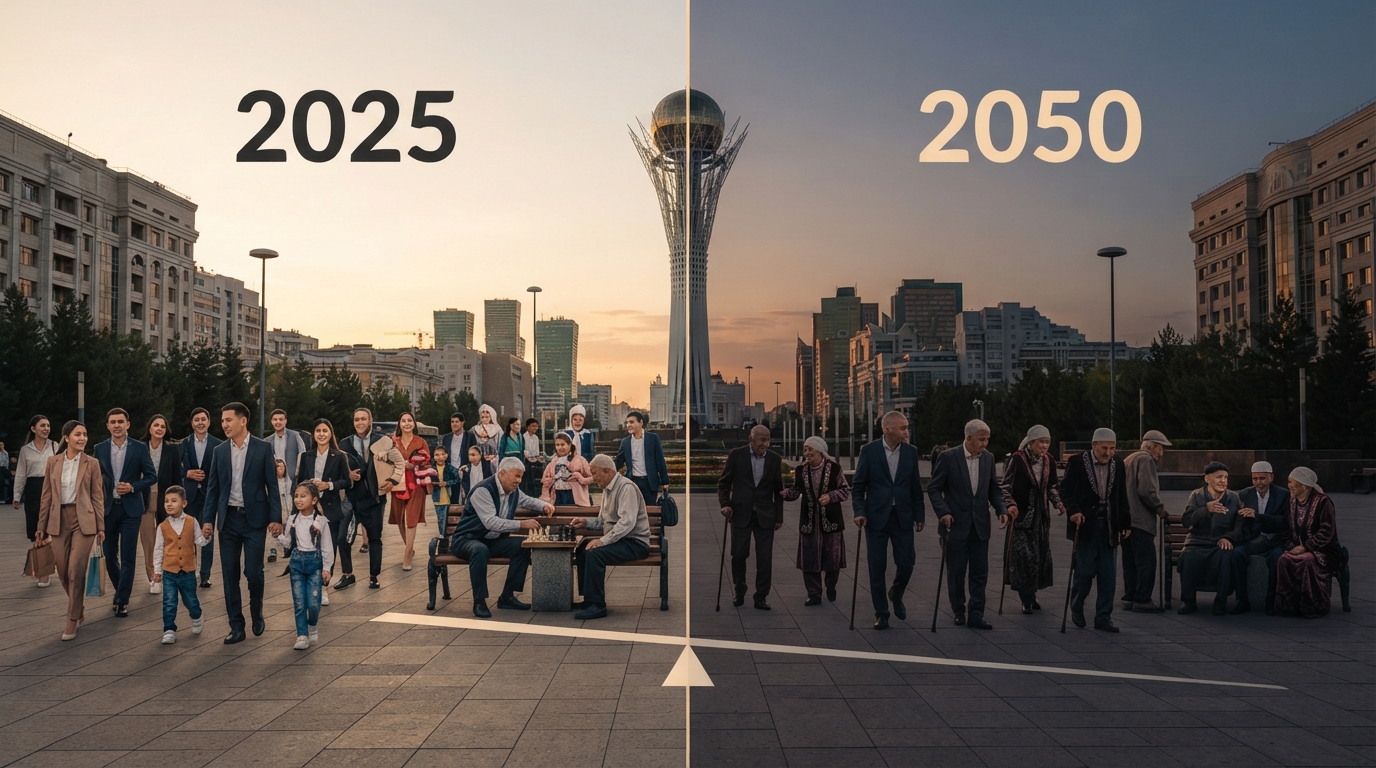
Kazakhstan may become a country of "old people" in 25 years, as the birth rate is falling and life expectancy is increasing. This is changing the ratio between the working-age population and the elderly. This information is provided in the analysis of the Pension Fund of Kazakhstan.
As of January 1, 2026, the country's population was 20.5 million people. Of these, 8.79 million are under 25 years old, 9.73 million are aged 25–65, and 1.98 million are over 65.
According to forecasts, by 2050, the population of Kazakhstan will reach 26.5 million people. During this period, the share of people over 60 is expected to increase by 18.8 percent, that is, approximately every sixth Kazakh will be elderly.
**Fertility rate is declining**
After a decline during the pandemic, life expectancy increased from 70.23 years in 2021 to 75.97 years in 2025. For women, this figure was 79.8 years, and for men, it was 72.91 years.
At the same time, the fertility rate is declining. The overall coefficient fell from 3.32 in 2021 to 2.57 in 2025. The United Nations (UN) predicts that by 2050 this figure will drop to 2.39 children per woman.
"The decline in fertility is a global trend. An increase in life expectancy leads to a decrease in the share of the working-age population, which, as a result, increases the demographic burden on the economically active population," the report says.
**Growth in migration and shrinking labor force**
In recent years, the number of people migrating to Kazakhstan has increased. For example, in 2025, 23.8 thousand people migrated, while 7.6 thousand people left the country. However, according to UN estimates, by 2050, the migration balance in Kazakhstan will approach zero.
The ratio of working people to pensioners is also changing. While in 2025 there were 4.95 working people for every pensioner, by 2050 this figure will decrease to 3.42. Such demographic changes will sharply increase the financial burden on the pension system.
Earlier, the UN forecast that by the end of the 21st century, Kazakhstan and Kyrgyzstan will be the only countries in the Eurasian Economic Union where the birth rate will remain higher than the death rate. In other EAEU countries, a natural decline in population has already begun or is expected in the coming decades.