

Central Asian countries reaffirmed commitment to the region's nuclear-weapon-free status
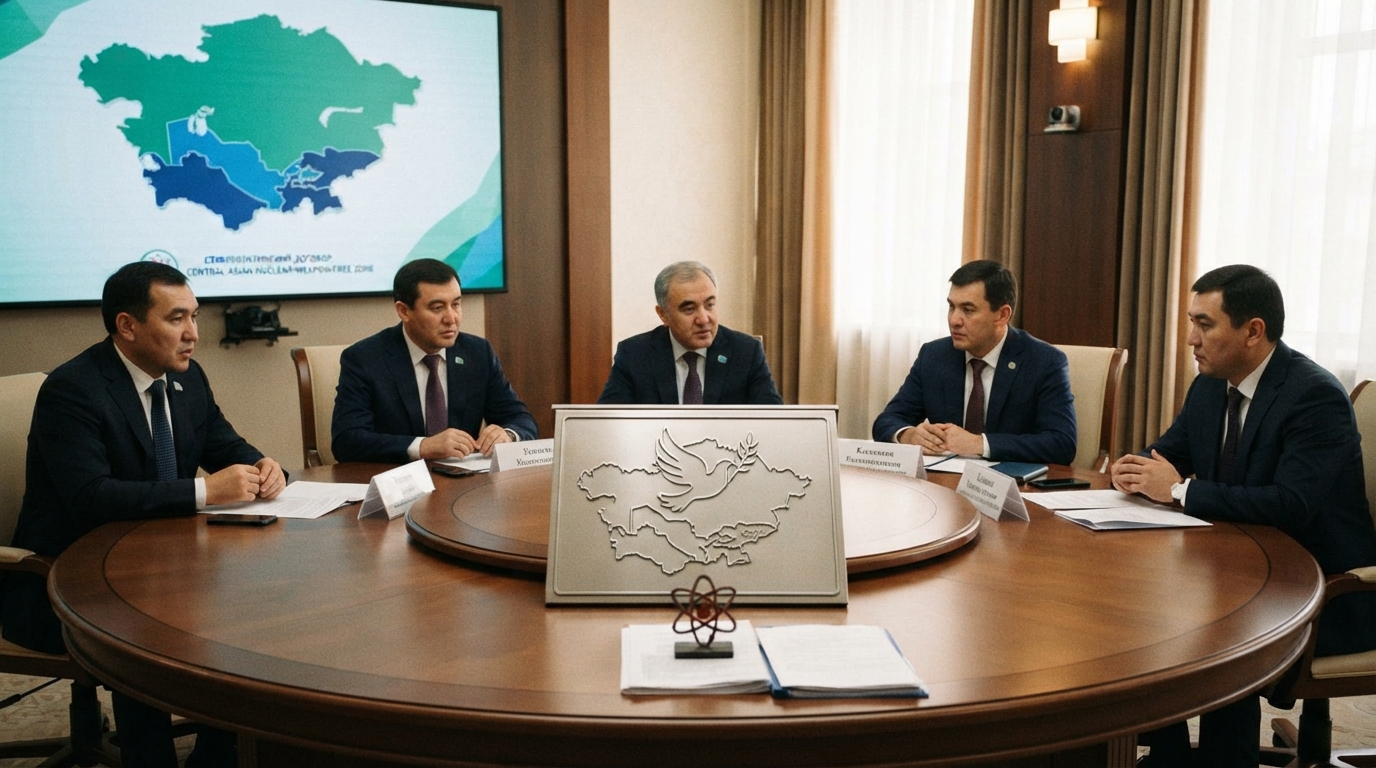
Central Asian Countries Reaffirm Commitment to Region's Nuclear-Weapon-Free Status
In a joint statement, the foreign ministers of the five Central Asian states reaffirmed their commitment to the region's nuclear-weapon-free status. The occasion for this was the 20th anniversary of the Semipalatinsk Treaty. The document recalled that the idea of such a zone was first voiced by Uzbekistan in 1993.
In the joint statement, the heads of the foreign ministries called the treaty "historically significant" and emphasized that it was the result of the joint work of the five countries in the region.
Special attention in the document is paid to the history of Uzbekistan's initiative. Tashkent first proposed creating a nuclear-weapon-free zone in Central Asia in September 1993 at the 48th session of the UN General Assembly.
Thirteen years later, this initiative received legal consolidation. The Treaty on a Nuclear-Weapon-Free Zone in Central Asia was signed on September 8, 2006, in Semipalatinsk. Its participants became Uzbekistan, Kazakhstan, Kyrgyzstan, Tajikistan, and Turkmenistan. Today, Central Asia remains the only nuclear-weapon-free zone located entirely in the Northern Hemisphere and directly bordering two nuclear-weapon states.
For the region, this topic is of particular importance. It was Central Asia that in the past became the site of large-scale nuclear tests, the consequences of which are still felt today. In the statement, the participants honored the memory of people affected by nuclear explosions and their consequences, and welcomed the 35th anniversary of the closure of the Semipalatinsk test site.
At the same time, the Central Asian countries expressed concern over the lack of progress in nuclear disarmament, the termination of a number of arms control agreements, and the modernization of nuclear arsenals.
The heads of the foreign ministries called on the nuclear powers to work more actively on disarmament and the creation of arms control mechanisms.
Separately, the countries reaffirmed their support for the Treaty on the Non-Proliferation of Nuclear Weapons and the activities of the International Atomic Energy Agency. They also advocated for the earliest possible entry into force of the Comprehensive Nuclear-Test-Ban Treaty.
The statement also emphasizes the need to develop cooperation between existing nuclear-weapon-free zones. In particular, it notes the importance of further interaction with the African Commission on Nuclear Energy and the Agency for the Prohibition of Nuclear Weapons in Latin America and the Caribbean.
Earlier, President of Kazakhstan Kassym-Jomart Tokayev stated that the country continues to advocate for negotiations between nuclear powers and the earliest possible entry into force of the Comprehensive Nuclear-Test-Ban Treaty.