

CBR: the impact of the US dollar exchange rate on inflation expectations has weakened
Deputy Head of the Central Bank Nodirbek Achilov: the perception of an inevitable 5–10% annual increase in the dollar exchange rate is changing, and its contribution to inflation expectations is declining.
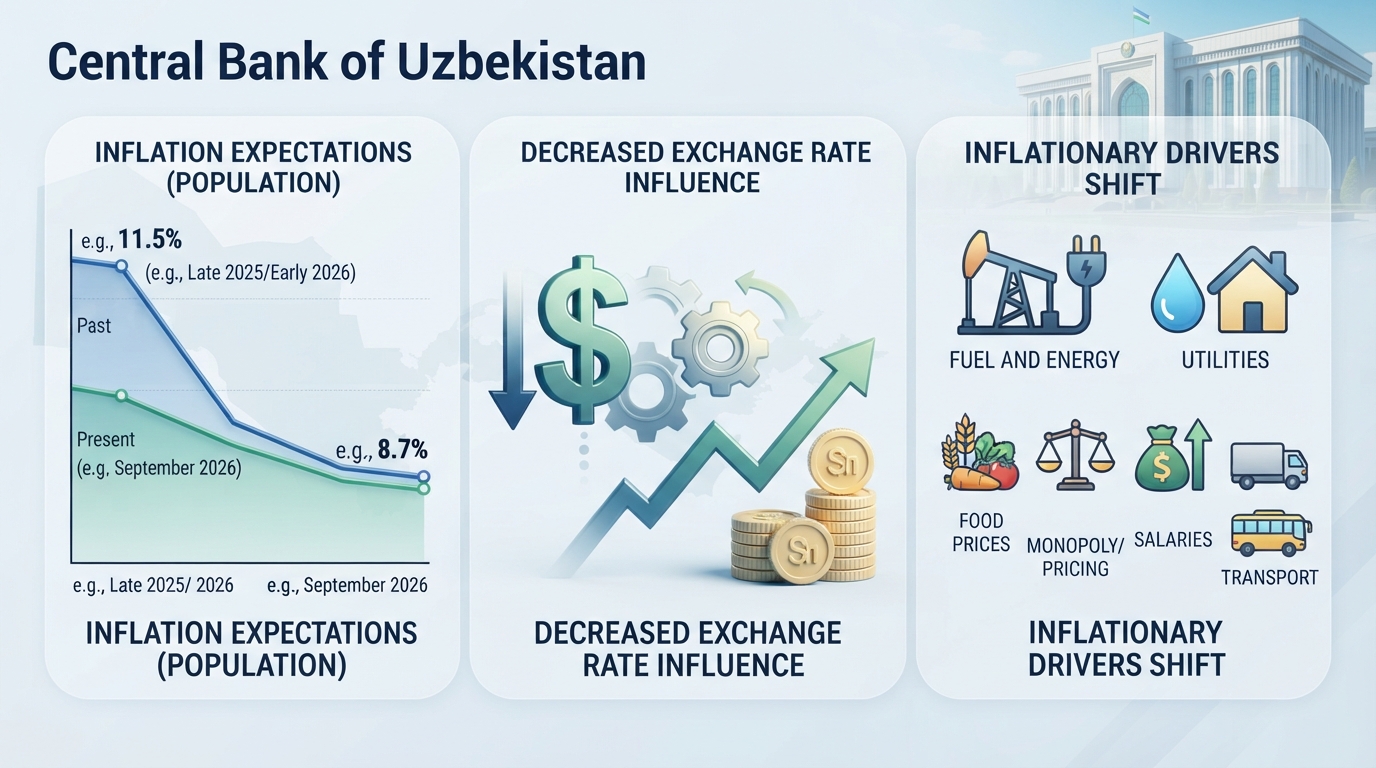
**Central Bank: The Impact of the Dollar Exchange Rate on Inflation Expectations Has Weakened**
The population and businesses of Uzbekistan are gradually moving away from the idea that the dollar exchange rate must increase by 5–10% annually.
Changes in the foreign exchange market are reducing the impact of the exchange rate on inflation expectations, Deputy Chairman of the Central Bank Nodirbek Achilov stated at a press conference on November 4.
According to Achilov, for a long time, the exchange rate was the main factor shaping the expectations of the population and entrepreneurs regarding future price increases. "As you know, until 2025, an upward trend prevailed in the dynamics of the exchange rate. Exchange rate changes accounted for almost 60% of inflation expectations," he said.
Since 2025, the situation has begun to change. "After 2025, changes in the foreign exchange market, an increase in the supply of foreign currency, and two-sided exchange rate fluctuations led to a decrease in the impact of this component on inflation expectations," explained the Deputy Head of the Central Bank. According to him, the changing structure of expectations is taken into account when preparing macroeconomic forecasts and decisions on the main rate.
According to data from the Central Bank survey, in September 2026, the population's inflation expectations for the next 12 months decreased to 8.7% from 9.8% in August.
In December 2025, this figure stood at 11.5%. Entrepreneurs' expectations dropped to 9.2% compared to 9.6% a month earlier and 11.1% in December last year.
Exchange rate changes were cited as a possible reason for price growth in September by 22% of surveyed residents, compared to 14% in August.
This factor is still mentioned less frequently than several others. Most often, the population linked future price increases to rising prices for fuel and energy resources (50% vs. 52% in August) and utilities (38% vs. 53%).
Price increases for basic food products were cited by 31% of respondents, monopolies and artificial price gouging by 30%, increases in wages and pensions by 29%, and rising transportation costs by 26%.
Entrepreneurs also most frequently cited the rising cost of fuel and energy resources (52%) and utilities (38%). At the same time, the share of business representatives expecting price pressure due to the rising cost of raw materials and supplies increased over the month from 19% to 37%, and the share citing a high tax burden rose from 15% to 29%.
Since 2025, the Central Bank has been separately studying the expectations of financial experts. "This is a third group alongside the population and entrepreneurs.
Their inflation expectations are formed at around 6.3%. That is, they expect significantly lower inflation in a year than the population and business," Achilov said. Actual annual inflation in September stood at 6.4%, including 7% in the services sector, 6.3% for food products, and 5.8% for non-food items.
Decisions on the main rate affect the economy with a lag of up to 16–18 months; therefore, the regulator focuses not only on current inflation but also on expectations.
"It was precisely the decline in inflation expectations to 8.7% that became one of the reasons why the option of reducing the main rate to 13.5% was submitted for consideration today," said the Deputy Head of the Central Bank. If the trend continues across all three groups, the issue of easing policy may be discussed again at upcoming board meetings.
On November 4, the Central Bank kept the main rate at 14% per annum, citing high domestic demand and inflationary risks. The regulator allows for a reduction of the rate to a single-digit level in 2027–2029 given a sustained slowdown of inflation to 5%.
Since the beginning of 2025, the soum has been strengthening: over 2025, it gained almost 7% against the dollar, and in the nine months of 2026, another approximately 1.9%.
The trade deficit remains high. At the end of August, Central Bank Chairman Timur Ishmetov stated that the regulator would maintain a floating exchange rate and would not manage it administratively.