

Boxwood, lavender, and crepe myrtle: which shrubs are being prepared for the greening of Tashkent
In Tashkent, there are plans to grow at least 120 million shrubs to green the city. To achieve this, nurseries are being established in the Bektemir district, where seedlings are cultivated from cuttings of adapted varieties. According to the district khokim, Nurilla Abdurakhmanov, the project launched in 2024 as part of the nationwide "Yashil Makon" program on the initiative of the Tashkent khokimiyat. On an area of nearly 110 hectares, a single […]
Boxwood, lavender, and crape myrtle: what shrubs are being prepared for the greening of Tashkent
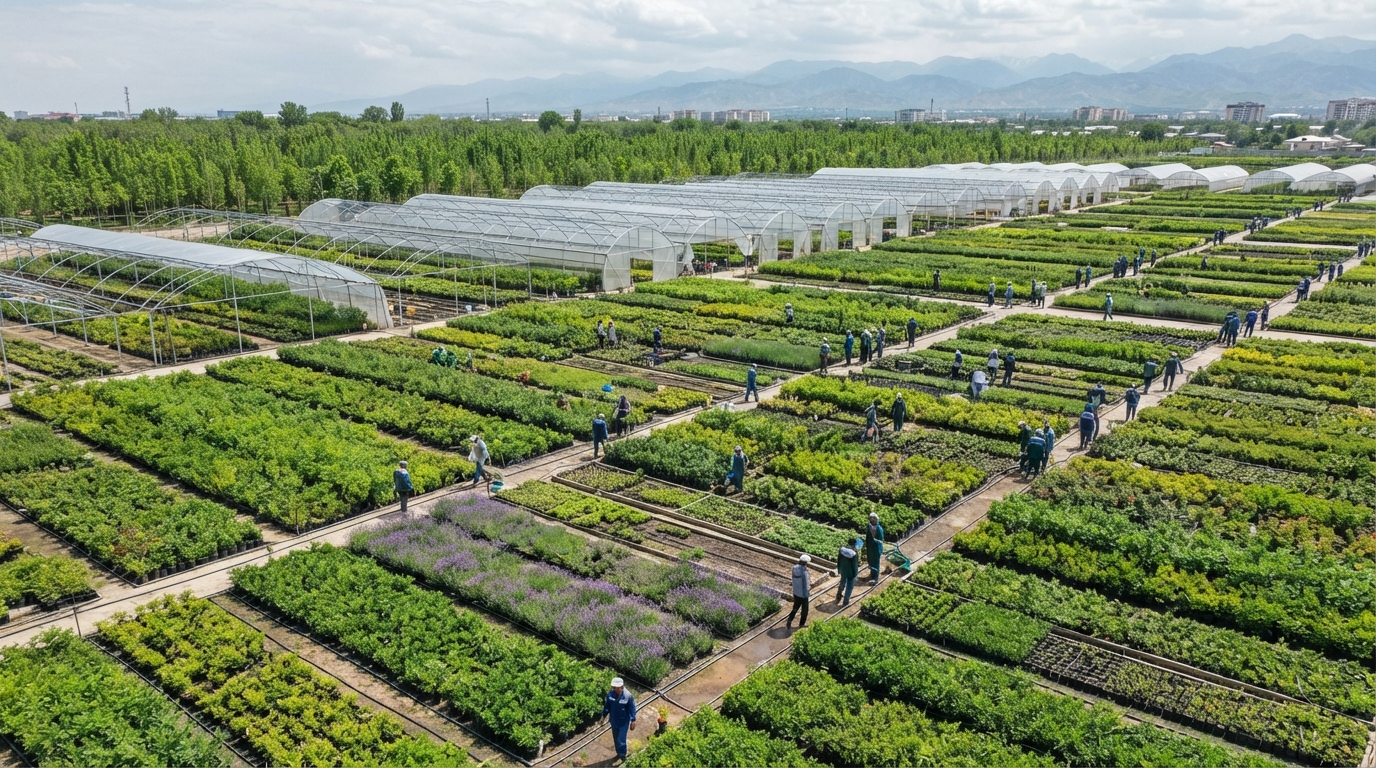
Tashkent intends to grow at least 120 million shrubs for the city's greening. For this purpose, nurseries are being established in the Bektemir district, where saplings are produced from cuttings of adapted varieties.
According to the district khokim, Nurilla Abdurakhmanov, the project was launched in 2024 as part of the nationwide "Yashil Makon" program at the initiative of the Tashkent khokimiyat. On a plot of almost 110 hectares, one of the first parts of the capital's ecological framework—its green belt—is being formed. Here, in addition to planted trees, small greenhouses are being set up to grow shrubs from cuttings available to the city and district landscaping departments.
The work involves 2,020 specialists and employees of relevant departments. It is planned to grow at least 120 million shrubs—at least 10 million for each district of the city. To organize the process, the districts have appointed responsible staff and formed teams of specialists.
Several types of shrubs were selected for cultivation, which, with the participation of invited foreign specialists, underwent adaptation to local conditions. Over the past two seasons, the plants have shown good results in Tashkent's climate. Among them are boxwood, ligustrum and its Italian variety, Lonicera "Bravo", Japanese honeysuckle, barberry, euonymus, lavender, crape myrtle, and thuja.
This is the first project of such scale in Tashkent to grow shrubs from cuttings of adapted imported varieties. The new nurseries are expected to become part of the capital's green belt and serve as an additional ecological barrier. Domestic production of planting material will also make it possible to gradually meet the city's needs for saplings, expand greening efforts, and improve the urban microclimate.