

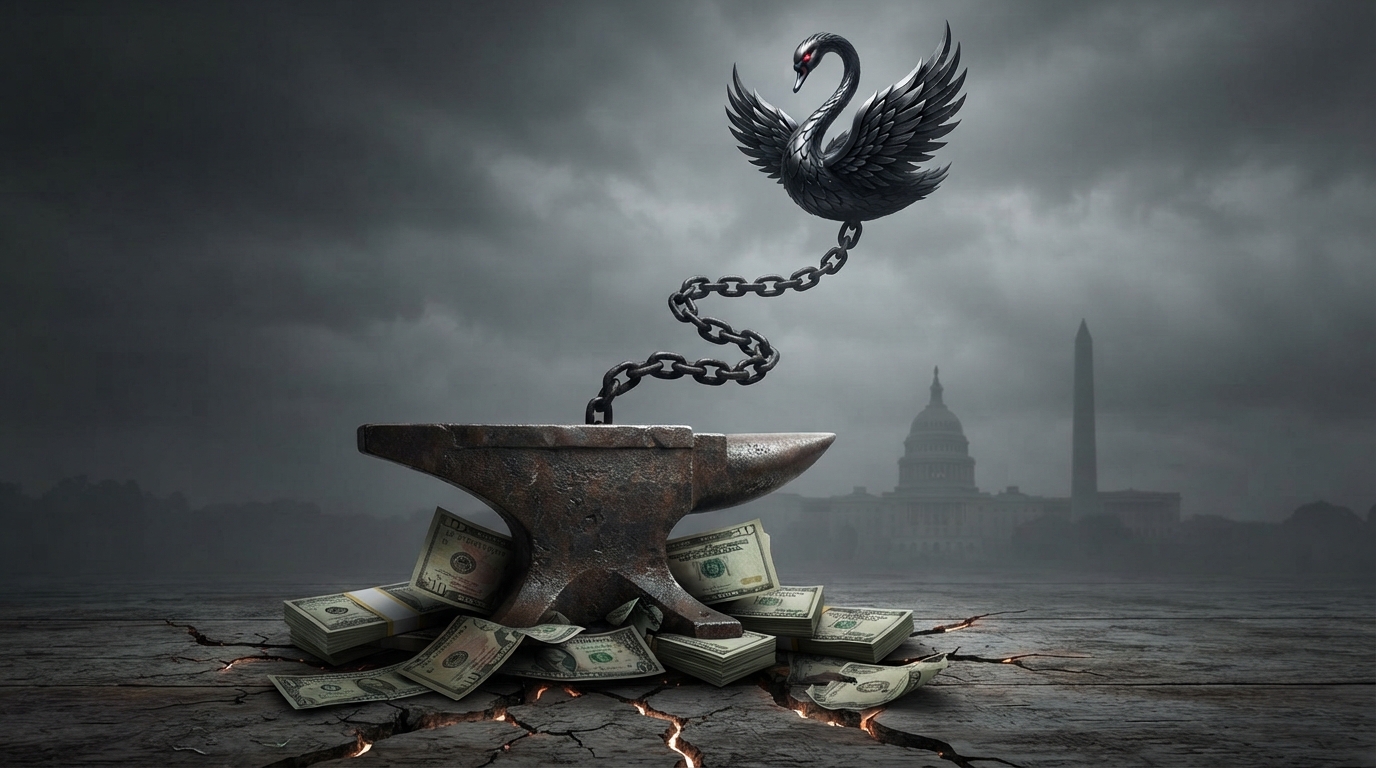
**The "Black Swan" of the American Economy: $40 Trillion in Public Debt and Risks for the Dollar**
The United States, which traditionally finances its spending by selling Treasury bonds to other countries, is facing growing challenges. While Russia has long since abandoned its investments in US government debt, China is also reducing its holdings, reducing them from $1.1 trillion to $600 billion in recent years.
Against this backdrop, the US public debt has reached an unprecedented $40 trillion, representing 125% of the country's GDP. Forecasts indicate it will rise to $50 trillion by 2030. However, these figures appear not to be the Trump administration's primary concern. The focus is on record-high yields on US Treasuries. The yield on 30-year bonds has reached 5.5%, a level not seen in 19 years, while the yield on 10-year bonds has tripled in five years, reaching 5%.
**Consequences for the Budget and the Population**
High yields on government bonds are creating serious problems for the US budget. Servicing the national debt is becoming increasingly expensive, leading to a significant increase in the deficit. Interest payments alone consume 20% of budget expenditures. This year, the US Treasury Department will have to refinance approximately $9 trillion in national debt, further exacerbating the fiscal pressure. The gap between spending and revenue is widening: in July, the budget deficit increased by almost 50% compared to July 2025, reaching $432 billion – a record high in the last five years. By August 11, the deficit was estimated at $2.1 trillion.
These problems are already being felt by Americans. Rising government bond yields have led to higher rates on mortgages, student loans, and business loans. A further increase in the national debt will inevitably lead to increased costs for individuals and businesses.
**Political Context and Economic Challenges**
The financial situation looks unfavorable for the Trump administration ahead of the November midterm elections. Beyond the national debt problem, there are numerous other economic challenges. Inflation remains above the 2% target, and motorists, who make up a significant portion of the electorate, are unhappy with the 40% increase in gasoline prices (to over $4 per gallon) and diesel fuel (to over $5.50), despite White House promises to lower them. A war with Iran could also result in serious political losses for Trump.
**Treasury Department Measures and Their Risks**
Unable to influence Middle Eastern issues, the US Treasury Department has focused on domestic measures. To reduce government bond yields, it decided to double the purchase of long-term Treasury securities starting in September. Essentially, this means the Treasury will be buying longer-term bonds while simultaneously issuing shorter-term securities. Experts compare this to paying off a mortgage with a credit card: it may provide a temporary solution, but it doesn't solve the fundamental problem of government debt and its high servicing costs, merely postponing it for the future.
**Possible Solutions and the "Ring of Omnipotence"**
A radical solution to the problem could be raising corporate taxes, which currently account for less than 2% of GDP and only 11% of budget revenues. However, the US government is not accustomed to cutting spending, and raising taxes is considered political suicide.
Unlike most countries, which in a similar situation are forced to either raise taxes and cut spending, or default (like Argentina in 2001 or Venezuela in 2018), the US has a unique advantage – the "printing press." It can print as many dollars as needed. Despite the gradual decline in the dollar's share of global reserves and international settlements, this process is slow.
The US can still print dollars and lend them out in unlimited quantities. Public debt could rise to 200% of GDP, and the risk of default will remain minimal, provided economic growth is maintained (for example, through investment in the AI sector). This is precisely the path the Treasury is currently taking. Buying long-term bonds is a form of quantitative easing that will devalue the dollar and reduce the value of long-term US Treasury bonds.
**A Weak Dollar and Its Consequences**
A weak dollar benefits Trump because it will make American exports more affordable, increase demand for them, reduce the trade deficit, and stimulate economic growth. All of this is necessary to continue living on debt. The threat of declining confidence in the dollar apparently doesn't worry Trump much, as it remains remote for now.
However, uncontrolled dollar printing undermines confidence in the US currency, favoring the Chinese yuan and other national currencies. Furthermore, sooner or later, this situation leads to financial bubbles and economic imbalances, which are resolved through their collapse and recessions. It's only a matter of time and what will cause the next crisis. While economists are currently concerned about the AI sector, which is being inflated by debt, "black swan" events often spring surprises.