

At the Development Stage
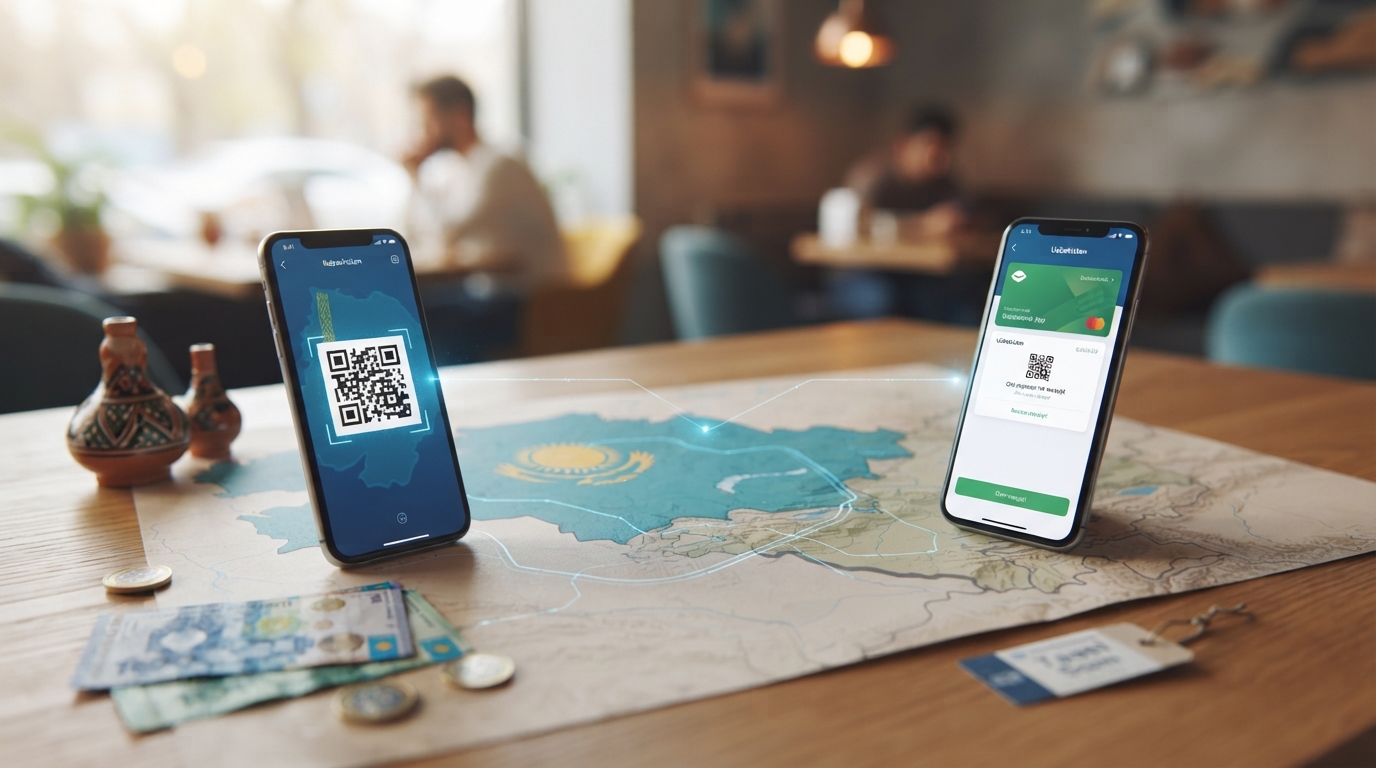
Kazakhstan and Uzbekistan have begun working on the creation of an interoperable system for cross-border QR payments. While the project is currently at the technical development stage, its significance goes far beyond the banking sector. If the national payment platforms of the two largest economies in Central Asia are linked, residents of the region will be able to pay for purchases and transfer money through their familiar mobile applications without having to issue foreign cards. In essence, this is about forming a common payment space — without supranational bodies and economic union agreements.
In September, Uzbekistan's national payment system HUMO and the National Payment Corporation of Kazakhstan signed a memorandum of cooperation. The parties plan to establish mutual acceptance of QR codes: citizens of Uzbekistan will be able to pay for purchases in Kazakhstan through the local system, and Kazakhstani citizens will be able to use UzQR in Uzbekistan. Another area of focus is transfers between cards of the two countries from banking applications.
"For HUMO, this project is an important step in the development of cross-border payment solutions and strengthening financial integration in Central Asia," said Alexander Sotnikov, Chairman of the Board of HUMO.
The service has not yet been launched. The start dates, first-stage banks, tariffs, and currency conversion mechanism have not been determined. Regulators still have to decide how clearing and final settlements will take place, where data will be stored, and what customer identification rules will apply.
Kazakhstan launched interbank QR payments in 2025, and from July 19, 2026, the Unified QR system operated by the National Payment Corporation began working in the country. It makes it possible to pay for purchases with the application of one bank through the terminal of another. According to the National Bank, about 1 million transactions were processed in the very first days. The operator charges banks 0.05% of the interbank payment amount; for the buyer, the transaction is free.
The QR code has long ceased to be a niche technology in Kazakhstan. In 2024, the number of such payments exceeded the number of card payments through POS terminals by 26%. Approximately every second cashless purchase was made via QR code, and the average transaction amount was 14,000 tenge.
In Uzbekistan, the domestic payment infrastructure is being integrated in parallel. In 2024, the integration of the HUMO and Uzcard ATM networks was completed. By the beginning of 2025, banks had 52.9 million users of remote services — this refers to accounts, not unique citizens. The volume of transactions by individuals through mobile applications grew 1.6 times over the year, to 396.7 trillion soums. About 108,000 codes were issued to entrepreneurs in the QR-online system.
"When national systems connect, regional trade accelerates, and with it, trust grows," notes David Melikidze, Director General of Uzcard. In his opinion, a shared infrastructure is capable of providing equally fast and transparent payments in Tashkent, Bishkek, or Almaty.
The economic foundation for such convergence already exists. In 2025, trade turnover between Kazakhstan and Uzbekistan grew by 16.2% and approached $5 billion. The goal set by the presidents of the two countries is to bring it to $10 billion. Kazakhstan ranks third in Uzbekistan's foreign trade after China and Russia.
No less important is the mobility of the population. During January–November 2025, 2.5 million citizens of Kazakhstan visited Uzbekistan. In the opposite direction, about 1.3 million Uzbeks traveled during the year. Tourists, labor migrants, small hotels, cafes, shops, and transport companies could become the first mass users of the new system.
A Kazakhstani in Tashkent or an Uzbekistani in Almaty today often has to withdraw cash or find out which application the seller accepts. With mutual recognition of QR codes, it will be enough to open the application of one's own bank. The simplicity of this operation hides a complex infrastructure — currency conversion, customer verification, data transmission, and settlements between banks.
It is at this level that the main difficulties arise. "The problem is in the interface between the market developing from the bottom up and the approach of central banks from the top down. The lack of common standards creates friction," says Sergio Mello, Head of Stablecoin Solutions at Anchorage Digital.
China could become another participant in the process. In August, the Central Bank of Uzbekistan began discussing with Tencent the integration of UzQR with international payment ecosystems. The TenPay Global platform, according to the Chinese company, already interacts with more than 40 wallets and payment networks from 13 countries and regions.
Against this background, the question arises about the balance of Chinese and Russian influence. In 2025, China was Uzbekistan's largest trading partner: trade turnover reached $17.2 billion compared to Russia's $13 billion. Acceptance of Russian "Mir" cards in the Uzcard infrastructure was suspended back in September 2022.
However, it is premature to talk about Russia being squeezed out. It retains a dominant role in the field of labor migration and remittances. In 2024, 77% of cross-border transfers to Uzbekistan, or $11.5 billion, came from Russia. About 83% of transfers from Kazakhstan abroad through specialized systems went through Russia's "Zolotaya Korona".
Thus, Russia still holds the infrastructure of migrant money, while China claims the infrastructure of digital consumption, trade, and tourism. The countries of Central Asia are getting a third option — their own regional payment circuit, connecting external partners as technological gateways.
Therefore, the main question is not who owns the image of the QR code. More important is who sets the standard, routes the payment, performs currency conversion, receives transaction data, and establishes the rules of access for banks. On this depends whether the new system will become an instrument of Central Asia's financial independence or lead to a new technological dependence.
Regional integration in this case is developing not from the top down, but from the bottom up. It is driven by millions of trips, family transfers, marketplaces, and everyday purchases. Central Asia has not yet become a single market in the political sense, but it is gradually becoming one on the smartphone screen.