

Arrowheads found in Obi-Rahmat could rewrite the history of Central Asia
35,000 years older than expected
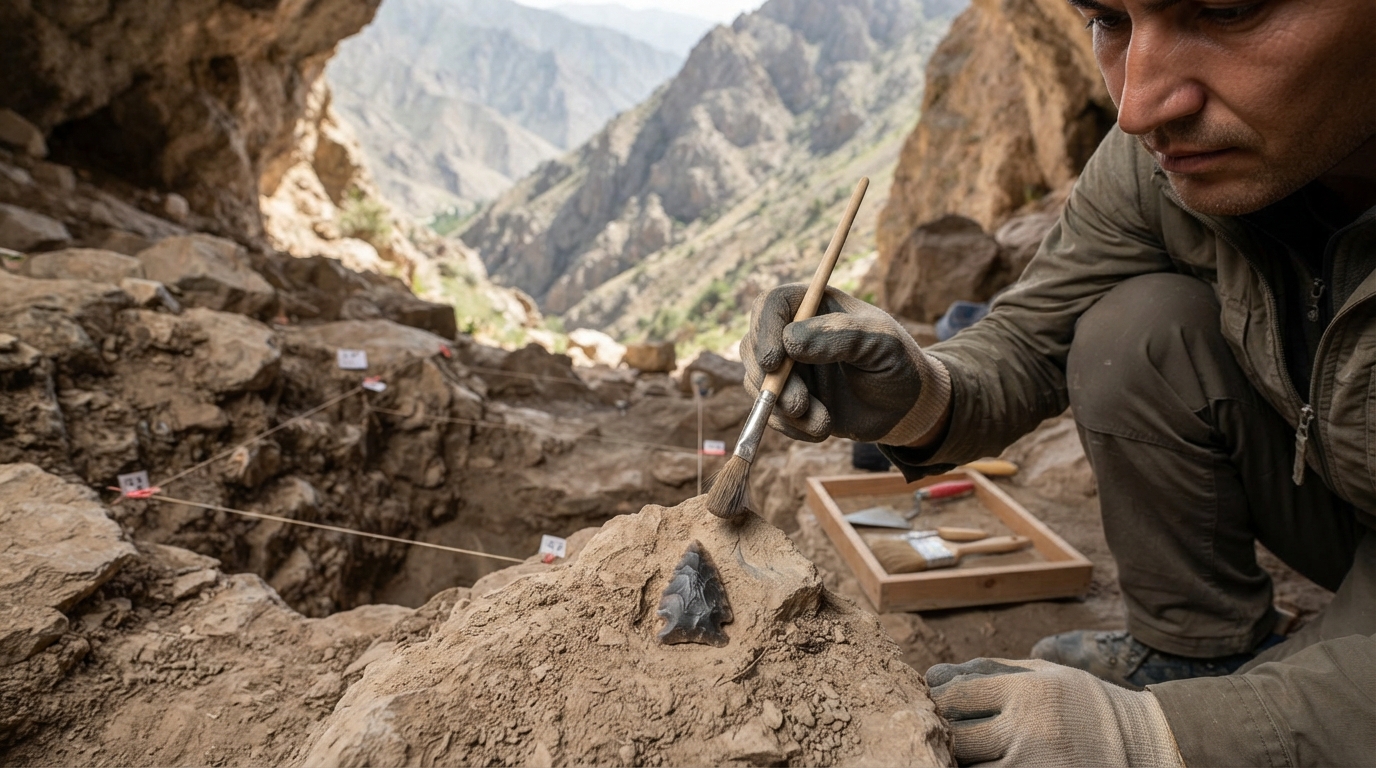
Arrowheads found in Obi-Rakhmat could rewrite the history of Central Asia
Ancient arrowheads discovered at an altitude of 1.2 km in the Tien Shan Mountains in northeastern Uzbekistan could fundamentally change scientific understanding of the history of Homo sapiens in Central Asia, reports write.
During a 2025 study, while examining the historical layers of the Obi-Rakhmat site located in the Bostanlyk district of the Tashkent region, scientists announced the discovery of arrowheads that do not correspond to Neanderthal history but resemble Homo sapiens finds from later periods. This discovery may indicate that Homo sapiens lived in Central Asia 80,000 years ago. That is, humans arrived in this region nearly 35,000 years earlier than previously assumed.
"This discovery suggests that the complex technology of making projectile weapons may have emerged in Central Asia long before modern humans firmly established themselves in Europe. This allows us to rewrite an important chapter in the history of human migration,"
the study's authors note.
The triangular microlithic points found in the oldest layers of the Obi-Rakhmat site are much smaller in size than Neanderthal-style spearheads. They match the small arrowheads made by Homo sapiens in France's Rhone Valley, dating to a period approximately 25,000 years later than those found here.
The arrowheads found in Obi-Rakhmat are about 1.2 cm wide and weigh only a few grams. They resemble 77,000-year-old arrowheads found elsewhere around the world, including South Africa.
According to the study's authors, this find supports the conclusion that Homo sapiens were armed with bows and arrows when they arrived in Neanderthal territory. The similarity of the micropoints found in different locations is not just a coincidence.