

Arab parties in Israel: who are they and why did they win so many votes?
On election day, concerned by the long queues in Arab cities, the Israeli Prime Minister called this an "emergency state." Now, the 19 seats of the Arab parties, together with the opposition, are enough to remove Netanyahu from power, but his main rivals are in no hurry to reach out for these votes.
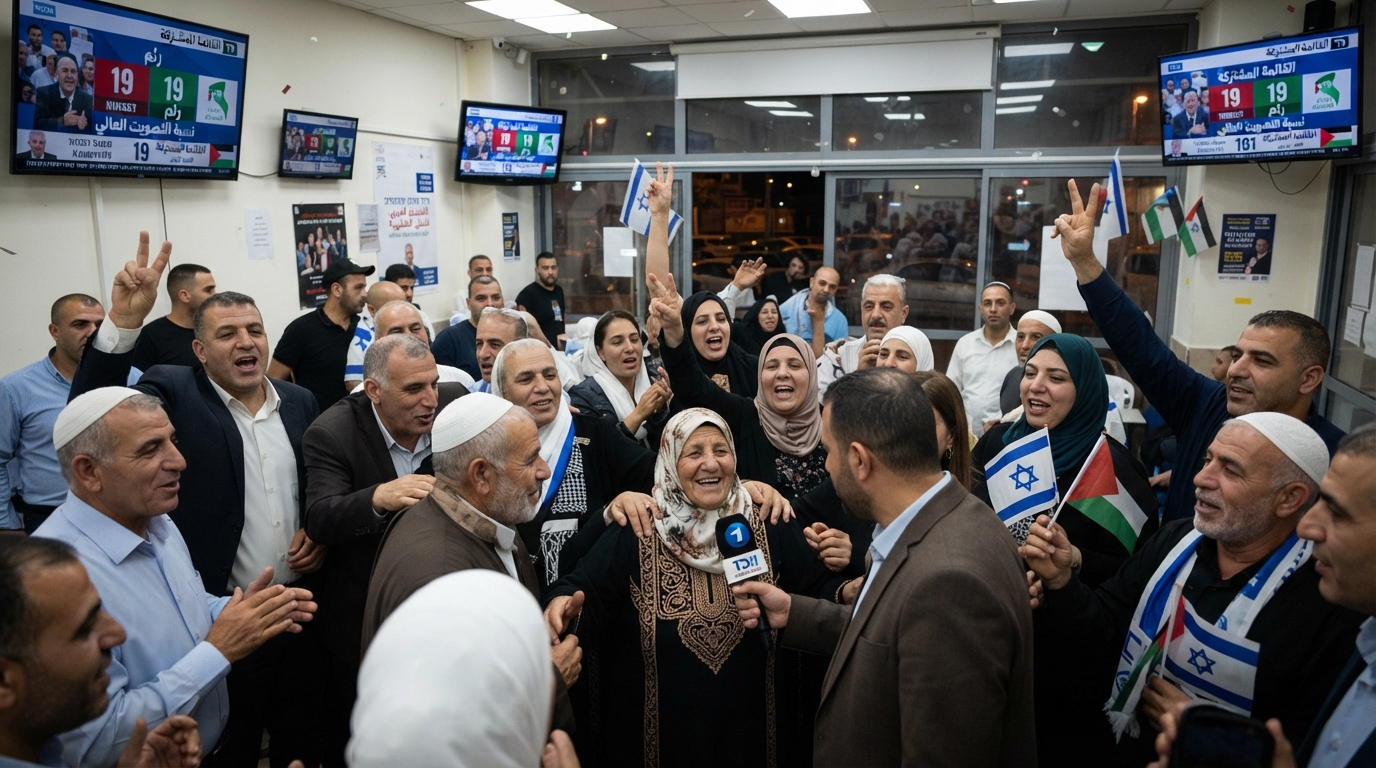
**Arab parties in Israel: who are they and why did they receive so many votes?**
In the parliamentary elections in Israel on October 27, out of 7.33 million voters in the country, more than 5.69 million participated. Overall turnout was 77.7 percent. According to initial official counts from the Central Elections Committee (CEC), with votes counted in 98 percent of precincts, two Arab parties — "Ra'am" and the "Joint List" — together received more than 783 thousand votes, or 15.3 percent of the valid votes.
This is equivalent to 19 seats in the 120-seat parliament. Never in the history of the State of Israel have Arab parties won so many seats in the Knesset.
The result is not final yet: "double envelope" votes cast mainly by military personnel, diplomats, prisoners, and hospital patients are being counted. Official results must be announced by November 4.
**Why is this result considered historic?**
The previous record was 15 seats won in 2020 when four Arab parties ran as a single Joint List. Also, in that record 2020 election, the Joint List received 581.5 thousand votes. This time, the two lists gathered over 780 thousand votes.
This is likely the highest number of votes received by Arab parties since the establishment of the State of Israel.
According to initial estimates cited by international publications, the turnout among Arab citizens reached nearly 80 percent. According to the Israel Democracy Institute (IDI), this figure was 44.6 percent in 2021 and 53.2 percent in 2022. This is the highest level in about half a century.
Netanyahu's bloc is securing 53 seats, while the opposition bloc led by former Chief of General Staff Gadi Eizenkot is getting 48 seats; neither holds a 61-seat majority.
On paper, this makes the Arab parties the kingmakers deciding the fate of the government.
Therefore, the result of the Arab parties is being called the biggest surprise of the election.
**The Arab minority in Israel: who are they?**
To understand the strength of the Arab parties, one must first look at the society on which they rely.