

Record turnout, uncertain outcome: Who will form the government in Israel?
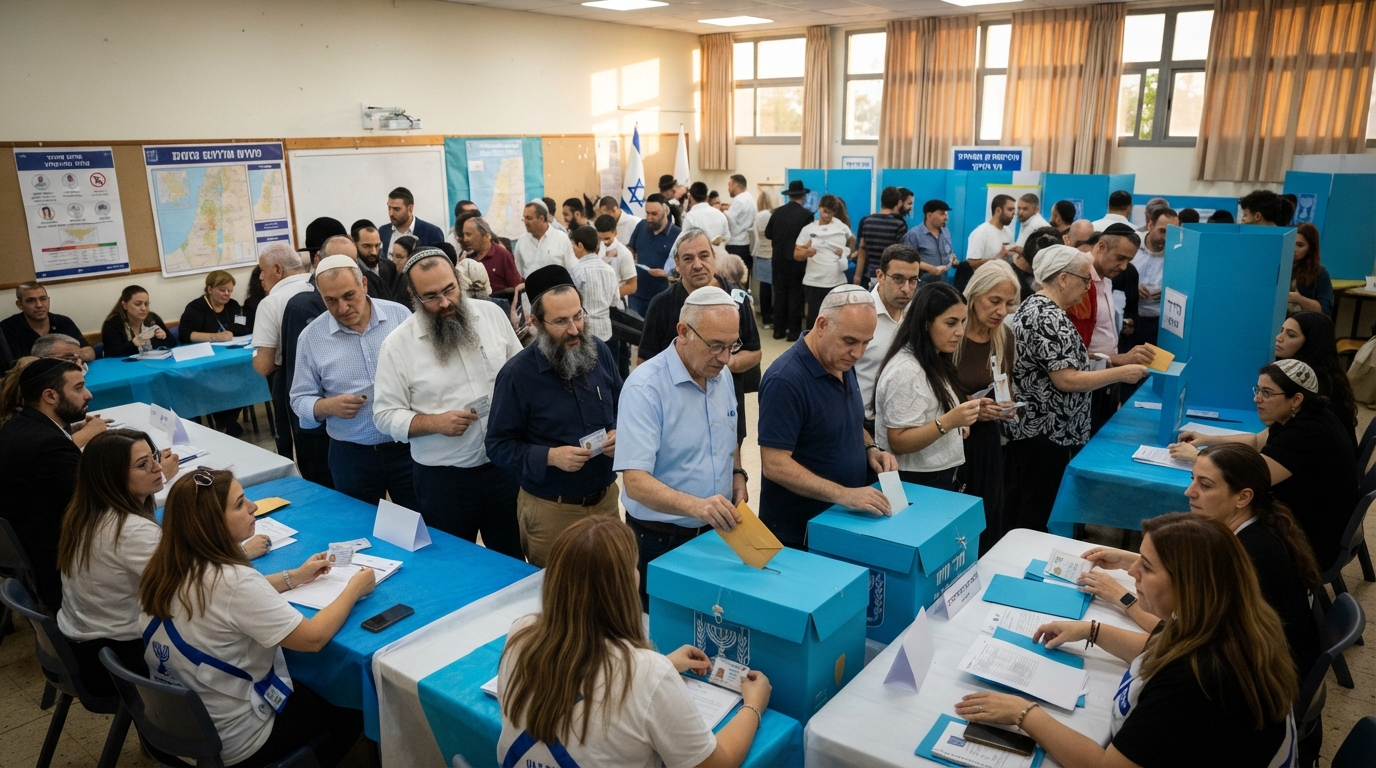
According to exit polls announced after the parliamentary election in Israel, neither the bloc led by Benjamin Netanyahu nor the opposition bloc around his main rival Gadi Eisenkot are gaining a majority in the Knesset. Voter turnout reached its highest level since 1973.
Record turnout, uncertain outcome: Who will form the government in Israel?
Polls conducted by major TV channels show that the opposition bloc around Eisenkot's "Yashar" party could receive 52–53 seats, while the bloc led by Netanyahu's "Likud" party could get around 50 seats.
A majority in the 120-seat parliament requires at least 61 mandates. Therefore, the possibility of forming a government will depend on the final results and subsequent coalition negotiations. Exit polls are not considered official election results.
"Likud" may remain the largest party
Broken down by individual parties, "Likud" could become the largest political force in parliament with 24–25 seats. "Yashar" is expected to win 21–23 mandates.
The main competition in the election was between the right-wing government camp of incumbent Prime Minister Netanyahu and the opposition led by Gadi Eisenkot, a center-right politician and former Chief of General Staff of the Israel Defense Forces.
74.3 percent of voters had cast their ballots by 19:00
According to the Central Elections Committee, 74.3 percent of eligible citizens participated in the election.
The committee stated that such a high turnout for this hour has been recorded for the first time since relevant statistics began being kept in 1973. This is not the final turnout figure.
Request to extend voting hours rejected
On October 27, the Central Elections Committee rejected "Likud's" request to extend the opening hours of polling stations. The committee concluded that there was no need to continue voting after 22:00.
According to Israeli media, the "Shas" and "Jewish Power" parties also requested an extension, citing large crowds outside polling stations.
Eisenkot's "Yashar" party opposed the move. The party said in a statement that no emergency events had occurred to justify extending voting hours.
This is the first parliamentary election in Israel since the Hamas attack on October 7, 2023. In the country, 7.3 million people are eligible to vote. More than 30 parties are registered for the 120 seats in the Knesset.