

An updated National Curriculum for Schools has been adopted
A revised National Curriculum for Schools was presented in Tashkent. Its stated goals are to improve academic performance at all levels and achieve results comparable to recognized global standards. Implementation will be carried out in partnership with Cambridge University Press and Assessment.
**Uzbekistan Approves Updated National Curriculum for Schools**
On August 18, a presentation of the revised National Curriculum (NCU) for general education institutions in Uzbekistan took place in Tashkent. The program was developed by the Republican Education Center under the Ministry of Preschool and School Education with the support of the United Nations Children's Fund (UNICEF) as part of the SmartED project. The NCU will be implemented jointly with Cambridge University Press and Assessment.
According to the UNICEF press service, the updated NCU, which defines learning goals for all schoolchildren, "more closely aligns with international standards for highly effective education systems."
"The main goal is to improve academic performance at all levels: primary, lower secondary, and secondary education, by creating pathways that can deliver results comparable to the recognized international standards of Advanced Level (A Level)," the statement noted.
The updated curriculum was developed over a two-year period by 147 national and 30 international experts. The process included more than 260 working meetings and consultations. For the first time, strong international expert support was integrated into each subject team, collaborating weekly with the team throughout the entire period to fully revise the curriculum.
UNICEF emphasized that international experts had previously been involved in curriculum development, but this had not been a collaborative process and did not cover all subjects and grade levels.
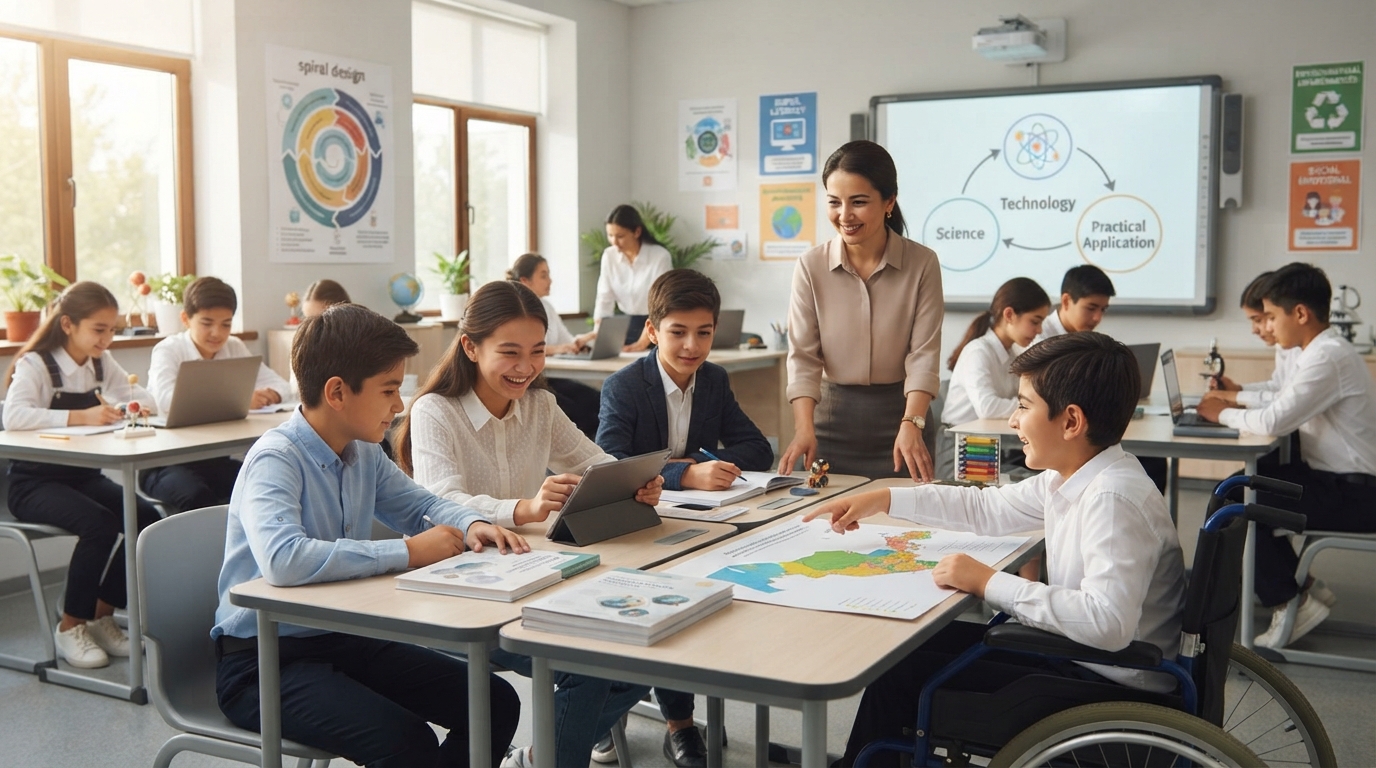
The revised curriculum is focused on a competency-based approach and is based on the principles of inclusion and equity. The Universal Design for Learning approach ensures that learning content is accessible to all students, including children with disabilities, as well as gifted and highly motivated students. Clear learning goals and a spiral-based curriculum design facilitate the gradual development of knowledge and skills, the fund reported.
"The revised curriculum will strengthen continuity and progression across stages (grades) of education, link the study of various subjects, and place greater emphasis on the practical, real-life application of knowledge," the statement reads.
The new curriculum is designed to develop digital literacy, environmental and green education, and social and emotional competencies, "helping students prepare for the future while supporting Uzbekistan's sustainable development priorities."
"The curriculum reform is part of a larger transformation of education, which also includes improving assessment systems, teaching practices, textbooks, and teaching materials. The new methodological guidelines for teachers and school leaders promote the effective organization of the classroom learning process, formative assessment, inclusivity, gender equality, and setting high expectations for each student," said Sherzod Karimov, First Deputy Minister of Preschool and School Education.
UNICEF noted that these reforms, taken together, are aimed at creating a more ambitious, inclusive, and internationally compliant education system.
The SmartED project is funded by the Islamic Development Bank, the Arab Coordination Group, and the Global Partnership for Education.
It should be noted that the Republican Education Center adopted the National Curriculum in 2020. Schools were expected to fully implement it by 2025. UNICEF and the former United States Agency for International Development (USAID) supported the development of the curriculum. As part of the education improvement project, Cambridge University Press textbooks on computer science and IT for grades 5-11 and English for grades 1-11 were also localized. Their implementation began in 2021.