

An international gastronomic festival of Khorezm khans' dishes was held in Khiva
On September 19–20, the "Arda Khiva" tourist complex hosted the II International Gastronomic Festival "National Dishes of the Khans of Khorezm." For two days, Khiva became a platform where the history of the region was told not only through architecture and museum exhibitions, but also through food. More than 20 traditional Khorezmian dishes were presented at the festival. Among them were tukhum barak, kok barak, qovoq barak, shivit [...]
The International Gastronomic Festival of Khorezm Khans' Dishes Took Place in Khiva
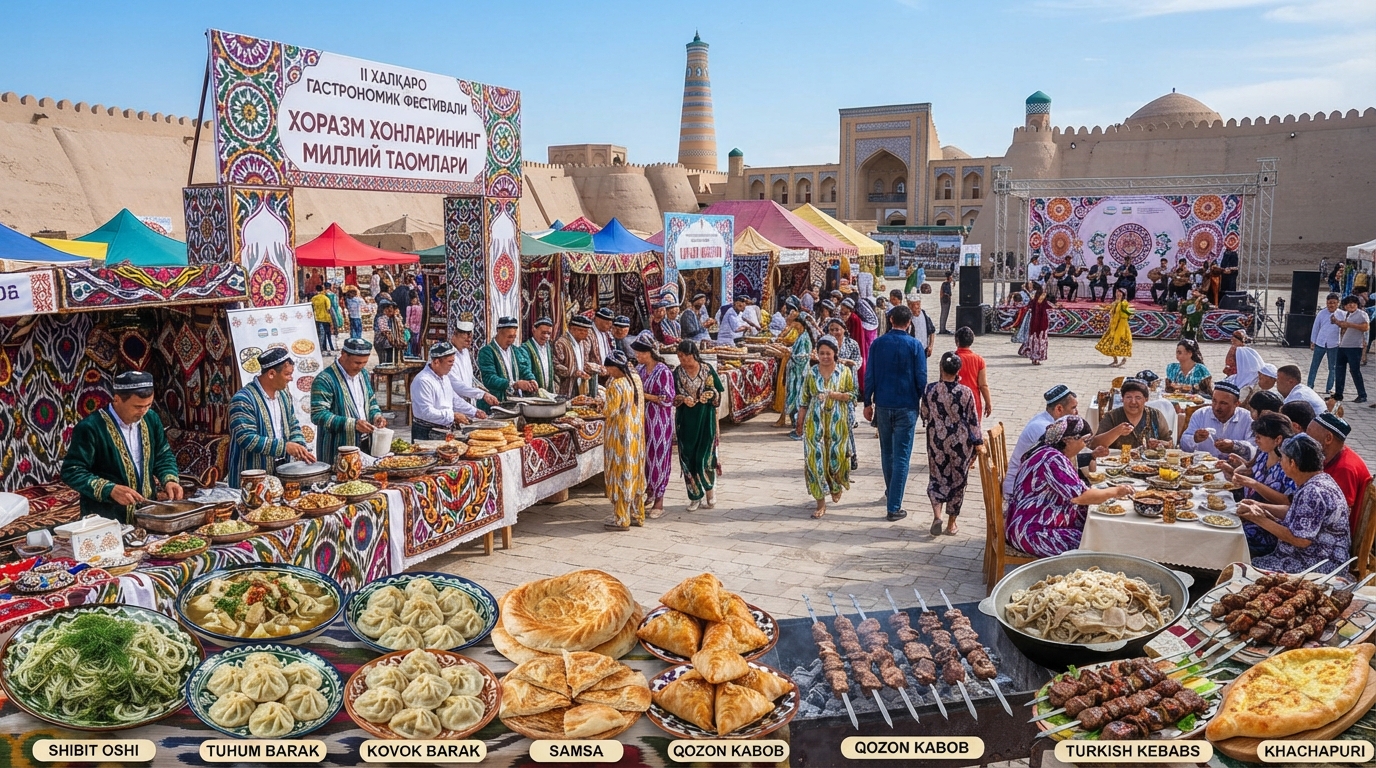
On September 19–20, the "Arda Khiva" tourist complex hosted the II International Gastronomic Festival "National Dishes of the Khorezm Khans." For two days, Khiva transformed into a venue where the region's past was told not only through architecture and museum exhibitions, but also through food.
More than 20 traditional Khorezm dishes were presented at the festival. Among them were tukhum barak, kok barak, qovoq barak, shivit oshi, gumma, ijjon, various meat dishes, soups, and Khorezm types of bread.
Special attention was paid to dishes associated with the traditional cuisine of Khorezm. The festival program included go‘shtli qovurma, go‘shtli dimlama, qazon kabob, jigar kabob, tuncha sho‘rva, Khorezm mastava, patir, meat patir, durvadik patir, bo‘ghirsoq, and other dishes.
Some of these dishes can be tasted today in ordinary Khorezm homes and establishments, while others require more time and specific cooking skills. Therefore, the festival became not just an exhibition of ready-made dishes: guests could observe the cooking process itself and get acquainted with the traditions behind the familiar names.
In addition to Khorezm cuisine, participants presented dishes from different countries. In the international part of the festival, beshbarmak from Kazakhstan, qurutob from Tajikistan, kebab from Turkey, and dolma from Azerbaijan were prepared. The program also included dishes from Georgia, India, China, South Korea, and Italy — khachapuri, biryani, bulgogi, and lasagna.
In total, more than 19 restaurants, chefs, and representatives of gastronomic tourism from different regions of Uzbekistan took part in the festival.
Tastings, gastronomic exhibitions, and master classes were organized for the guests. On the territory of the complex, for two days, it was possible not only to taste the dishes but also to watch them being prepared.
The festival was accompanied by a cultural program. National melodies and songs were played, and various thematic and entertainment events took place. Among the visitors were both residents of the region and tourists who came to Khiva.
A gastronomic competition was a separate part of the festival. A prize fund of 120 million soums was provided for its winners: 60 million soums for first place, 40 million for second, and 20 million for third.
Khorezm cuisine itself is closely linked to the history of the region. It features dishes that are difficult to imagine outside of this land: green shivit oshi, various types of barak, ijjon, Khorezm patirs. Each of them has its own cooking method, set of ingredients, and, often, family memory.
That is why the gastronomic festival in Khiva turned out to be not just a competition of chefs. Behind a plate of food, one could see a part of the everyday history of Khorezm — the kind that rarely makes it into textbooks, but continues to live in kitchens, in recipes, and in the hands of people who still cook according to the old rules.
For two days, "Arda Khiva" united the national cuisine of Khorezm and dishes of other countries, turning gastronomy into another way of talking about the history, culture, and modern tourism potential of Khiva.