

An expert estimated the mass of PM2.5 particles in Tashkent's air at approximately one ton
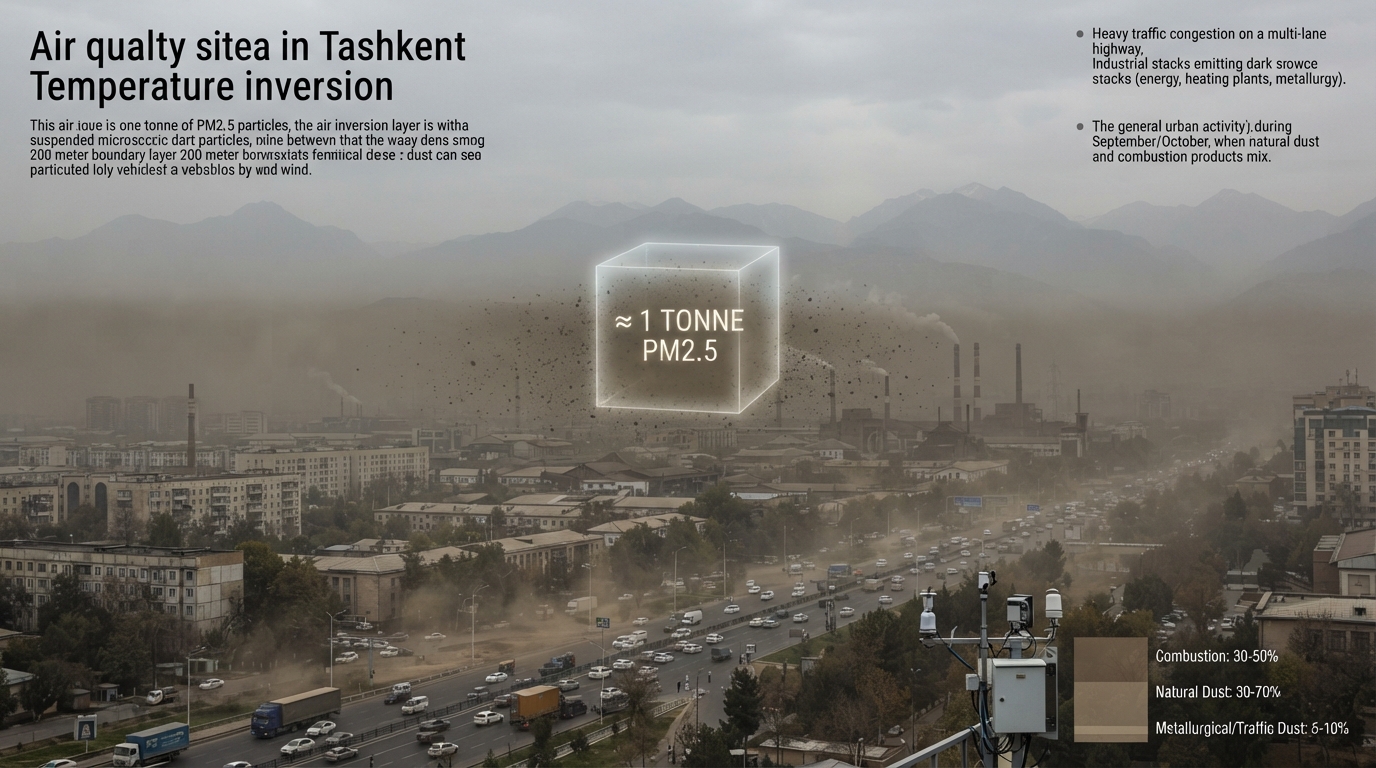
An expert estimated the mass of PM2.5 particles in Tashkent's air at approximately one ton
During a temperature inversion, the air of Tashkent can contain about one ton of fine PM2.5 particles if the height of the inversion layer is approximately 200 meters. With light winds, such particles disperse less effectively and can accumulate near the Earth's surface, increasing the concentration of pollutants.
This was reported by Zikrilla Alimov, Doctor of Technical Sciences and head of the atmospheric air protection laboratory at the Research Institute of Environment and Nature Protection Technologies. According to his estimate, the share of natural dust in air pollution in September and October can reach 30–70%, while combustion products, including emissions from transport, energy, and greenhouses, account for 30–50%. Another 5–10% may come from transport and metallurgical dust.
Alimov emphasized that the ratio of pollution sources changes depending on weather conditions and wind direction. According to him, to reduce the concentration of PM2.5, it is necessary to identify specific emission sources and take measures based on scientific data.
It is also reported that the concentration of PM2.5 particles in Tashkent has decreased by 25% since the beginning of 2026 compared to the same period last year. The Ecology Committee attributes this to the implementation of the "Clean Air" program.