

An atmospheric laboratory has been launched in Tashkent to study what the city breathes
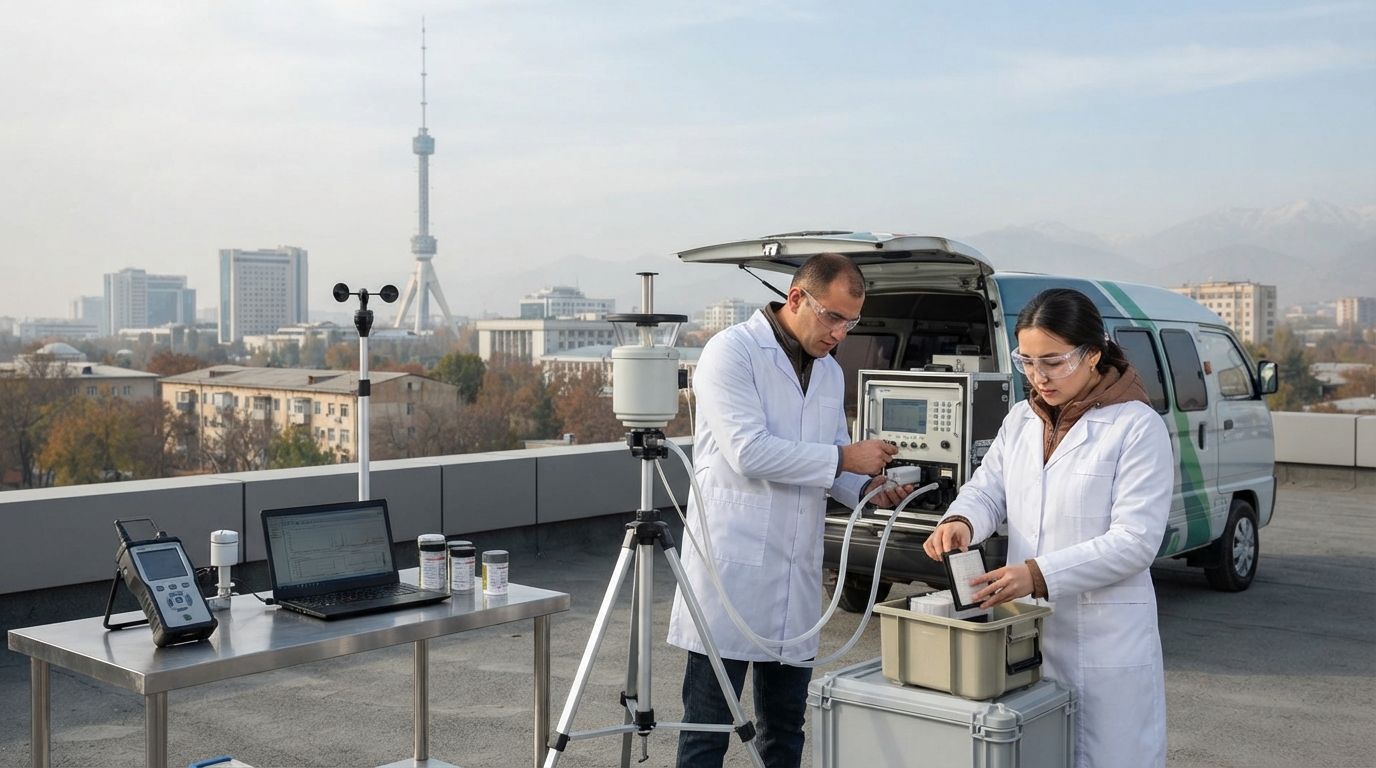
An atmospheric laboratory has begun operations in Tashkent to study what the city breathes
Air composition studies have started in Tashkent to identify the main sources of pollution and understand which factors influence the accumulation of harmful impurities in the atmosphere. To achieve this, specialists from the new atmospheric laboratory are taking samples across all districts of the city and analyzing them. The research results will help develop scientifically grounded measures to improve air quality.
The Center for Specialized Atmospheric Laboratory was created under the National Committee on Ecology and Climate Change by a presidential decree. As the head of the center, Doctor of Technical Sciences Zikrilla Alimov, reported, specialists are using modern equipment and international experience to determine the main sources of pollution.
Air samples are collected using special filters, after which their composition is studied in the laboratory to determine the concentration of pollutants. In addition, scientists are evaluating how weather conditions affect the dispersion and accumulation of harmful impurities.
Special attention is paid to the autumn-winter period, when the air pollution problem in the capital becomes particularly noticeable. During prolonged periods without precipitation, dust accumulates in the atmosphere. Another factor is temperature inversion—a phenomenon in which the vertical mixing of air is hindered, causing pollutants to disperse less effectively near the Earth's surface.
In the future, there are plans to expand the experience of the capital's laboratory to other regions of Uzbekistan. This will make it possible not only to monitor the state of the atmosphere, but also to develop targeted measures to reduce pollution based on scientific research results.
Earlier, the director of the National Climate Change Center, Farrukh Sattarov, explained the causes of air pollution in Tashkent. Among the natural factors, he cited a lack of precipitation, strong winds, and disruptions in natural air exchange, which can contribute to the accumulation of harmful impurities in the atmosphere.