

Alternative for the future
Caspian Sea Cable: Kazakhstan and Azerbaijan are building a new digital route between Asia and Europe.
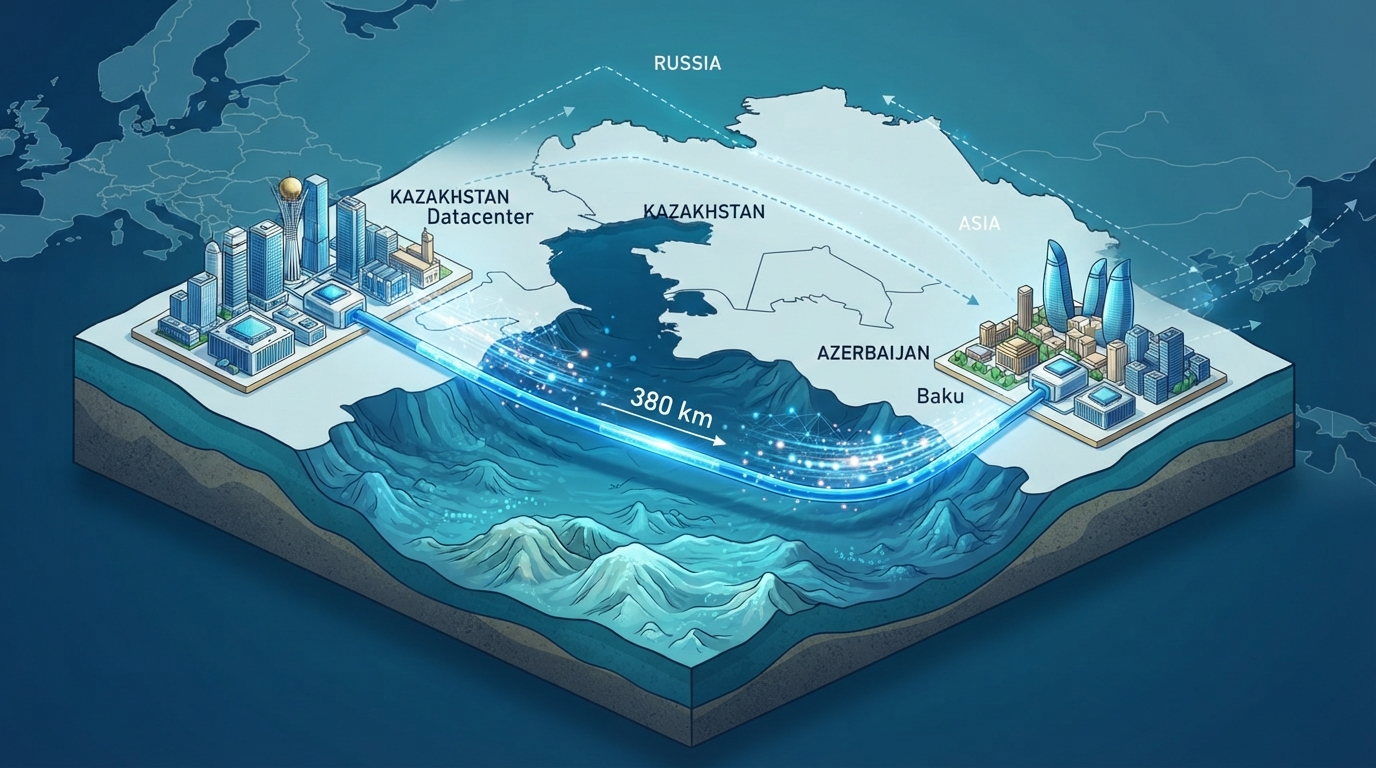
## An Alternative for the Future
Kazakhstan and Azerbaijan have successfully completed one of the most important stages of the Trans-Caspian fiber-optic communication line. This new submarine cable, approximately 380 kilometers long, will be laid along the bottom of the Caspian Sea, directly connecting the digital infrastructure of the two countries.
The significance of this project extends far beyond Kazakhstan and Azerbaijan. Essentially, it aims to create a new high-speed digital corridor linking Asia and Europe. The Trans-Caspian line has the potential to become a key element of the international telecommunications infrastructure, providing an additional route for transmitting significant volumes of data between regions.
According to experts, the commissioning of the line will increase the speed and stability of internet connections, expand the capacity of international channels, and open up new opportunities for telecommunications companies in Kazakhstan and Azerbaijan.
The potential geographic expansion of the project is also a topic of discussion. Plans are underway to connect Russia and other Caspian region states to the new cable system. In this case, the significance of the Trans-Caspian line will increase significantly: from a bilateral infrastructure project, it will be transformed into a component of a broader Eurasian digital network.
For ordinary users, the issue of cost is no less important. The emergence of an additional international channel could theoretically increase competition between data transmission routes and improve connection reliability. However, the actual impact on tariffs for residents of Kazakhstan and Azerbaijan will be a topic of upcoming discussions.
The construction of the 380-kilometer line across the Caspian Sea demonstrates that regional infrastructure competition is gradually expanding into the digital space. Today, not only railways, highways, and pipelines are becoming strategic routes, but also cables, which transport colossal volumes of data between countries.