

A space for art, dialogue, and new ideas
The Center for Contemporary Art (CCA Tashkent) has opened in Tashkent. Located in the building of a former 1912 diesel power station, the Center is conceived as a new cultural institution that combines exhibition spaces, a library, a concept store, a restaurant, educational platforms, and public spaces. It is a meeting place for artists, representatives of creative industries, curators, architects, and the general public, open to dialogue and new artistic initiatives. A special feature of the Center […]
A space for art, dialogue, and new ideas
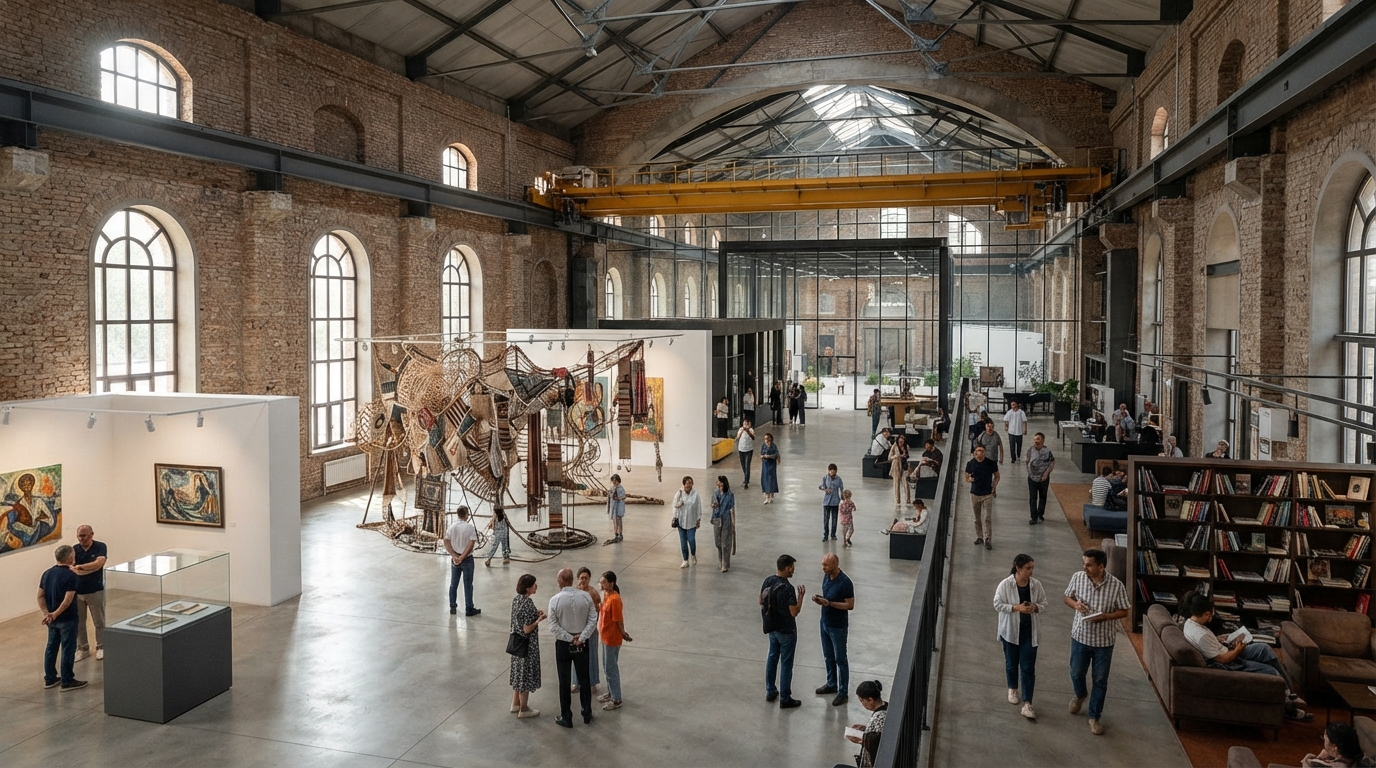
The Center for Contemporary Art (CCA Tashkent) has opened its doors in Tashkent. Housed in a former 1912 diesel power station, it is conceived as a new cultural institution that combines exhibition spaces, a library, a concept store, a restaurant, educational platforms, and public areas. It is a meeting place for artists, representatives of creative industries, curators, architects, and the general public, open to dialogue and new artistic initiatives.
The unique feature of the Center is that its creators decided to preserve the historic building, integrating modern cultural functions into it. The choice of the site was also connected to the history of the district. It has long been a place of vibrant public life, and it was important for the project's authors to preserve this "buzz," translating it into a space for creative experimentation.
The architects approached the building as an independent participant in the project. According to them, when they first encountered it, it was in a difficult state: dark, abandoned, with the smell of diesel inside. Yet, behind the external neglect, a strong architectural character was discernible. The abandoned power station gave the impression of a monumental space, so the main task was to preserve its architecture as much as possible and adapt it to new functions without destroying its individuality.
The deeper the specialists of the architectural bureau Studio KO, who took on the architectural transformation of the building, studied its features, the more ideas emerged. The layout and placement of various functions were largely determined by what already existed. One could say that the former power station itself suggested the solutions; all that was left was to listen to it. It was this approach that made it possible to combine history with contemporary content.
The result is a space that partly resembles a museum and partly an exhibition venue. However, the overall concept of the Center implies a much broader spectrum of activities. It will host exhibitions, meetings, discussions, and other projects that facilitate interaction between artists and the audience.
"The Center should be a place where artists can work, show their projects, and interact with the audience. At the same time, the program should not be limited to exhibition activities alone. We want it to be a living space that constantly evolves together with artists, viewers, and the entire professional community," noted Dr. Sara Raza, Chief Curator of CCA Tashkent.
It is important not only to present a finished work to the public but also to create conditions for work, experimentation, and professional communication, which is possible when the creative individual and their practice are at the center of this space's attention.
Another goal of the project is to make contemporary art more visible within the country and to create opportunities for local artists to interact with the international professional community.
The Center for Contemporary Art opened with the exhibition Hikmah. The title comes from the Arabic word hikmah, meaning "wisdom," and brings together works by contemporary artists. Muhannad Shono, Nari Ward, Shokhrukh Rakhimov, Tarik Kiswanson, Kimsooja, Ali Cherri, Nadia Kaabi-Linke, Vladimir Pan, and Daribay and Bakhtiyar Saipov explore the relationship between local traditions, spiritual heritage, and contemporary artistic practices in their works, sharing their vision with the audience. In addition to the artworks, a sound installation by Sabina Inoyatova is also presented.
"The Hikmah exhibition is dedicated to exploring new points of contact between tradition, material culture, and contemporary artistic practices. By bringing together artists from different countries, it offers a new way to conceptualize wisdom as a process of continuous reflection on culture, memory, and art," noted Dr. Sara Raza, Chief Curator of CCA Tashkent.
In summary, the activities of CCA Tashkent are aimed at supporting artists from Uzbekistan, developing international cooperation, and introducing the local audience to the work of leading contemporary artists from around the world. At the same time, it will contribute to promoting Uzbek artists on the international stage, opening up new opportunities for collaboration, research, and participation in international art projects.
For Tashkent, this means the emergence of a new point of attraction for contemporary culture, where art, architecture, public life, and international cultural dialogue intersect.