

The Tashkent Center for Contemporary Art is preparing for its opening. First day program
The Contemporary Art Center in Tashkent (CCA Tashkent), located in a historic 20th-century building, will welcome its first visitors on September 6. The opening day program includes performances, film screenings, and workshops for children. The highlight is the Hikmah exhibition featuring local and international artists.
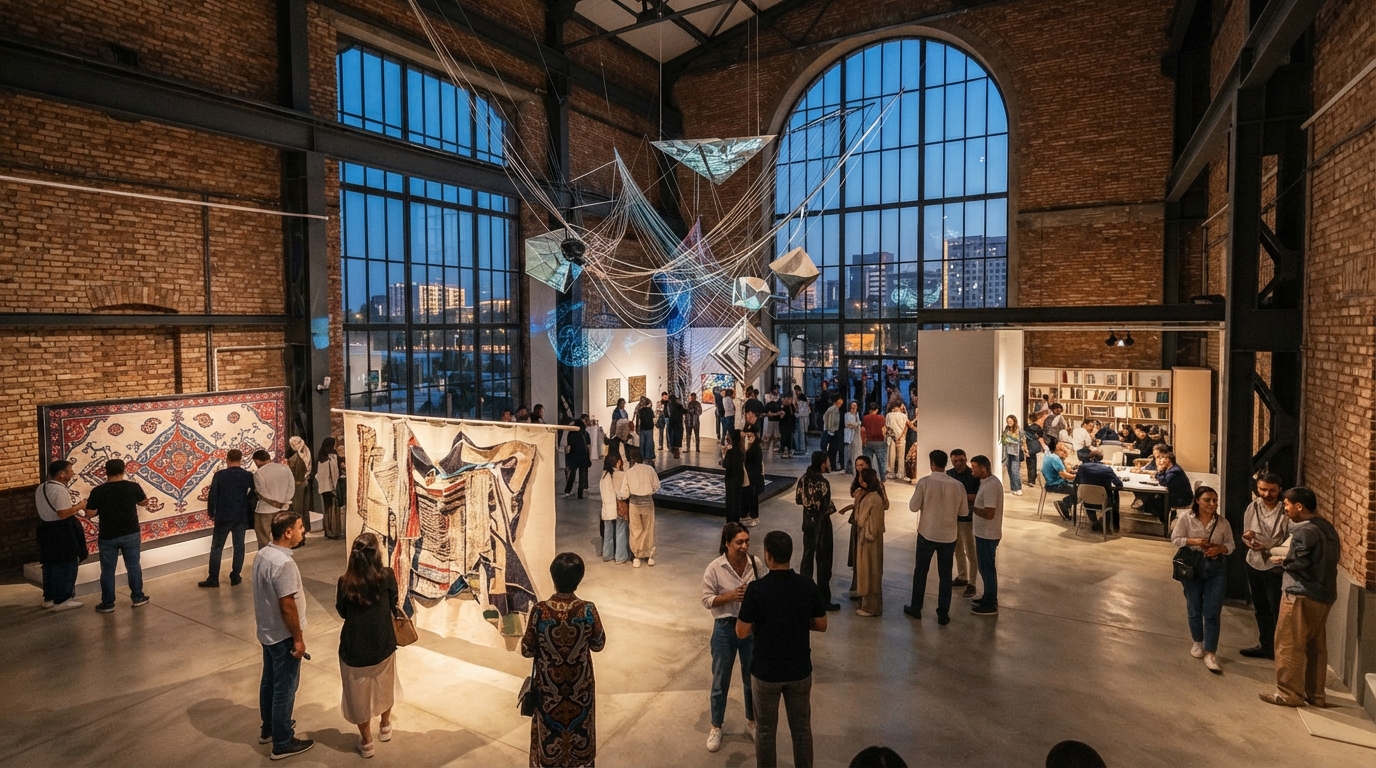
The Contemporary Art Center (CAC) in Tashkent is preparing for its grand opening on September 6. Located in a historic building, a former diesel power station built in 1912, in the center of the capital, it will be the first cultural institution of its kind in the region, designed to unite the local and international art scenes through exhibitions, research, and educational programs.
Gayane Umerova, Chairperson of the Foundation for the Development of Culture and Arts of Uzbekistan, called the upcoming opening a significant milestone in the development of the country's cultural infrastructure and the implementation of the foundation's long-term strategy to create a sustainable contemporary art ecosystem. She emphasized: "CAC Tashkent will become a meeting place for artists, researchers, curators, and representatives of various communities, where the local artistic context can fully interact with the international cultural environment. We strive to create an institution that will not only present contemporary art but also support its development through education, research, and international cooperation."
The reconstruction of the building, designed by Wilhelm Heinzelmann, head of the Turkestan Region's construction department, was entrusted to the Parisian architectural firm Studio KO. Their task was to demonstrate a dialogue between the historical environment and the new building erected on the site. The concept for the renovated center was presented as a model at the Art Basel international fair in Paris in October 2025.
The contemporary art center is conceived as a multifunctional space. In addition to exhibition halls, it will house a library, educational spaces, a concept store, and a restaurant.
Dr. Sarah Raza, formerly of the Solomon R. Guggenheim Museum in New York and the Tate Gallery in London, has been appointed Artistic Director and Chief Curator of the CCA Tashkent. Under her curatorship, the center's first exhibition, "Hikmah," will open on September 6. Its title derives from the Arabic word for wisdom. The exhibition explores the intersections of tradition, material culture, and contemporary artistic practices. It will feature works by artists from Saudi Arabia, France, Germany, the United States, South Korea, and Uzbekistan. Visitors will also be able to see works by Vladimir Pan, Daribay Saipov, and Bakhtiyar Saipov from the I.V. Savitsky State Museum of Arts. A sound installation will be presented by Sabina Inoyatova, music curator of the Tashkent Contemporary Art Center.
A day earlier, on September 5, as part of the Tashkent Contemporary Art Center's public program, the exhibition "BENCHELLAL, MONUMENTAL | Sculpting Past Tomorrow" by Moroccan-born Dutch designer and couturier Mohamed Benshalal will open at the State Museum of History. The collection featured was created during Benshalal's art residency in Tashkent and is inspired by the culture, craft traditions, and architectural heritage of Uzbekistan.
Along with the two existing residencies in Tashkent, a new residency will open in Samarkand in September. Unlike the program in the capital, it will focus on research, interdisciplinary exchange, and engagement with the city's rich historical and cultural heritage.
The Center will continue its collaboration with the Architectural Association Visiting School. From September 4 to 14, the AA Visiting School: Climate Cartographies in Samarkand will be held at the Samarkand residence. The program will include lectures, research routes, and workshops exploring the relationship between climate, cultural heritage, and space through the lens of Samarkand's history. Architects, artists, historians, scientists, and researchers will participate in the project.