

A new model for assessing the criminogenic situation will be introduced in Uzbekistan
A "criminogenic stability index" will be formed to assess the level of security in the regions. It will also take into account the population's sense of security and hidden crime rates. Forecasting crime risks using artificial intelligence is also planned.
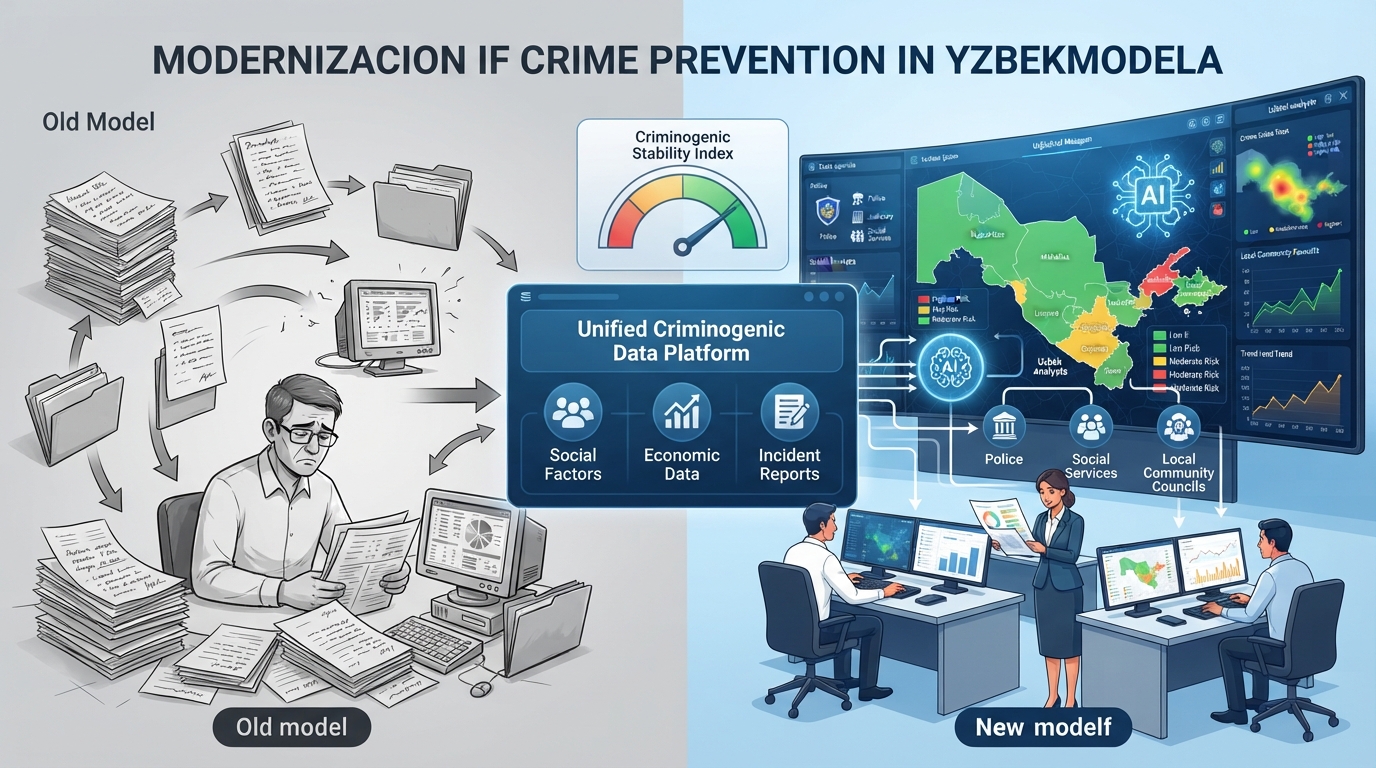
A new model for assessing the criminogenic situation to be introduced in Uzbekistan
A new model for assessing the criminogenic situation will be introduced in Uzbekistan. This was announced during a presentation on improving crime prevention, which Shavkat Mirziyoyev reviewed on November 4.
It was noted that current assessment methods have largely relied on statistical data. Socio-economic factors influencing crime are insufficiently analyzed, and the existing information systems of state agencies are not fully integrated with one another.
For this reason, it was proposed to introduce a new model for assessing the criminogenic situation. According to it, a "criminogenic stability index" will be formed for the first time. To achieve this, there are plans to launch a unified criminogenic data platform that will combine the information resources of state agencies.
In addition, it is envisaged to analyze and forecast crime risks using artificial intelligence technologies and to create criminogenic maps of regions.
Through the new mechanisms, the criminogenic situation in regions and neighborhoods (mahallas) will be assessed regularly. Depending on the level of risk, targeted preventive measures will be established, and the activities of responsible agencies will be evaluated based on performance indicators.
The presentation also provided information on the work carried out to develop the country's security infrastructure. In particular, 263,000 recognition cameras, 70,000 modern intercoms, and 22,000 panic buttons have been installed in the regions.
Through social prevention measures, the problems of 2.1 million individuals were solved in a targeted manner. As a result, 701 out of 809 neighborhoods with the most severe criminogenic situations were removed from this category. Nearly 4.4 thousand neighborhoods remain in the "green" category.
The President stressed that crime prevention should not remain solely the responsibility of law enforcement agencies, but that all responsible agencies, mahallas, and the public must work together in this process.
At the end of the presentation, a decree envisaging the introduction of the new model for assessing the criminogenic situation was signed. Officials were given instructions on establishing digital analysis and monitoring mechanisms.