

Students' behavior and mental state in Tashkent schools will be analyzed using artificial intelligence
Due to the increasing juvenile crime rate in Tashkent, 'smart' cameras are being installed in high school classrooms. The artificial intelligence program assesses students' attendance, aggression, mood, and activity in class.
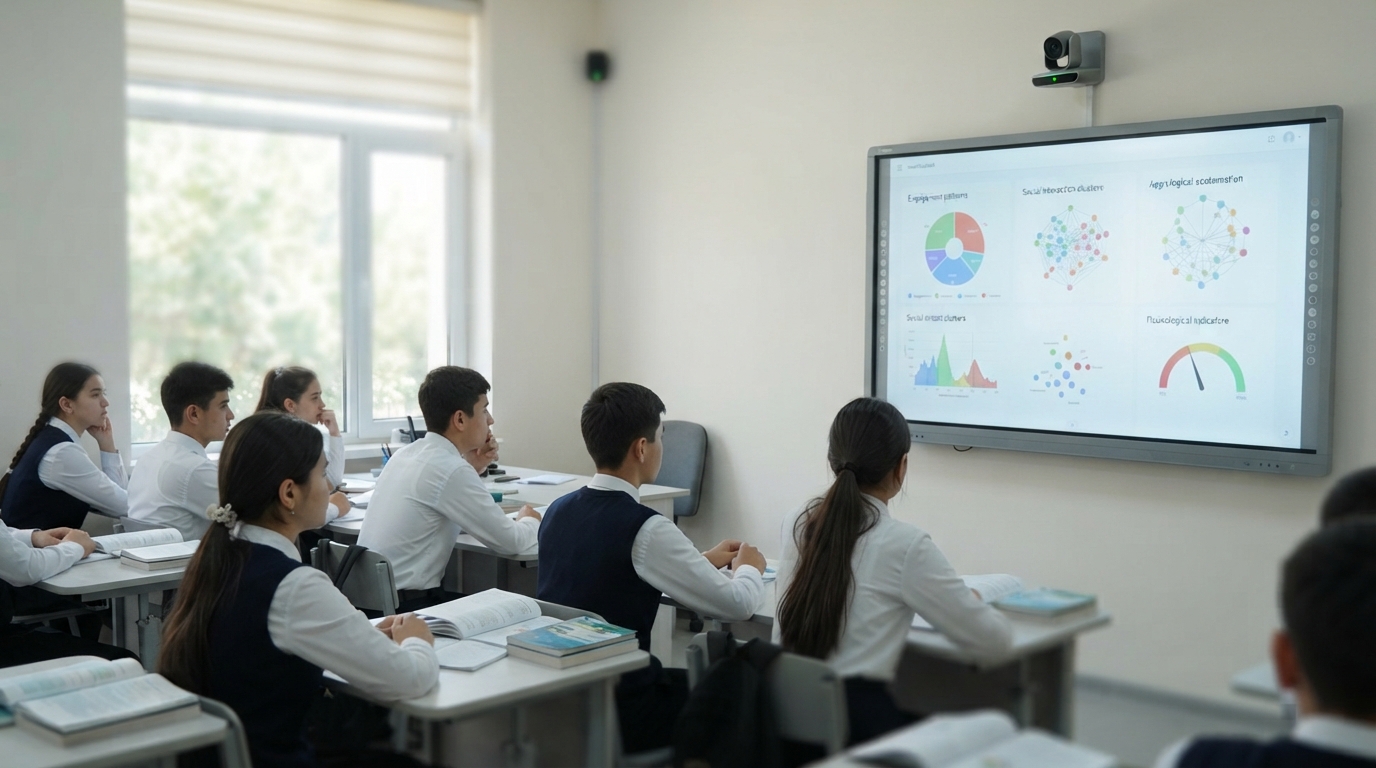
The behavior and mental state of students in Tashkent schools will be analyzed using artificial intelligence. This measure is due to the increase in the number of crimes committed by minors in the capital. This was reported to the Gazeta correspondent by Tashkent Deputy Mayor Durdona Rakhimova.
According to the Ministry of Internal Affairs, youth crime in Uzbekistan has significantly decreased. In Tashkent, compared to last year, crimes among youth (drug abuse, intentional crimes and offenses) and the number of young people participating in them have decreased by 24 percent. However, the number of crimes committed by minors has increased.
Rakhimova noted that young people, sometimes unknowingly, become direct participants in crimes. This situation is also observed among students. Such situations also arise when using taxi, courier and postal services. Therefore, along with strengthening preventive work, attention is also paid to the early identification of young people prone to crime.
In order to prevent juvenile delinquency, the "Smart School" system is being introduced in Tashkent. As part of this project, "smart" cameras are being installed in classrooms of grades 9, 10 and 11.
According to Durdona Rahimova, the system was initially launched as a pilot project in the Sergeli district and connected to the Situation Center. Out of a total of 345 classrooms in grades 9-11 of general secondary schools in the district, modern "smart" cameras have been installed in 177. Currently, schools in 11 more districts of the capital are also being provided with cameras.
In addition to student attendance and behavior, the program based on artificial intelligence analyzes their aggressiveness, psychological state, social and classroom activity. According to the deputy governor, this program will create an opportunity to determine the psychological state of schoolchildren, to study their immunity or predisposition to negative vices.
Rakhimova noted that the system is still in the development stage and may contain some errors. It is planned to provide detailed information about the mechanism and results of the program at a separate press conference later.
The deputy governor noted that in the fight against crime, attention is paid not only to eliminating its consequences, but also to identifying the causes of its occurrence. According to her, the majority of young people who commit crimes are neither engaged in education nor work, that is, they do not have a profession or a clear source of income.
Therefore, work is being carried out to identify and assist such young people through the "seven" mechanism in the neighborhoods. Prevention inspectors, youth leaders and assistants to the governor should help young people find jobs, earn a source of income, start a business or learn a profession.
Rakhimova added that today, the factors of crime are being analyzed not superficially, but in depth. The process involves studying the reasons for youth unemployment, the region they are from, the enterprise they left, why some businesses closed, and why young people do not choose certain professions.
This information is also used to compare the demand in the labor market with the number of personnel being trained in the education system. In particular, it is being determined which professions are in high demand, which jobs are attractive and profitable for young people.
According to Rakhimova, cooperation is being carried out with research institutes to study the labor market in Tashkent and the trends in choosing a profession among young people. Based on these analyses, it is planned to make proposals for state programs, adjust educational quotas to the needs of the labor market, and develop systematic measures together with ministries and departments.
Earlier, it was reported that in January-June 2026, more than 14.3 thousand preventable crimes were recorded in Uzbekistan. According to the Ministry of Internal Affairs, although crimes involving young people, women, and the unemployed decreased, crimes committed by minors increased by 4.5% compared to the same period in 2025.
It was also reported that a situation center based on artificial intelligence was launched in the Sergeli district administration. The President instructed to introduce it in other districts of the capital, as well as to expand the installation of "smart" devices for online appeals to the Ministry of Internal Affairs in crowded places and markets.