

A neural network was able to read Napoleon's encrypted letter
In 1809, Napoleon sent a letter to his general that no one had been able to read for over 200 years. For the GPT-6 Astra neural network, however, six hours was enough to decrypt (decipher) the letter.
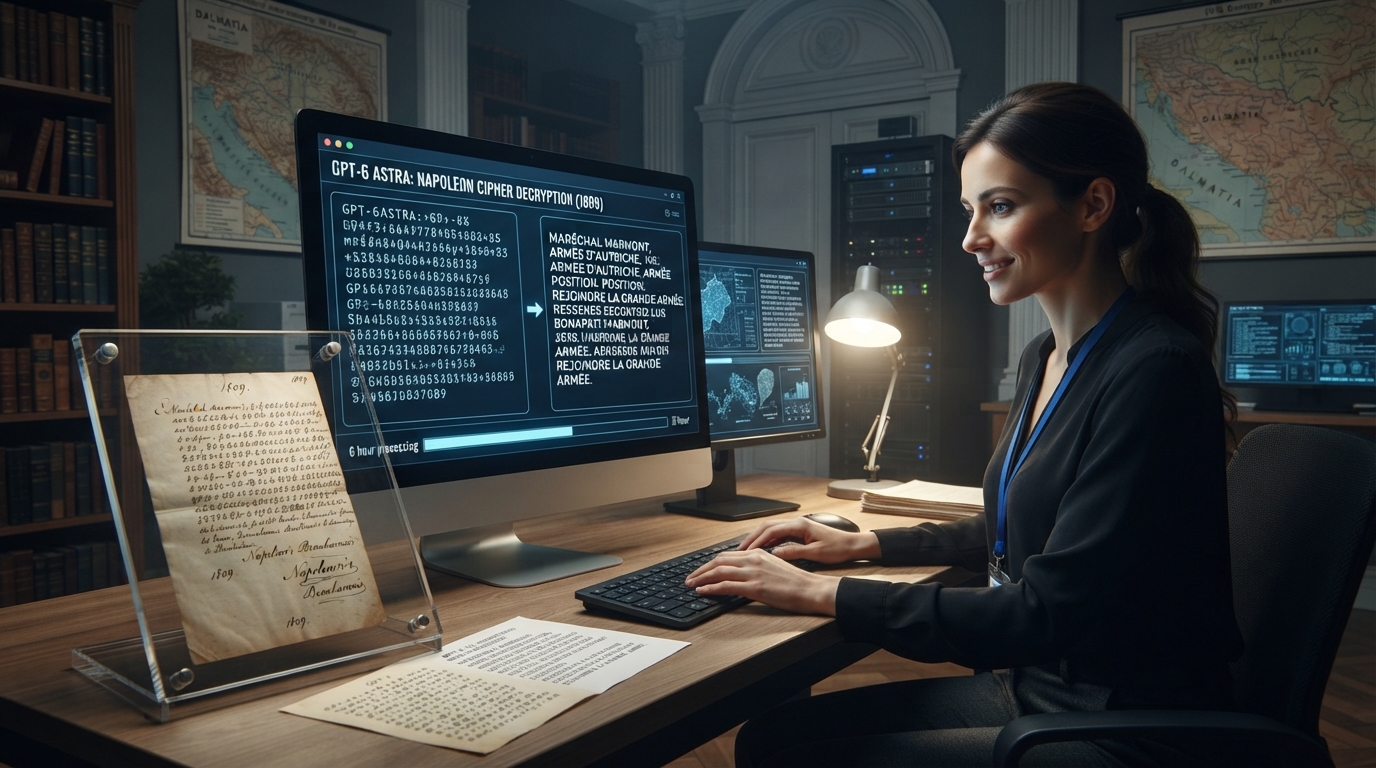
Neural network managed to read Napoleon's encrypted letter
In 1809, the French Emperor Napoleon Bonaparte was preparing for war with Austria, but his elite troops led by General Auguste de Marmont were cut off from the main forces. Napoleon ordered his stepson, Eugène de Beauharnais, the Viceroy of Italy, to establish contact with the general. Eugène sent de Marmont an encrypted letter outlining the military plan. Since the cipher key was not preserved, its content had remained unknown for more than 200 years. The GPT-6 Astra neural network read it in about six hours.
Napoleon had sent this letter to his general Auguste de Marmont in 1809. Having recently learned that the neural network was capable of cracking a message from the World War II "Enigma" encryption machine, it was decided to read Napoleon's letter as well using GPT-6 Astra.
Astra spent around six hours on the decryption. Napoleon's letter was composed based on a homophonic cipher, which provides several code symbols to represent each letter. 33 symbols had been decrypted previously. Astra broke the letter down into lines, identified 175 handwritten symbols in it, and cracked the cipher by testing values for the unknown symbols and checking if they formed a reliable text.
As it turned out, the letter Napoleon sent to de Marmont described the deployment and strength of the French troops before the start of the war with Austria. The Emperor warned his general about where the Austrians intended to attack and urged him not to retreat in the face of the enemy. "When you receive the order to enter battle, do not let a few military detachments or a mob of common people frighten you," Napoleon wrote.
The war of 1809 ended successfully for de Marmont: he led the French army out of Dalmatia (the territory of modern Croatia), joined Napoleon's main forces, and participated in the last major battle of the campaign. After the victory, Napoleon awarded him the title of Marshal.