

A disease "in ambush". What is LADA diabetes and is there a cure for it?
Usually, diabetes is divided into two types — type 1 and type 2. However, in diabetology, other forms of the disease are also identified. One of them is LADA diabetes, that is, latent autoimmune diabetes in adults.
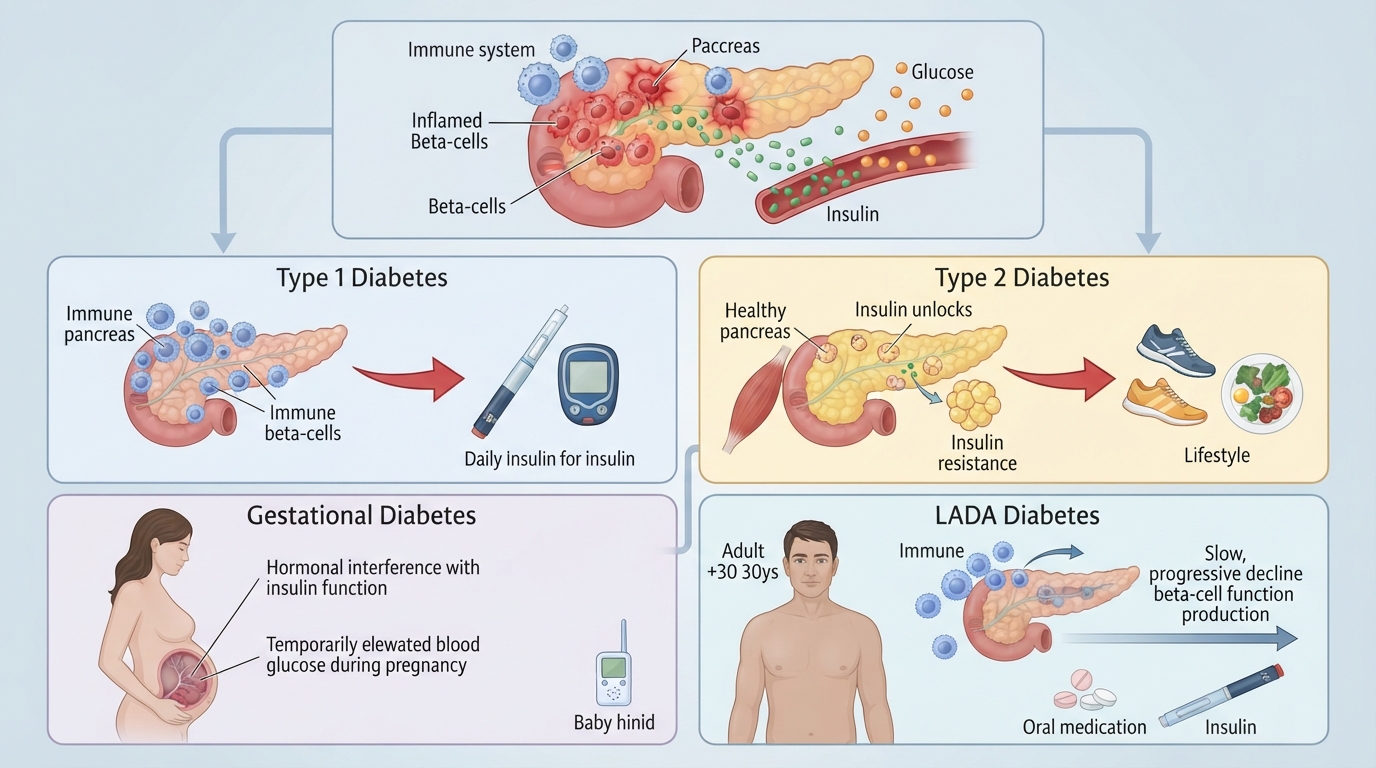
A Disease "in Ambush." What Is LADA Diabetes and Is There a Cure for It?
This is a slow-progressing form of type 1 diabetes that usually develops after the age of 30. If the disease remains undetected for a long time, it can lead to improper treatment and the early development of complications.
Four Types of Diabetes
Most people think there are only two types of diabetes. However, its classification is broader than that.
Type 1 diabetes. This is an autoimmune disease in which the immune system destroys insulin-producing beta cells in the pancreas. As a result, insulin production drops sharply, and the patient requires lifelong insulin injections. The disease usually begins in childhood.
Type 2 diabetes. It is most often associated with being overweight and a sedentary lifestyle. In this case, insulin resistance occurs — a decrease in the sensitivity of the body's cells to insulin. This is the most common form of diabetes, accounting for approximately 90–95 percent of all cases. It usually develops at a mature age (after 30 years).
Gestational diabetes. This is a carbohydrate metabolism disorder that is first diagnosed during pregnancy. It is associated with a decrease in the body's sensitivity to insulin under the influence of placental hormones. This condition often resolves after childbirth, but it increases the mother's risk of developing type 2 diabetes in the future and can also affect the child's health.
Specific forms of diabetes belonging to a general group. This group also includes LADA diabetes (Latent Autoimmune Diabetes in Adults). It is considered a slow-progressing type 1 diabetes that develops in adults.
"In 2019, the World Health Organization recognized it as a distinct type of diabetes belonging to hybrid forms.