

A 4-billion-year-old fragment of Mars found in the Sahara Desert
Scientists studied a pinkish meteorite found in Mali and determined its age. As a result, it was revealed to be not just an ordinary stone, but a fragment of the Red Planet.
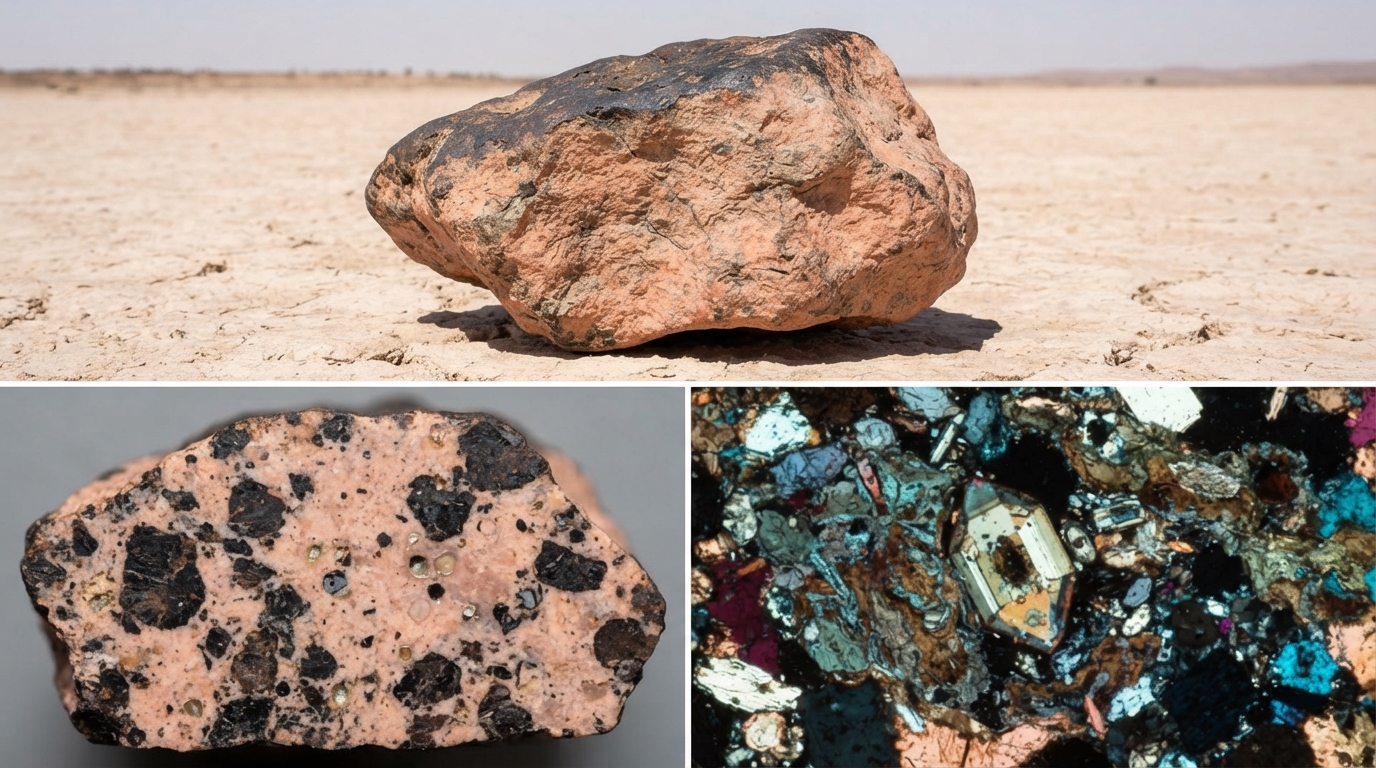
A 4-billion-year-old piece of Mars found in the Sahara Desert
A pinkish meteorite found in the Sahara Desert in 2022 has been identified as a 4.1-billion-year-old piece of the planet Mars. CBS News reported this, citing the findings of a NASA study.
Weighing nearly one kilogram, the fragment was discovered in Mali. The piece of the Red Planet was named Teghaza 001 because it was found on a salt plain.
Scientists compared its chemical and mineral composition with data collected by NASA missions. As a result, it was confirmed that this rock is one of approximately 435 meteorites that have fallen from Mars.
Researchers determined the age of the meteorite and concluded that it is one of the three oldest Martian meteorites ever found on Earth. According to NASA representatives, this discovery provides unique insights into the Martian crust and its formation.
"Only after we began to study the meteorite carefully did we realize that it was truly unique. One of the reviewers of the scientific paper called it a 'Rosetta Stone' for Mars," said Yang Liu, a researcher at NASA's Jet Propulsion Laboratory in Southern California.
Previously discovered ancient meteorites provided less information about the history of Mars. Teghaza 001, however, demonstrated how the Martian crust formed from cooling magma and how it was subsequently altered by the action of water.
Traces of ancient water
The meteorite contains volcanic minerals, including zircon crystals. Caltech geochemistry professor François Tissot helped analyze the meteorite fragment using a new method. This method allowed for the individual study of certain mineral particles.
Analyses showed that the rock was altered by the action of Martian water 4.1 billion years ago. The rock itself formed even earlier. The data indicated that the water cycle on ancient Mars was more active than previously assumed.
"This is the first piece from a part of the Martian crust of which we previously had no samples," added Lee Saper, a scientist at NASA's Ames Research Center.